A padel club looking for a reliable rental racket buys differently from a specialist retailer building a performance range. The club may care most about handling, replacement cost, and reorder availability. The retailer needs a product its staff can explain and customers can distinguish from the other rackets on the shelf. That difference should shape the first product brief.
Before requesting samples, decide who will buy the racket, where it will sell, and what it should cost to deliver. Those decisions influence the mold, materials, packaging, order quantity, and amount of development the first launch can support.
Padelico is a China-based padel racket manufacturer serving brands, wholesalers, and sports companies. The steps below cover the decisions a brand owner needs to make from the first product brief through sample approval, production, and launch.
Define Your Customer and Your First Racket
Start with a customer you can describe in a sentence. A recreational player buying a first racket, a competitive club player seeking a firmer response, and a coach buying equipment for lessons represent three different product briefs.
Give the first model a specific role. For a recreational racket, that might mean manageable weight, a comfortable impact feel, and enough forgiveness for players still developing consistent contact. For a club model, the brief might prioritize straightforward handling, a durable finish, and a specification the club can reorder. For a more technical model, define what the player should feel on contact and how the racket should handle during fast exchanges.
Your sales channel should inform the brief at this stage. A club can demonstrate a racket during a lesson. An online store has to explain the same product through specifications, images, and video. If you plan to sell through retailers, account for their margin when setting your target production cost. Set a target retail or wholesale price and work backward from the costs of freight, packaging, fulfillment, and after-sales support.
Turn the Product Brief Into a Racket Specification
Round, teardrop, and diamond outlines are useful starting points. Confirm the handling and preferred contact area on the finished sample, since shape works together with weight distribution and construction.
| Shape | Typical starting point | What to check on the sample |
|---|---|---|
| Round | A control-oriented or recreational racket with a more central hitting area | Ease of preparation and response on off-center contact |
| Teardrop | A versatile racket for players who alternate between defense and attack | Handling during blocks and feedback on faster swings |
| Diamond | An attack-oriented racket, often with more weight toward the head | Whether the intended player can prepare on time and make consistent contact higher on the face |
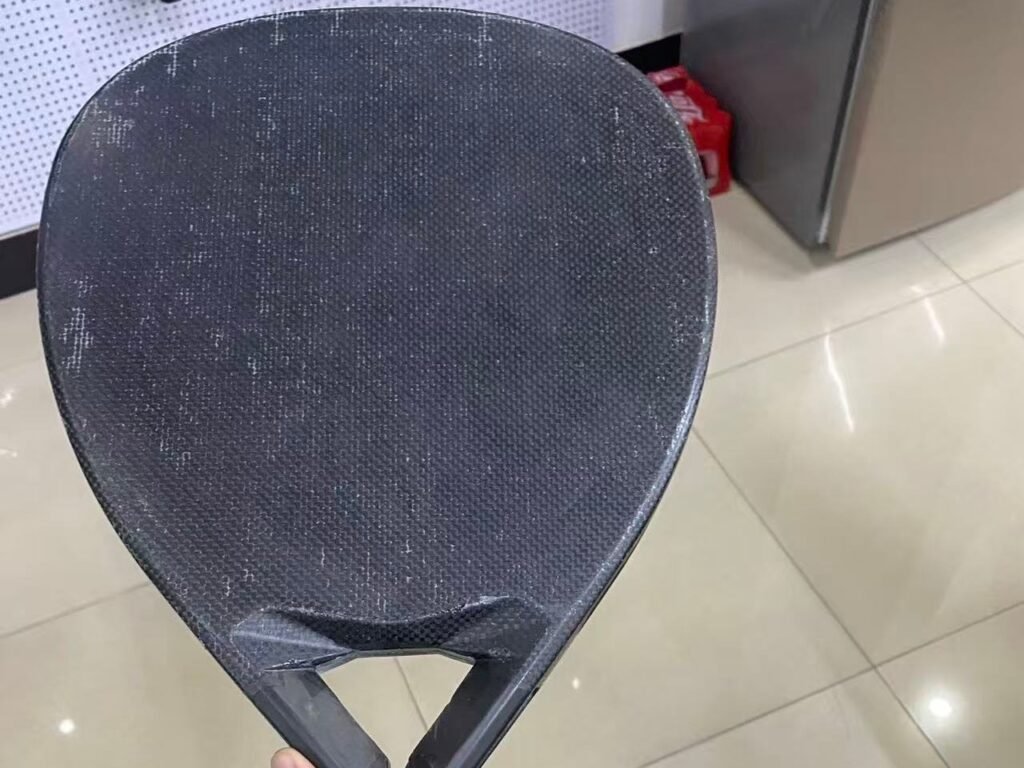
Specify the face, frame, and core together. Fiberglass can be a useful starting point for a flexible hitting surface. Carbon or hybrid constructions give you other ways to tune firmness and response. If a supplier proposes an aluminized carbon or mixed-fiber face, ask how it is constructed. Labels such as 3K, 12K, and 18K describe the number of filaments in a carbon-fiber bundle. The finished face also depends on the fiber grade, layer arrangement, and resin.
The same principle applies to EVA. Softer formulations may suit a brief that calls for cushioned contact. Firmer formulations can give more direct feedback, particularly for players who strike consistently at higher swing speeds. When comparing two cores, keep the face, mold, weight, and balance as close as practical. That makes it easier to judge which change produced the difference in feel.
Record finished weight, balance, grip dimensions, and surface finish alongside the material choices. Agree on whether the weight measurement includes the factory grip, wrist cord, and any fitted protector. For available materials and construction options, see Padelico’s padel racket manufacturing .
Choose a Manufacturing Route That Fits the Launch
An existing factory mold can be a sensible starting point when its geometry suits the product brief. A private-label project can use an established construction with your branding. A more involved project can retain the mold while changing compatible elements such as the core, face, weight target, or finish.
A new mold makes sense when the product needs a different geometry or structural feature. It also adds tooling and development work. Before committing, ask how tooling is quoted, who can use it, and what the arrangements are for storage, maintenance, and reorders.
| Manufacturing route | What the brief covers | What to confirm before ordering |
|---|---|---|
| Private label on an existing model | Graphics, colors, logos, and agreed component or packaging options | The base construction, branding scope, and minimum order |
| Custom construction on an existing mold | Compatible changes to the face, core, weight, balance, or finish | Which changes the mold supports and how they will be evaluated |
| New mold development | New geometry or structural features, plus the complete racket specification | Tooling costs, usage rights, sample stages, and production quantity |
Some branding services accept orders of around 10 rackets on an existing product. For factory production, use the minimum quoted for your chosen construction and confirm whether it applies per model, design, or total order. Padelico’s dedicated customization page lists a 100-racket minimum. Confirm how it applies to your proposed assortment when requesting a quote. See Padelico’s customization options.
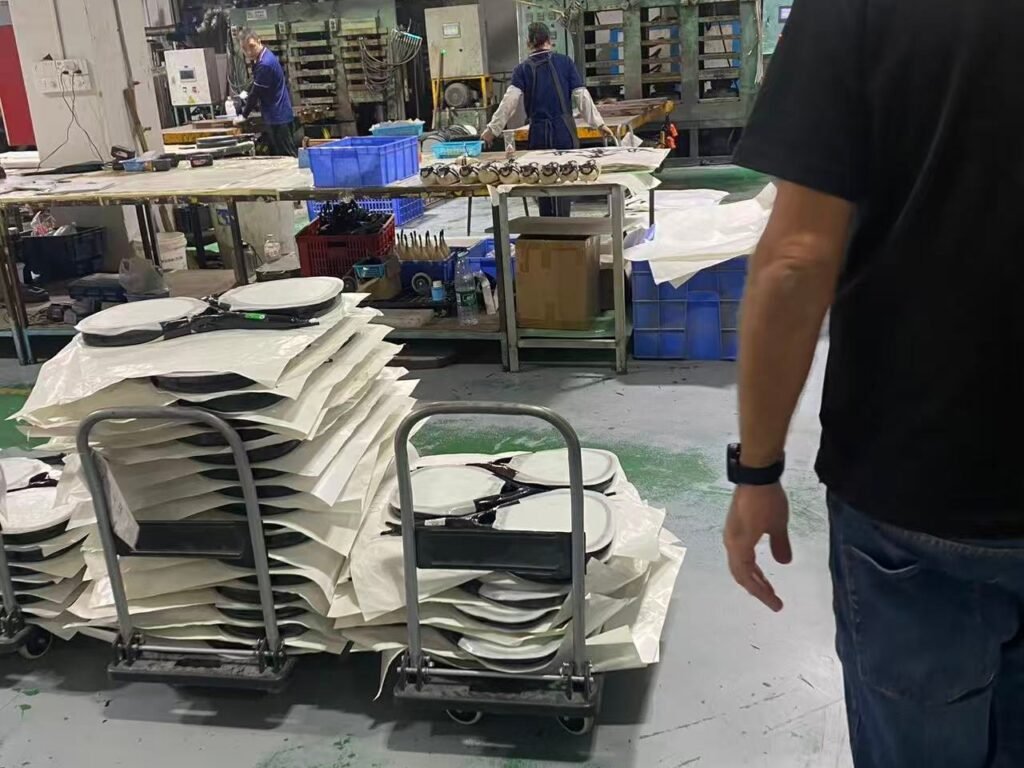
When evaluating a manufacturer, ask who handles mold development, sample revisions, finishing, and inspection. Those answers tell you whom to contact when a sample needs a change or a production unit falls outside the agreed specification. Explore the Padelico carbon racket factory.
Establish the Brand Before Approving Artwork
Give buyers a concrete reason to choose your brand. A club-focused range might offer a durable training racket with predictable reorders. A specialist range might focus on a particular handling preference that customers can test during demo sessions. A design-led collection can distinguish itself through graphics and finish while giving buyers a clear description of how each racket plays.
Once the positioning is clear, develop the name, logo, colors, packaging, and product descriptions around it. If your positioning includes an environmental claim, identify the specific material or process behind the claim and keep the supplier documentation that supports it.
Check business registration requirements and trademark availability in your target markets before committing to printed inventory. Review the name and logo with the relevant trademark office or a qualified adviser. For a European launch, EUIPO and Germany’s DPMA are starting points for reviewing EU and German trademark options, respectively.
Approve a Production Sample Before Ordering Inventory
Allow time for one to three sample rounds in the launch schedule. The number of revisions will depend on the changes required. A first sample may establish handling and impact feel, while a later sample can confirm the final finish, grip, and graphics.
Give the manufacturer feedback they can act on. “The racket feels heavy” leaves several possibilities open. “The sample is within the weight target, but the head feels slow to reposition on backhand volleys” gives the team a reason to review balance and weight distribution.
Ask representative players to test the sample in the situations the product is built for. A coaching model should be assessed on blocks, lobs, and compact strokes. An attacking model should also be tested on overheads and during fast exchanges. Agree with the manufacturer on any durability checks and on the criteria used to accept production units.
Keep an approved sample and a matching specification. Record the finished weight and balance tolerances, construction, artwork version, grip, finish, packaging, and inspection requirements. When production begins, both sides can refer to the same racket and the same written criteria. See Padelico’s custom padel racket development process.
Launch Through Channels That Let Players Try the Racket
Local clubs and coaches can put the first samples in the hands of the players you designed them for. Give demo partners a short product sheet and ask for feedback on handling, impact feel, and which players would buy or recommend the model. Regional players and creators can serve the same purpose when their audience matches the product.
For direct online sales, describe the racket in terms a buyer can act on. Show the actual weight range, balance, face material, core feel, and intended player. Use images and video to show the finish and handling in realistic conditions. Make delivery, returns, and support easy to find.
For wholesale, prepare a separate offer for clubs and sports retailers. Include order quantities, packaging, lead times, reorder terms, and any demo stock available. A buyer who starts with a trial order should know how to order the same specification again.
Use early sell-through, demo feedback, and return reasons to decide what to reorder or revise. If two models attract the same buyer for the same reason, the next collection may need clearer differences between them.
Start Your Padel Racket Project With Padelico
To request a quote, share your target customer, intended sales channel, estimated first-order quantity, preferred construction, artwork, packaging, and delivery destination. If you have a reference racket, explain which parts of its handling or feel you want to reproduce and which you want to change.
Padelico can review options for branding an existing model, modifying its construction, or developing a custom mold. The selected route determines which specifications, sample stages, and tooling requirements need to be confirmed. Contact Padelico about your project.
Frequently Asked Questions
How many models should a new padel racket brand launch?
One well-defined model can be enough for a first launch. Add a second when it serves a distinct customer, playing style, or price point and you can support the additional inventory.
Do I need a custom mold to start a padel racket brand?
An existing mold can suit a first collection if it delivers the required shape and handling. Consider new tooling when a specific change to geometry or structure is central to the product.
What is Padelico’s minimum order quantity?
Padelico’s dedicated customization page lists a 100-racket minimum. Confirm the applicable quantity for your model, construction, and artwork before planning the production run.
How many sample rounds should I budget for?
Allow for one to three rounds in your initial plan. The first round can establish the construction and feel. Further rounds may be needed to confirm revisions, branding, and the final production specification.
What costs should I include in my launch budget?
Include samples, tooling where applicable, production, packaging, freight, applicable import charges, demo stock, and after-sales support. Confirm what the manufacturer’s quote covers before comparing it with your target selling price.
Can I sell through clubs and my own online store?
Yes. Set wholesale prices and order terms alongside your direct retail offer so both channels have room to operate. Clubs can give players court time with the racket, while your store can carry the full product specifications and handle direct sales.