A beach tennis racquet needs to do two quite different jobs. It must move quickly during close-range exchanges, yet remain composed when you block a powerful shot or accelerate into an overhead. Finding the right balance between those demands is the starting point for choosing one.
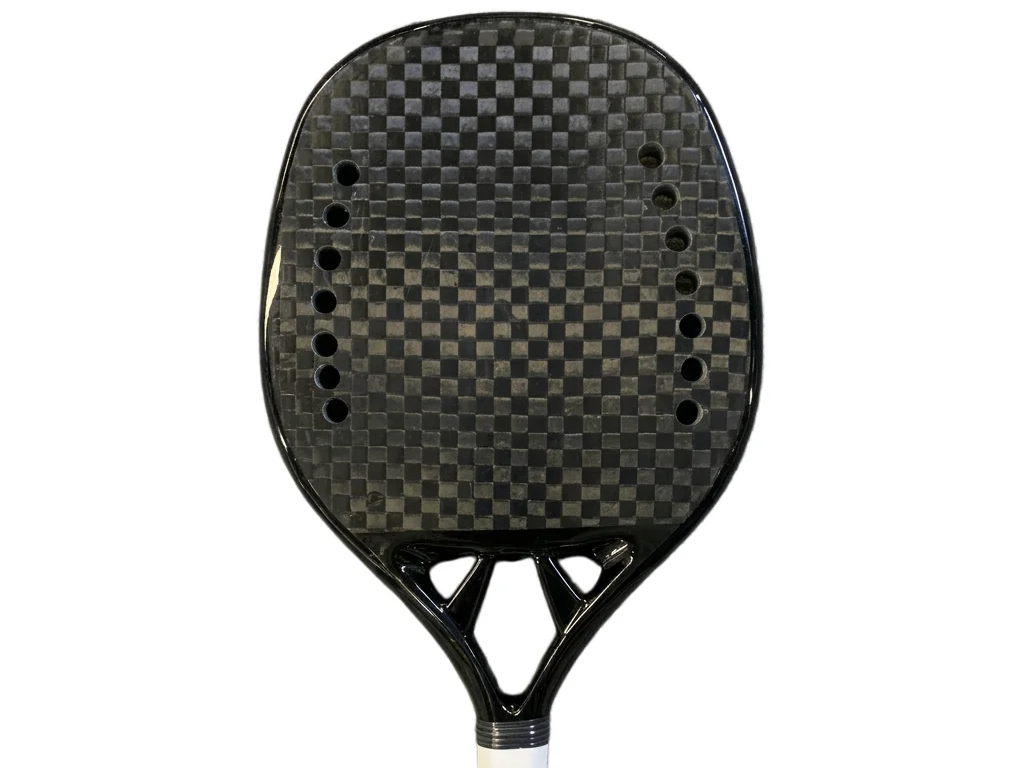
Your playing level, preferred feel, and physical capabilities all matter. So do the racquet’s face materials, internal foam, weight distribution, and thickness. A specification that suits an aggressive tournament player may feel unnecessarily demanding during a beginner’s first lessons.
Unlike a traditional tennis racquet, a beach tennis paddle has no strings. Its composite hitting surfaces and internal core provide the response that a string bed would otherwise contribute. This makes the relationship between materials and construction particularly important.
Start With Your Playing Level and Style
Beginners: Prioritise Comfortable, Repeatable Contact
During the early stages, look for a racquet that you can prepare comfortably and control with a compact movement.
A flexible face construction, softer core, and low-to-medium balance are sensible features to explore. They provide a useful starting point for learning blocks, controlled volleys, and defensive returns.
Do not assume that the lightest available paddle will automatically be the easiest. It should also feel stable enough when the ball arrives quickly. A racquet that moves easily but feels unsettled at contact may be just as difficult to learn with as one that is too demanding to swing.
Intermediate Players: Identify What You Want to Improve
Once your contact becomes more consistent, choose around a specific requirement.
Perhaps you need quicker handling during exchanges at the net. You may prefer a more defined response on attacking shots, or want easier depth when defending. These are different needs and may lead to different specifications.
Compare a manageable medium-balance racquet with your current paddle before making a large change in weight or firmness.
Advanced Players: Match the Construction to Your Attacking Game
Experienced players may prefer a firmer carbon construction and a more substantial response when accelerating through the ball. Others retain a lighter or softer setup because quick preparation and touch are central to their game.
Advanced play does not require the heaviest or stiffest racquet. The useful specification is the one that supports your timing across a complete match.
Understand the Face Materials
Fiberglass: A Flexible, Approachable Response
Fiberglass is commonly used where a softer, more flexible feel is desired. It is worth considering for beginners and intermediate players who value comfortable contact and accessible ball output.
Its role should be assessed within the complete construction. A fiberglass face paired with one core can feel different from the same broad material category paired with another.
Carbon Fiber: More Than a Material Label
Carbon fiber gives manufacturers considerable scope to adjust structural stiffness and weight. It is often used in performance-oriented racquets, but “carbon” alone does not establish how firm or powerful a finished paddle will feel.
The fiber grade, fabric construction, layer arrangement, resin, and core all contribute to the result.
Also distinguish between a carbon frame and a carbon face. A product description may refer to one component rather than the entire racquet.
What Do 3K and 12K Actually Mean?
The K number describes the approximate number of filaments in a carbon-fiber tow:
- 3K: approximately 3,000 filaments.
- 12K: approximately 12,000 filaments.
It is not a universal stiffness scale. Carbon fibers with different mechanical properties can be supplied in the same tow size, and the same fiber grade can be available in several tow sizes. A higher K number therefore does not, by itself, prove that a racquet is stiffer or more powerful.
When comparing two carbon racquets, ask about their intended playing response and complete construction rather than choosing by K number alone.
Choose the Core Feel Alongside the Face
The internal foam influences how the racquet compresses and responds during impact. EVA—ethylene-vinyl acetate—is commonly offered in different firmness levels.
Soft EVA
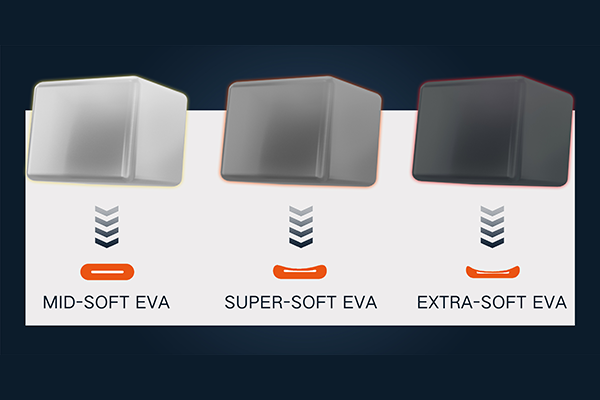
A softer core is worth exploring if you prefer a cushioned contact sensation and an accessible response during slower shots.
For a beginner, the practical test is whether controlled returns feel comfortable without requiring a forceful swing. For a more experienced player, the question may be whether that softness still provides the feedback needed during faster exchanges.
Medium or Harder EVA
A firmer core can provide a more direct sensation, which some aggressive players prefer when striking decisively.
However, firmness alone does not guarantee greater ball speed. A racquet must work with the player’s swing and face construction. Avoid choosing a harder core solely because it is described as professional.
Padelico’s beach tennis racquet manufacturing options include extra-soft, soft, and hard EVA selections. These options allow core feel to be discussed as part of the overall product specification.
Compare Weight and Balance Together
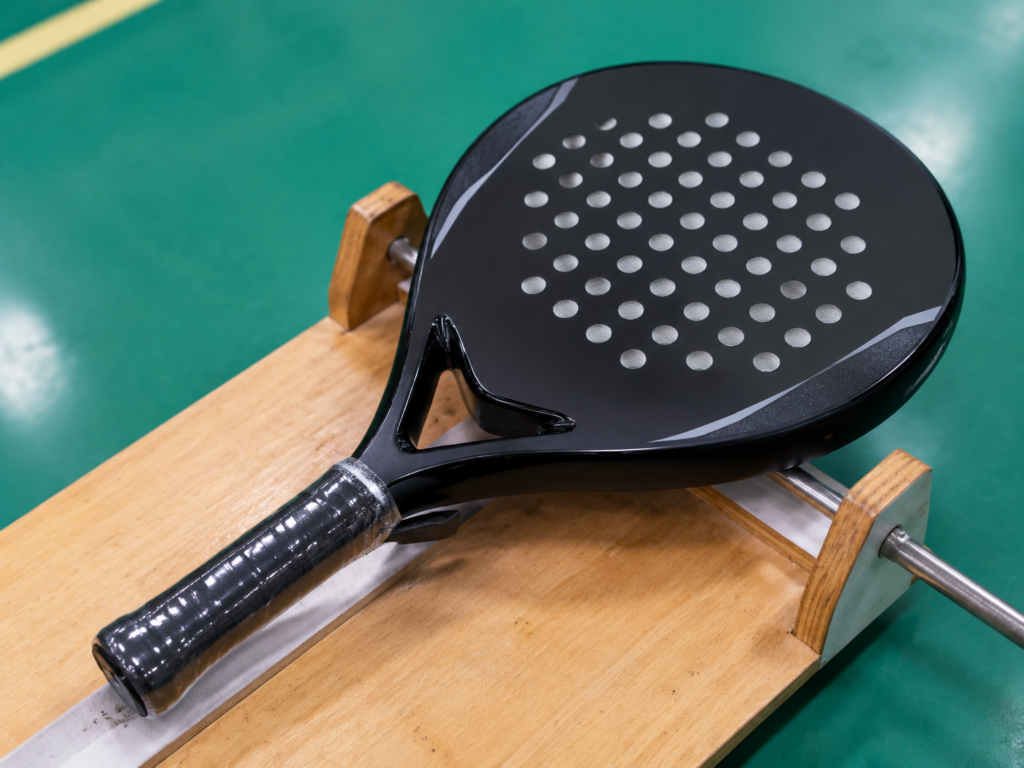
Many adult beach tennis paddles fall around 300–350 grams. Treat that as a comparison range, rather than a recommendation that every player should choose one end of it.
A lighter paddle may be easier to reposition. A heavier one may provide a more substantial impact sensation, provided you can prepare and accelerate it comfortably.
Balance changes how that weight feels:
| Balance | General handling tendency | What to assess |
|---|---|---|
| Low balance | More weight toward the handle; easier repositioning | Whether contact still feels sufficiently stable |
| Medium balance | A compromise between maneuverability and head presence | Comfort across defensive and attacking shots |
| High balance | More weight toward the head; a more demanding swing | Whether you can prepare on time during fast exchanges |
The important comparison is the finished playing setup. An overgrip adds weight near the handle, while additional surface treatment adds weight to the head. Accessories can therefore change both total weight and balance.
Test repeated volleys and overhead recovery movements. If you begin preparing late or tightening your grip excessively, consider whether the setup is too demanding.
Treat Thickness and Length as Part of the Design
Beach tennis racquet profiles commonly sit around 19–23 mm, while many adult models are approximately 50 cm long.
Thickness can affect structural stiffness and the space available for the core. Manufacturers may use a thinner profile to pursue a more controlled response or a thicker construction to pursue easier ball output. Those are design approaches, rather than guarantees.
Two racquets with the same thickness can behave differently because their faces, cores, and weight distributions differ. Similarly, comparing a 20 mm and a 22 mm model tells you little unless the remaining construction is understood.
Length also deserves attention. A longer paddle provides reach, but it changes the relationship between your hand and the hitting area. Assess whether it feels natural during quick reactions, rather than selecting the maximum length automatically.
For competition, distinguish common product dimensions from legal limits. The 2026 rules specify a maximum overall length of 50 cm, maximum head width of 26 cm, and constant thickness no greater than 38 mm. The familiar 19–23 mm range is a product convention, not the official thickness limit.
Decide Whether a Textured Surface Suits Your Game
Beach tennis racquets may have smooth, gritty, or moulded textured finishes.
Texture is intended to increase interaction between the ball and the surface during brushing contact. It can be useful for players developing slices and other spin-based shots, but it does not replace the necessary swing path and timing.
A more aggressive finish is not automatically better. Compare the response during ordinary blocks and touch shots as well as deliberate spin strokes.
If you plan to add grit after purchase, ask how much weight the treatment adds and check the paddle again afterward. The original specification no longer describes the complete setup.
Check the Grip Before Making Your Decision
The handle should feel secure without constant squeezing.
Check the grip circumference, available handle length, and how naturally the face sits when you prepare for a volley. If you intend to use an overgrip, include it during your assessment.
Grip changes can improve fit, but they also change the setup. A comfortable handle should support relaxed preparation and a reliable connection with the racquet throughout the session.
How to Test a Beach Tennis Racquet Properly
A useful trial should include the situations you encounter most often.
Begin with controlled volleys and gentle rallies. Check whether you can direct the ball with a relaxed movement. Then block firmer incoming shots and assess whether contact remains predictable.
Next, try defensive lifts, serves, and overheads. Pay attention to preparation and recovery as well as the resulting ball speed.
Finally, repeat some quick exchanges after you have been playing for a while. A racquet that feels impressive for five minutes may be less suitable once fatigue affects your timing.
When comparing two options, keep the drills similar. Note the differences in handling, impact feel, depth control, and comfort. Those observations are more useful than choosing from one successful smash.
Choosing a Beach Tennis Racquet With Padelico
Padelico is a China-based manufacturer of padel and beach tennis racquets. For beach tennis projects, our services include OEM/ODM development, material selection, custom moulds, branding, colours, and packaging.
For brands and distributors, a useful product brief begins with the intended player. Define the required handling, preferred contact feel, weight range, balance, and surface finish before concentrating on graphics.
Our beach tennis racquet page provides an overview of the available manufacturing options. To discuss a new collection, contact Padelico with your target market, reference samples, and performance requirements.
Frequently Asked Questions
What should a beginner look for in a beach tennis racquet?
Start with comfortable handling, forgiving contact, and a weight you can manage throughout a session. A flexible face, softer core, and low-to-medium balance are useful characteristics to compare.
Is a 12K carbon racquet better than a 3K racquet?
Neither is automatically better. K describes filament count in the tow, while finished performance depends on the fiber grade, laminate construction, resin, core, and overall design.
Should I choose a lighter or heavier paddle?
Choose according to your preparation and impact preferences. A lighter option may help quick reactions, while a heavier option may feel more substantial at contact. Balance must be assessed alongside total weight.
Does a thicker beach tennis racquet always produce more power?
No. Thickness is one design variable. Face stiffness, core response, weight distribution, and the player’s swing also affect the result.
Do I need a gritty surface as a beginner?
It is not essential. Prioritise comfortable handling and repeatable contact first. Consider texture as you develop the brushing technique needed to make use of it.
Can Padelico manufacture a custom beach tennis racquet for my brand?
Yes. Padelico provides OEM/ODM beach tennis racquet services, including material selection, custom moulds, branding, colours, and packaging. Specific construction and performance requirements can be discussed during project development.