The best padel racket for a beginner is one that is easy to prepare, comfortable at contact, and predictable when the ball arrives slightly away from the centre. A round shape, low-to-medium balance, a flexible hitting face, and a soft or medium-soft core provide a practical starting specification.
Weight needs an individual trial. Many adults can begin by comparing rackets around 340–360 g, while some prefer the steadier impact of a 360–370 g option. The right choice should remain manageable during repeated volleys, defensive returns, and overhead recovery.
Padelico manufactures padel rackets in China for brands, clubs, and distributors. These same selection principles guide the development of beginner collections, where player suitability and consistency across an order both matter.
What Should a Beginner Racket Help You Do?
During early lessons, preparation and contact vary from one shot to the next. You might strike a forehand cleanly, reach for the next ball, and then have very little room for a backhand off the glass. A suitable racket should help you manage those ordinary variations.
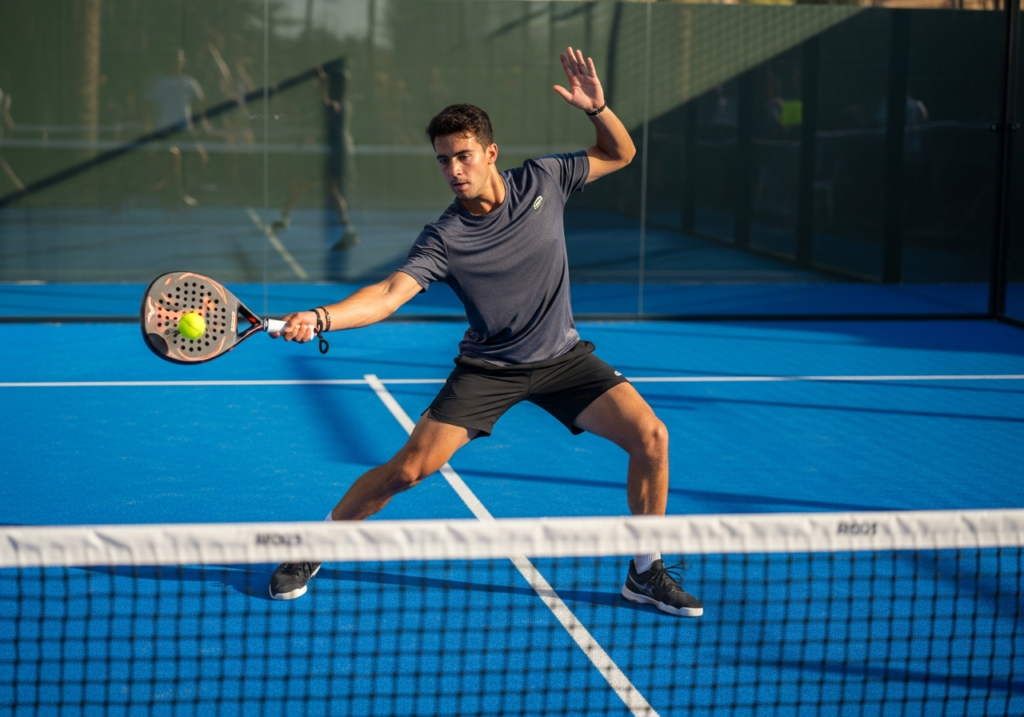
Start with how easily it gets into position. Against a fast feed at the net, you need to present the face with a small movement. From the back of the court, you need enough response to return a slower ball with a compact swing. A useful first racket feels understandable in both situations.
The response slightly outside the centre also deserves attention. If a modest miss causes a large loss of depth or sharp twisting in the hand, you may find the racket difficult to use while your timing develops. Compare the same shot with another sample and notice which one gives you more playable returns.
Comfort includes handle fit and the effort required to move the racket throughout a session. Judge it after repeated drills as well as during the warm-up. If you can prepare on time, keep a relaxed grip, and repeat a controlled return, you have useful evidence that the racket suits your current level.
A Practical Starting Specification
| Feature | What to compare first | What the court trial should show |
|---|---|---|
| Shape | Round, with an accessible teardrop as an alternative | A usable contact area during ordinary rally shots |
| Weight | Around 340–360 g where easy handling is the priority | Comfortable preparation with enough stability at contact |
| Balance | Low to medium | Easy movement between forehand and backhand |
| Hitting face | Fiberglass or a suitably flexible hybrid | Useful depth with a compact stroke |
| Core | Soft or medium-soft EVA | Predictable response on both slow returns and firm blocks |
| Grip | A secure, comfortable circumference | Relaxed handling and natural changes in face angle |
| Finish | A surface that feels consistent during regular strokes | Reliable contact on flat volleys and controlled slices |
Use the table to build a shortlist. The finished construction determines how these features work together. A round racket with a firm face and considerable weight toward the tip can still feel demanding. A manageable teardrop with a comfortable core may suit a player who already makes consistent contact.
For club equipment, the starting specification should reflect the people taking lessons. A mixed group of recreational adults may need a different balance of handling and stability from a group with extensive racket-sport experience. Have a coach and representative learners test the proposed configuration before ordering the fleet.
Which Padel Racket Shape Is Best for Beginners?
Round rackets
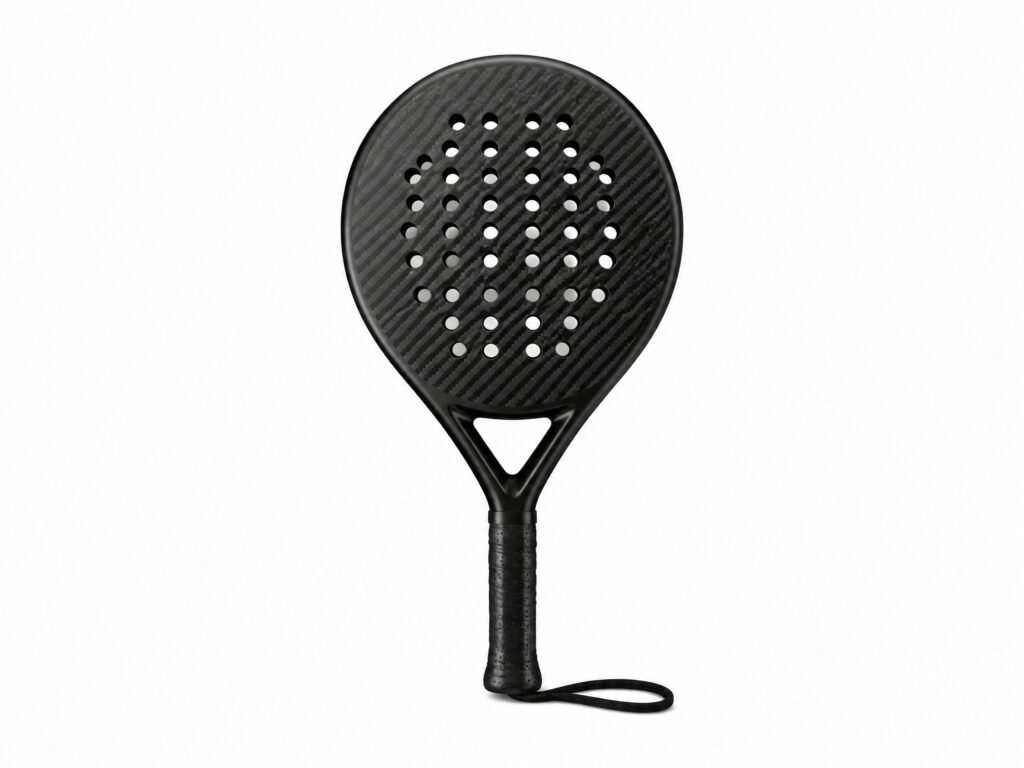
Round rackets commonly provide a more central preferred hitting area. Many are built with a lower balance that makes them easy to position. This combination is worth trying when you are learning to block, return low balls, and direct lobs.
The practical benefit is room for small contact errors. You can work on positioning and swing length while getting understandable feedback from the face. During a trial, deliberately include slightly awkward feeds. A racket that remains manageable when the ball comes close to your body may be more useful than one that feels excellent only on clean warm-up strokes.
Round shapes can also suit experienced control-oriented players. A first racket with this outline can remain useful as you improve, provided its feel and handling continue to support the shots you play.
Teardrop and hybrid rackets
A teardrop is a reasonable comparison for someone who already finds the ball consistently. Players coming from tennis or squash may appreciate its response on overheads, while still wanting comfortable handling for defensive strokes.
Try it beside a round model of similar weight and firmness. On low returns, compare the effort needed to produce depth. At the net, compare preparation and recovery. This gives you a clearer sense of the complete racket than judging either shape on a few hard swings.
The word “hybrid” can refer to different outlines or material combinations. Check how the manufacturer uses the term and ask for the actual construction when comparing specifications.
Diamond rackets
Diamond designs often favour a higher contact area and a more attack-oriented weight distribution. They can appeal to players who prepare early and strike overheads confidently. For a first racket, include defensive blocks and lobs in the comparison so you can judge the effort across a full rally.
If a diamond feels comfortable only when you have time to set up, an easier-to-position configuration may give you better results through your early lessons. Revisit the shape once you have a clearer preference about where you like to make contact and how much head presence you can use.
How Heavy Should a Beginner Padel Racket Be?
Weight recommendations differ because players and racket constructions differ. A lighter configuration may help you prepare sooner. A more substantial one may feel steadier when receiving pace. Begin with a manageable range and choose through a direct comparison.
For many adults, 340–360 g offers a useful group of candidates where maneuverability is a priority. If a sample in that range feels unsettled at impact, compare a 360–370 g racket with suitable balance. Notice whether the extra mass improves your blocks without making preparation difficult.
Compare weight and balance together
Static weight is the mass measured on a scale. Balance describes where that mass is distributed along the racket. Two 355 g rackets can feel noticeably different if one carries more of its weight toward the head.
A low balance usually makes repositioning easier. Medium balance can feel more substantial through contact while remaining manageable for many players. Head-heavy configurations require closer evaluation during short, quick movements.
Swingweight describes resistance to rotation around an axis near the handle. It helps explain why a racket can feel demanding to swing even when its total weight appears modest. You can assess that difference through repeated forehand-to-backhand blocks without needing a laboratory measurement.
Test your playing configuration
An overgrip changes handle size and adds weight near the hand. A protector adds mass to the head. If you expect to use either, include it in the trial or account for the difference before comparing two rackets.
For custom production, record which components are fitted when finished weight and balance are measured. A sample and a production unit should be checked in the same configuration. That makes the numbers meaningful when a club or retailer evaluates consistency.
Assess the later part of the session
A few relaxed swings show only the first impression. After volleys and overheads, notice whether you maintain preparation and recovery. If you begin squeezing the handle or arriving late, compare an option that is easier to move.
A coach can help distinguish equipment preference from an adjustment in technique. Try the same feed with each racket and keep the swing task consistent. The most useful choice is the one you can handle naturally at your normal playing pace.
Fiberglass or Carbon Fiber for Your First Racket?
The hitting face contributes to the sensation at contact. Fiberglass is commonly chosen for more flexible constructions and is worth considering for a beginner racket. It can work well with a comfortable core when the brief calls for accessible response on compact strokes.
Carbon fiber offers manufacturers different ways to tune stiffness and structural performance. A carbon or hybrid racket can also suit a beginner when its overall construction remains approachable. Try the finished racket and check how much effort it takes to make an ordinary return.
Identify the face and frame separately
A racket can use carbon in the frame and fiberglass on the hitting face. Another can have a carbon face with a softer core. Both the location of the material and the surrounding construction affect the result.
When comparing product descriptions, ask which material is used in each component. For a club or private-label project, have the agreed face and frame construction recorded in the sample specification. A broad material label leaves several manufacturing choices open.
Put carbon weave descriptions in context
Labels such as 3K and 12K describe the approximate number of filaments in a carbon-fiber bundle. The fiber grade, layer arrangement, resin, and core also affect the finished racket. Choose a first racket through its handling and response, and retain the exact construction when approving an OEM sample.
For a beginner collection, describe the required playing feel before selecting the visible weave. If the intended player needs a comfortable short stroke and easy preparation, use those requirements to guide the construction discussion. The physical sample can then show whether the proposed combination meets the brief.
How Soft EVA and Firmer Cores Change the Feel
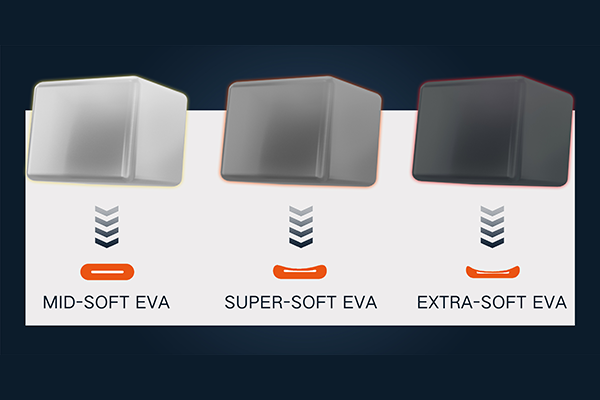
EVA is a foam used within many padel rackets. Available formulations can deliver different firmness levels. A softer setup can produce a cushioned contact sensation and an accessible response at slower swing speeds.
That can be useful during blocks, low returns, and lobs. The player can judge the relationship between a modest movement and the resulting depth. A medium-soft build is worth comparing if you prefer a little more defined feedback as rallies become quicker.
Test the same core at different speeds
Begin with a gentle feed and a compact return. Then receive a firmer ball with a short block. A racket may feel easy on the first task and lively on the second. Check whether you can reduce the pace naturally when needed.
Core response is part of the complete construction. A stiff face over a soft core can feel different from a flexible face over similar foam. For a supplier comparison, keep the other major variables close when changing the EVA.
A useful sample note would be, “Version A reaches the target depth comfortably on a short swing, while version B gives me clearer feedback on fast volleys.” That describes the trade-off the buyer or player needs to decide.
Use a physical reference for firmness
Soft, medium, and hard are helpful descriptions within a product range. If you commission a custom racket, identify the selected core on the written specification and retain the approved sample.
Where a numerical hardness value is supplied, ask which scale and measurement method apply. This matters when comparing supplier proposals. The finished sample remains the reference for the impact feel the group actually tested.
Check the Handle and Grip Fit
A comfortable grip lets you hold the racket securely with a relaxed hand. Try a ready position, a forehand volley, and a backhand block. Notice whether the handle feels natural when you turn the face and whether you can maintain control without squeezing harder than usual.
Handle length and grip circumference are separate dimensions. The first affects available hand space. The second affects how the hand closes around the grip. An overgrip may help achieve the preferred fit, so test the setup you intend to use.
Check the wrap near the end cap and the transition toward the throat. A ridge that seems minor when picking up the racket may become noticeable during repeated changes in hand position. On a custom sample, evaluate those assembled details before signing off.
For clubs, think about maintenance. Choose a repeatable replacement-grip arrangement and have coaches try it on the demo racket. Consistent wrapping helps returning players experience familiar handling and makes comparisons between units more reliable.
Does Surface Texture Matter for a Beginner?
A smooth or moderately textured finish can both work in a beginner construction. Start by comparing ordinary flat volleys and blocks. As you learn slices and other brushing strokes, evaluate whether the surface gives you the response you prefer.
Texture works with swing path and contact conditions. During a trial, a rough face can also be paired with a different core or balance. Keep those differences in mind when deciding which feature caused your preference.
For an OEM collection, approve the finish on a physical sample. Check how it looks and feels around the holes, graphics, and edge transitions. Record the agreed surface with the artwork and construction so the production order has a clear reference.
Choose for the Beginner You Are Today
Completely new to racket sports
Start with an easy-to-position round racket and a comfortable face-and-core combination. Ask for slow, predictable feeds and work toward a repeatable depth target. Include balls that come a little close to the body so you can check preparation.
Choose the sample that lets you understand small adjustments in swing length and face angle. A racket that helps you repeat ordinary returns gives you a useful foundation for lessons and social sessions.
Moving from another racket sport
Previous experience may help you time clean contact and create pace. Spend the trial on compact padel strokes, especially low returns after the glass and blocks at the net. These tasks reveal whether the new racket remains manageable when swing space is limited.
Compare a round and an accessible teardrop with similar finished weight and firmness. Your preferred configuration should work during those defensive situations as well as on the fuller strokes that already feel familiar.
Taking regular coaching
Use the shots you are currently learning to structure the comparison. If lessons focus on volleys and lobs, evaluate those first. Ask your coach whether one racket changes the timing of your preparation or makes depth easier to repeat.
A racket can stay useful as your game develops. Consider a different configuration when you can identify a particular response you want to improve and demonstrate that improvement during a fair trial.
Choosing for several new players
A coaching group may include people with different strength, experience, and grip preferences. Test the proposed model with representative learners and a coach. A lighter alternative may be useful alongside the main configuration where demand supports it.
Record which players prefer each option and why. That helps a club assemble a practical fleet and gives a retailer a clearer way to explain its beginner range.
How to Compare Beginner Rackets on Court
Two shortlisted rackets are easier to judge when the conditions remain similar. Use the same balls and comparable grips, and alternate rackets during each drill. Repeat a few shots later in the session so both options are assessed after you have warmed up.
Begin with controlled forehands and backhands
Use a comfortable feed and aim for a clear area of the opposite court. Start with a compact swing. Notice the effort required to reach the target and whether you can keep the direction consistent.
If one racket repeatedly leaves the ball short, increase the movement slightly and compare again. You may find it works well with more effort, or prefer a sample that reaches the target more naturally at your current pace.
Compare short blocks at the net
Have your partner feed forehand and backhand volleys at a manageable rhythm. Return to your ready position after each shot. Watch how quickly you can present the face and how much the handle turns when contact moves slightly away from the centre.
A lighter-feeling racket may help preparation. A more substantial sample may feel steadier against pace. Record both observations and choose according to the difficulty you actually encounter.
Add lobs and returns off the glass
Play several lobs from the same position and judge whether a similar movement produces a similar flight. When a lob goes long, adjust the next swing and notice how easily you can bring the length back.
Then compare low returns after a predictable rebound from the glass. This gives you less room than a warm-up feed. Check whether you can generate useful depth without making the stroke feel rushed.
Finish with controlled overheads and a short rally
An overhead shows how the racket behaves when you accelerate, and the next ball shows how readily you recover. Include both. A pleasant sensation through one hard strike should be considered alongside preparation and recovery through the rally.
Afterward, write a sentence for each sample. “A comes around earlier on the backhand and makes low returns easier. B feels steadier on blocks but needs more preparation time” gives you a clear comparison. A coach or manufacturing team can also work with that feedback.
What to Check Before Buying Online
A useful product description identifies shape, finished weight or range, balance, face material, and core feel. Look at the handle, bridge, perimeter, and fitted components in the photographs. Ask how the listed weight was measured if accessories are shown.
If you have borrowed a racket that felt comfortable, use it as a reference. Record its mass with the grip and protector fitted and note the handling you liked. Comparing new options with that familiar setup is easier than starting from a general label such as “control.”
Price should be considered against how often you play and what you need from the purchase. Confirm what comes with the racket and whether the construction fits the shortlist. A club demo or coaching session can be valuable when you have difficulty choosing between two similar specifications.
Inspect the racket when it arrives. Check the grip, end cap, wrist strap, perimeter, and drilled edges. Raise visible damage or loose assembly with the supplier before putting the racket into use.
Developing Beginner Padel Rackets With Padelico
Padelico supports brands, clubs, and distributors with custom racket development. For an entry-level model, define the intended player and the response first. A request for easy preparation, controlled depth on short swings, and comfortable contact gives the team practical goals for sampling.
The selected shape, face construction, EVA core, weight, and balance should support those goals together. A China-based padel racket manufacturer can review which available platforms accommodate the brief and which modifications require further development.
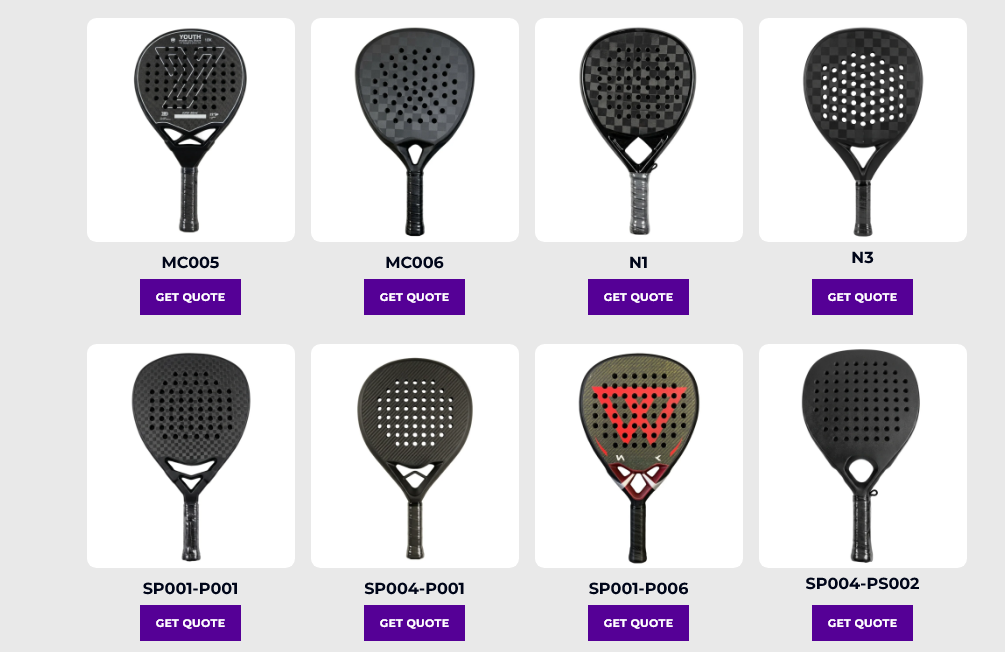
Padelico’s catalogue includes MC005, MC006, N1, and N3, among other platforms. Ask for the proposed construction and measurements for the model being considered. The approved configuration establishes what the buyer is ordering.
Turn player feedback into an OEM specification
Start with a reference sample where available. Identify what you like, what needs to change, and the target cost and quantity. If the sample feels slow to reposition but meets the weight target, discuss balance before changing several other variables.
During development, record the construction and each revision. Compare the updated sample using the same drills. If the change improves preparation while retaining the response the players liked, it provides a basis for approval.
Branding can then be developed around the confirmed build. Colors, graphics, grip details, and packaging should be evaluated together on the finished sample. Custom padel racket specifications provide the starting requirements for an order.
Confirm consistency before bulk approval
For clubs and retailers, several rackets of the same model should fall within the agreed specification. Define finished weight and balance limits, fitted components, artwork version, finish, and packing.
Measure the sample and production units in the same setup. Retain the approved racket and written build details so a later shipment can be compared fairly. Padelico’s custom padel racket development process covers sampling, refinement, production, and quality inspection.
The custom program lists a 100-racket minimum. Confirm how the quantity applies to the proposed models, constructions, and artwork. A focused first collection can make it easier to test demand, train staff, and plan repeat orders around the specification customers prefer.
A Beginner Racket Checklist for Players and Buyers
| Question | Evidence from a trial or sample |
|---|---|
| Can the racket be prepared comfortably? | Timely forehand and backhand blocks through repeated feeds |
| Does it give manageable depth? | Controlled returns with a compact swing |
| Is the response predictable against pace? | Short blocks that can be kept within the intended target |
| Does off-centre contact remain usable? | Manageable twisting and enough response for a playable return |
| Does the grip fit? | Secure handling with a relaxed hold during changes in face angle |
| Can the chosen setup be reproduced? | An identified sample and agreed finished specifications |
| Does it suit the intended customer? | Feedback from representative players using relevant drills |
Use the observations to settle on a configuration, then keep the reference details. A player can use them when trying a future racket. A club can use them when replacing stock. A brand can use them to define a second model that serves a distinct preference.
What Should Your First Racket Budget Cover?
Set the budget around the complete setup you will use. Confirm whether the quoted product includes a cover, factory grip, wrist strap, or fitted protector. If you plan to change the grip immediately, allow for that and assess the resulting handle fit during the trial.
When two rackets both feel comfortable, compare the services and specifications included with each purchase. A clear description of the construction and weight range makes future comparisons easier. A club demo can also help you decide whether the difference in feel matters enough to justify a higher price.
For a wholesale beginner collection, ask for quantity alternatives using the same construction. This reveals how volume affects the quotation without changing the product under comparison. Keep samples, artwork, packaging, and delivery requirements identified in the proposal. The buyer can then evaluate the cost of supplying a complete racket to the intended customer and decide where any optional changes belong in the budget.
Frequently Asked Questions
What type of padel racket should a complete beginner choose?
A round racket with low-to-medium balance, a flexible hitting face, and a soft or medium-soft core is a practical first comparison. Check that it is easy to position and produces predictable depth during ordinary returns.
Is 340–360 g the correct weight for every beginner?
It is a useful trial range when maneuverability is a priority. Some adults prefer a 360–370 g racket for a steadier impact sensation. Compare balance and preparation as well as the number on the scale.
Can a beginner use a teardrop racket?
Yes. An accessible teardrop can suit someone who already makes consistent contact. Compare it with a round model during lobs, low returns, and quick blocks to assess whether it remains manageable across a rally.
Should beginners choose fiberglass or carbon fiber?
Fiberglass is worth trying for a flexible feel. Carbon and hybrid constructions can also be approachable when the face, frame, and core are matched to that purpose. Judge the finished response on the same shots.
Does a soft EVA core provide better control?
A soft configuration may make low-effort returns feel easier, while another player may prefer more defined feedback. Compare slow returns and faster blocks so you can decide which response you control most naturally.
Do I need a rough surface on my first racket?
Choose a surface that feels predictable during your regular strokes. Texture becomes easier to evaluate as you develop brushing contact for slices and spin. Compare it alongside the complete construction.
Can I use the same beginner racket as I improve?
Yes, while its handling and response continue to suit the shots you play. Consider a change when you can identify a specific limitation and another racket improves it during a comparable trial.
Can Padelico make beginner rackets for a club or private-label range?
Padelico supports customization of materials, graphics, grips, packaging, weight, and balance for selected models. Prepare a player brief and assess a finished sample. The published minimum is 100 rackets, with the applicable order split confirmed for the project.