Handmade padel rackets appeal to brands that want close control over construction, impact feel, and presentation. Skilled work during material placement, assembly, and finishing gives the production team opportunities to check details while the racket takes shape. Those opportunities are especially valuable when developing a new model or refining a sample for a particular group of players.
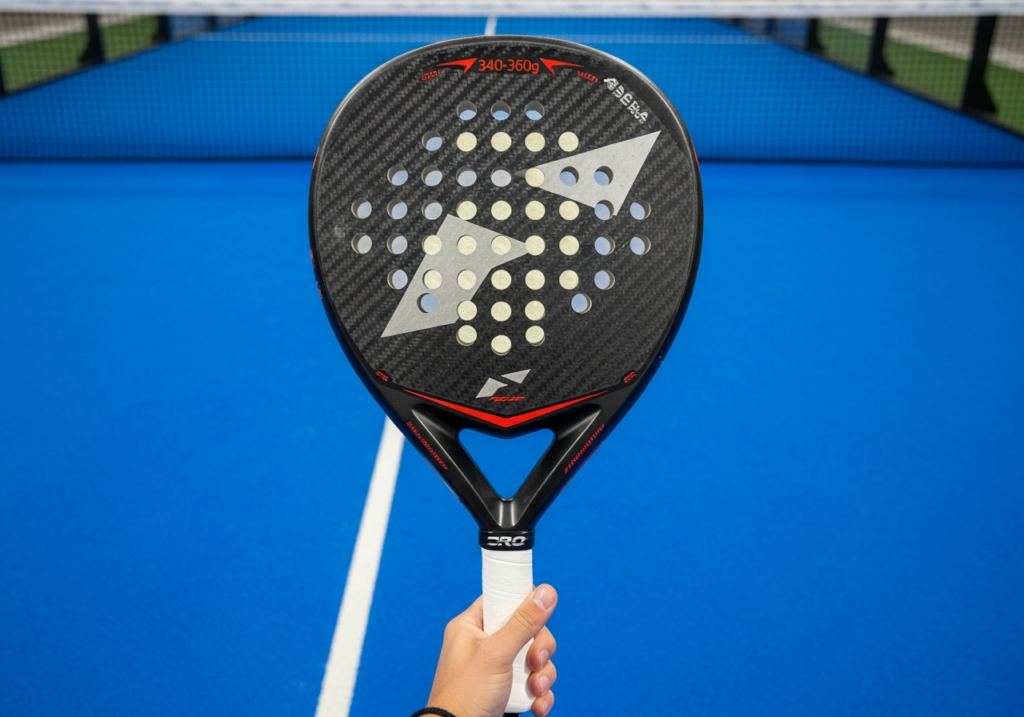
The benefits depend on how the work is specified and inspected. A technician needs clear instructions for the material, part geometry, and finish. The factory also needs controlled molding conditions, suitable tools, and measurable acceptance criteria. Together, these turn individual skill into a product that can be reproduced across an order.
Padelico manufactures padel rackets in China for brands, clubs, wholesalers, and distributors. From an OEM buyer’s perspective, the value of craftsmanship lies in what it helps the project achieve, including a better-developed sample, carefully finished components, and a production specification that reflects the approved product.
What Does Handmade Mean in Padel Racket Manufacturing?
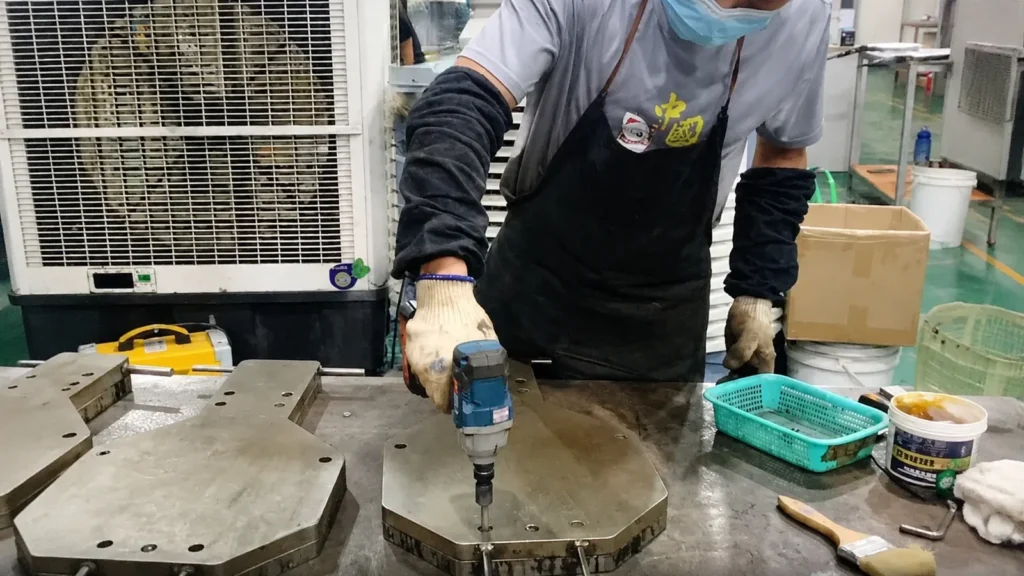
A composite padel racket goes through several operations before it is ready to play. Reinforcement materials are prepared, the face and frame are formed, the core is incorporated into the construction, and the molded racket is trimmed and finished. Branding, drilling, component assembly, and inspection complete the product. The exact sequence depends on the manufacturing method.
In this context, handmade often describes the involvement of skilled operators in selected stages. A worker may position material within a mold, fit parts, prepare an edge, apply a decal, or wrap a handle. A press, mold, cutting system, or drilling fixture can still be central to the same process. When evaluating a supplier, identify which operations involve manual work and how each operation is controlled.
This also distinguishes two meanings of hand lay-up. In wet lay-up, resin is applied to dry reinforcement during laminating. In prepreg lay-up, reinforcement arrives with resin already incorporated, and the layers can still be placed by hand. Both involve skilled handling, with different requirements for material preparation and curing. A supplier’s process description should make the method clear where it affects your specification.
For a padel brand, the useful question is which stages benefit from close handling and review. If the project needs an unusual face construction or a difficult graphic position around the bridge, ask how the factory will prepare, inspect, and approve that detail. The answer gives craftsmanship a practical meaning.
The Main Benefits at a Glance
| Area of the project | Potential benefit of skilled manual work | Evidence to request |
|---|---|---|
| Composite preparation and placement | Attention to material alignment, position, and fit around the selected geometry | Construction instructions and checks before molding |
| Sample development | A practical way to review a defined construction change | Identified sample versions with written feedback |
| Finishing | Close inspection and adjustment of edges, surfaces, and graphic placement | A finished appearance reference |
| Component assembly | Consistent fitting of grips, caps, straps, and other agreed components | Assembly requirements and final inspection |
| Custom production | Flexibility to prepare compatible variants within an agreed process | Quantity requirements, variant specifications, and scheduling |
| Batch consistency | Operator checks that support the approved specification | Weight, balance, appearance, and relevant test records |
These benefits are strongest when the order has clear requirements. “A premium handmade racket” leaves many production decisions open. A brief that defines target handling, materials, finish, and acceptable variation gives the team a reference for carrying out the work and deciding when a unit is ready to proceed.
1. Close Attention to Material Placement
Composite construction gives manufacturers several ways to influence a racket’s response. The reinforcement, layer arrangement, and material orientation contribute to the behavior of the finished structure. During manual placement, an experienced operator can handle each piece, align it with the intended position, and check how it fits the tool geometry.
The value becomes more apparent around contours. Material needs to sit where the construction requires it. A fold, an unsupported bridge across a feature, or a displaced piece can change the finished result. Skilled handling gives the operator an opportunity to identify a fit problem during placement and address it before proceeding. Processing guidance for composite components emphasizes careful consolidation around mold details to avoid gaps and related defects.
For a racket project, ask how the intended arrangement is recorded. A drawing, cutting pattern, layer schedule, or equivalent work instruction helps operators prepare the same construction consistently. The relevant production checks should confirm material identity and placement against that instruction.
This is also important when evaluating a sample. If your team prefers its feel, identify the construction that produced it and retain that information with the approved reference. When the production order moves to a different shift or is repeated months later, the specification needs to remain available.
Material placement offers a good example of the relationship between skill and process. The operator contributes handling and judgement. The instruction defines the intended build, and the inspection verifies it. For a brand buying finished rackets, those three elements explain how the sample can become a repeatable product.
2. More Practical Scope for Refining a Prototype
A first prototype often answers only part of the product brief. Its outline may work well while the face feels firmer than expected. The balance may suit the intended player, but the grip needs a different circumference. Small sample changes allow the buyer and development team to resolve those questions before committing to inventory.
Skilled manual operations can support this work when the selected construction permits a revision. The team can prepare a defined variant, identify its changed components, and send it through the appropriate molding and finishing process. That makes it possible to compare a specific adjustment against the previous sample.
Consider a club racket that feels comfortable on controlled forehands but difficult to position for quick backhand blocks. Measure the first sample and compare its balance with the intended target. If the manufacturer proposes a construction adjustment, ask for a second sample with the change recorded. A repeat court trial can then establish whether preparation improved and whether the remaining response still suits the coaching program.
The same method works for a retail brand developing two levels of firmness. Start with the same platform and keep the other major variables close. Give testers sample A and sample B without changing the graphics at the same time. Have them play blocks, low returns, and controlled overheads, then record where they notice the difference.
The advantage for the buyer is a clearer development conversation. Feedback connects a playing observation to a proposed production change. Manual skill helps prepare the revision, while sample identification and agreed measurements preserve what was learned from it.
3. Flexibility in Developing the Intended Playing Feel
A brand may want a racket that helps recreational players get depth with a compact swing. Another project may call for firmer feedback during fast exchanges. Craftsmanship contributes to delivering the selected construction, which must bring the face, frame, core, and weight distribution together.
During development, experienced production staff can identify whether a proposed detail is practical to manufacture. A particular material may be difficult to fit into the chosen geometry, or an artwork requirement may conflict with the hole pattern. Discussing these issues early gives the buyer time to adjust the design before approving the finished sample.
Describe the intended feel through shots. For example, ask that a coaching model remain manageable during short volleys and predictable on a defensive lob. A performance sample can be assessed on faster volleys and overhead recovery. These descriptions are easier to evaluate than a broad request for equal maximum power and control.
Once the sample is playable, separate what the player feels from what the team can measure. “The head feels slow to reposition” is useful feedback. It should lead to a review of balance, finished weight, and the player’s preparation during the trial. “Contact feels too lively on a passive block” gives a reason to compare the face-and-core response.
For the brand owner, the benefit of working closely with skilled manufacturing staff is access to that practical interpretation. The factory can propose a compatible revision, explain which parameters it changes, and prepare another reference for testing. The approved result should be documented before the order proceeds.
4. Careful Finishing of Edges and Surfaces
Finishing has an immediate effect on how a racket looks and feels in the hand. After molding and trimming, the edge and surface need preparation for the specified appearance. Manual review can help identify local roughness or an area requiring further attention.
The operator must work within the part’s requirements. Material removal needs to be controlled, particularly around edges and transitions. For a buyer, a clean appearance and a smooth perimeter should be assessed alongside the written construction and inspection criteria. The finished sample is a reference for both presentation and handling.
Padelico’s customization page describes manual sanding and hand preparation before painting. These are examples of stages where an operator can review the individual racket while carrying out the work. The page also describes finished-product checks against agreed requirements. Padelico custom manufacturing and finishing
For a retail product, inspect the face under angled light and look around the drilled holes. Check whether the intended texture is applied consistently and whether the graphics sit cleanly within the design. If part of the carbon weave remains visible, review its appearance with the rest of the artwork.
For a club order, examine the areas players handle repeatedly. Check the perimeter, bridge, and grip transition. Have a coach pick up the sample and make a few ordinary preparation movements. A detail that looks acceptable in a photo may be noticeable against the hand.
Before production, define the appearance standard with a physical reference and clear notes. Record which marks are acceptable and which require correction. That turns the benefit of careful finishing into a standard the receiving team can use when checking the order.
5. Detailed Branding and Component Assembly
A custom racket gives a brand several places to establish its identity. The face carries the main graphics, while the frame, grip, end cap, and wrist strap contribute to the assembled appearance. Skilled placement and assembly can help these elements read as one product.
Artwork often needs adjustment to the actual shape. Logos must remain legible around holes and curved transitions. A layout that looks balanced on a flat screen may appear different on the physical racket. During sampling, close manual review gives the production team an opportunity to check the alignment and raise a detail that needs revision.
Use the correct artwork template and identify critical placement requirements. If a club crest must remain fully visible, mark the area. If a model name needs to align on the front and rear faces, show how it should appear. A physical proof then confirms the result on the selected finish.
Assembly deserves the same attention. A grip wrap can affect circumference and the sensation under the hand. The end cap, strap, and any fitted protector should match the approved configuration. Include these parts when measuring the finished sample, particularly if the customer’s handling trial was carried out with them installed.
For an order with several colorways, approve the combinations together. A grip color that works with one face may look different beside another. Preparing a complete sample of each intended appearance helps the buyer confirm that the collection remains coherent without changing the underlying playing specification.
This stage is especially relevant for clubs whose rackets are used in lessons and sold in the pro shop. A consistent assembled appearance makes it easier for members to recognize the model they tried. A clearly recorded component specification helps the factory reproduce it on the next order.
6. Earlier Opportunities to Notice Production Issues
Skilled operators handle the product at several points and can observe details as the work proceeds. During preparation they may spot an incorrect piece. During finishing they may identify a visible opening or surface issue. During assembly they may notice an inconsistent fit.
Those observations become more valuable when the factory has a defined way to respond. The operator needs to know which conditions can be corrected at the workstation and which require a quality or engineering decision. The affected unit should remain identifiable while that decision is made.
For a buyer, ask how issues found during manual work are recorded. A recurring rough edge deserves more attention than repeated local correction. The team may need to review the preceding operation or tooling. The same applies when several rackets miss an agreed balance range or require the same artwork adjustment.
Manual contact with the product gives the team opportunities to inspect it, but acceptance should be tied to objective requirements wherever practical. Weight, dimensions, and balance can be measured. Appearance can be compared with an agreed reference. Structural checks require a method and acceptance criteria appropriate to the project.
A useful supplier discussion therefore includes where checks occur, what is recorded, and how the team handles a unit that needs further review. Craftsmanship has greater value when the observation leads to a controlled decision and, where necessary, an improvement for the rest of the batch.
7. Adaptability for a Focused Product Collection
A new brand may begin with one platform and a small number of configurations. A club may want the same racket in two visual versions for coaching and retail. Manual operations can offer practical flexibility where the construction, components, and production setup support the intended variation.
The buyer should distinguish each type of change. A graphic change affects artwork and finishing. A different EVA or face construction affects the playing specification and may require additional material preparation and samples. An exclusive outline brings tooling into the project. Each should be reviewed against feasibility, quantity, and cost.
For example, a club can approve one construction, then request a coaching version in one color and a retail version in another. It should ask whether both appearances can share the order quantity and whether the grip and packaging differ. A written variant list prevents the production team from having to infer which details apply to each version.
A retailer developing two impact feels needs a different approach. Each construction should have its own sample identification and build specification. Similar graphics can visually connect the range while the core and face choices define the intended response. The sample trial should establish that customers can distinguish the two products in the situations they are designed for.
Handmade production can support this kind of detailed adaptation when the factory agrees to it. The commercial benefit is the ability to build a focused collection around actual demand and a defined development process. Minimum quantities, available materials, and production capacity still determine the order that can be accepted.
How Skilled Work Becomes Consistent Production
A player may buy one racket, while a brand needs to know how the next hundred will compare. Skilled manual work can contribute to consistency when operators follow the same material identification, cutting patterns, work instructions, and inspection requirements.
A composite manufacturer may describe a ply book or layer schedule that sets the order and orientation of the reinforcement. That kind of instruction allows manual placement to follow a defined construction. Compaction and curing then follow the requirements of the chosen system. These are established practices in composite fabrication, and the specific racket process should be confirmed with its manufacturer.
Finishing and assembly need equivalent references. The approved color, surface texture, graphic location, grip wrap, and fitted components should be recorded clearly enough that the same requirements survive a shift change or reorder. Reference photographs can help, while a retained finished sample provides a direct physical comparison.
Ask how the factory checks variations between units. A batch average can obscure individual differences. In a hypothetical 355–365 g specification, a unit at 352 g and another at 368 g average 360 g, but both fall outside the agreed limits. Confirm whether the weight requirement applies to each measured unit and how the inspection sample is selected.
Balance should be checked separately. Two rackets can meet the same mass range while feeling different in a quick transition at the net. Agree on the balance measurement from the handle butt and the components installed during measurement. Keep the same setup on the prototype, pre-production sample, and production checks.
Where the buyer wants tighter limits, discuss the practical implications before placing the order. A factory may propose a different construction, sorting arrangement, or tolerance that better fits the target cost and quantity. The objective is a requirement that can be verified and reproduced.
What Players May Notice From a Carefully Developed Racket
The player experiences the finished racket. They may notice that the grip sits naturally in the hand, the edge feels clean, the face gives useful feedback, and the head comes into position at the expected time. Those qualities emerge from the complete design and the execution of its production steps.
To evaluate a craftsmanship claim through play, begin with short blocks. Use the same feed on forehand and backhand and notice how readily the player can set the face. Then play low returns from the back court and assess the depth obtained with a compact swing. Add lobs to compare how naturally the player adjusts height and length.
A more experienced player should include faster volleys and overhead recovery. A sample can feel substantial through a hard strike and demand more effort when repositioning. Record both sides of that trade-off. The desired response depends on the intended use.
If two prototype versions differ, describe the result in concrete terms. “The revised sample produced a more predictable lob with the same compact movement” helps explain why the player prefers it. That observation can guide approval without assigning every benefit to a single manufacturing operation.
For a brand’s product copy, communicate the performance established by the sample evaluation. If the project supports comfortable handling for recreational players, describe that use. Quantified claims about vibration, spin, or durability need a relevant test and stated conditions. A process description should identify the human contribution accurately and connect it to the approved product.
Where Hand Finishing Helps a Premium Presentation
A premium racket has several visible interfaces. The paint meets the edge, a decal follows a curve, the grip meets the cap, and the frame carries its model identification. Buyers often notice these areas when comparing a physical product with its photography.
Close finishing work allows an operator to inspect the transition and prepare it for the intended appearance. For an exposed-weave design, approve how the weave sits within the graphic layout and the coverage of the topcoat. For a solid-color design, compare the shade across the face, bridge, and edge under the same lighting.
A matte finish and a gloss finish can present the same artwork differently. Request a finished sample when the design relies on a precise visual effect. Review the face at an ordinary viewing distance, then check drilled openings and edge details close up. Record which observations affect acceptance.
Packaging completes the presentation. A branded racket cover or retail box should protect the approved finish during ordinary handling and transit. Ask for the proposed packing arrangement with a sample, including how components sit inside it. The buyer can then confirm both the presentation and the ease of receiving and identifying the product.
For a wholesale range, define how appearance checks will be carried out across the batch. A physical reference and agreed defect criteria are more actionable than a general request for a luxury finish. This gives the manual finishing team a clear objective and the buyer a consistent receiving standard.
The Cost of Handmade Padel Rackets
Manual operations use production time and skilled labor. Their cost depends on which stages are involved, how complex the design is, and what inspection or finishing standard the buyer requires. A small change in graphic coverage can have different implications from a revised structural build.
Request a quotation by scope. Identify whether the project uses an existing model, modifies the construction within an existing mold, or requires new tooling. Include the number of visual versions, component choices, finished specifications, and packaging. A factory needs those details to assess preparation and production work.
Sampling costs also deserve a defined allowance. Ask what the initial prototype includes and how revisions are quoted. If the buyer expects a raw structural sample followed by a fully finished pre-production sample, record both stages. Courier delivery and the buyer’s review time should appear in the schedule.
In commercial planning, include the production unit price, development, tooling where applicable, packaging, freight, and receiving requirements. A retailer also needs room for its chosen distribution channel and after-sales arrangements. The manufacturing description alone does not determine the cost of supplying a finished product to that channel.
The strongest reason to pay for a particular manual operation is a requirement it helps achieve. That could be the quality of a difficult finish, the preparation of a useful prototype revision, or close review of an assembly detail. Ask the supplier how the operation fits the approved process and how its result will be checked.
How to Evaluate a Manufacturer’s Craftsmanship
Begin with a process question. Ask which stages are performed manually on the selected model and which depend on machines, fixtures, or molding tools. Then ask how the operator knows the correct material, placement, or finish requirement. A specific explanation gives you a basis for comparing the proposed build with the sample.
Request relevant records for the order. Material specifications identify what was agreed. Sample references identify which build was tested. Measurement requirements establish how weight, balance, and dimensions will be assessed. Photographs can show a finishing detail, while relevant inspection or test results address the requirements they were designed to evaluate.
| Buyer question | What the answer should clarify |
|---|---|
| Which operations are completed by hand? | The actual scope of the craftsmanship claim |
| How is the construction recorded? | How the team reproduces the approved build |
| Which stages require inspection before work proceeds? | How issues can be identified while the unit is in production |
| How are prototype revisions identified? | Which sample and specification the buyer is evaluating |
| What criteria release the finished order? | The measurements, appearance checks, and relevant tests used for acceptance |
| How are reorders controlled? | How approved specifications and requested changes remain traceable |
A finished sample is essential to this evaluation. Handle it, inspect it in useful light, and ask representative players to test it. Match the unit to the specification supplied by the factory. If a change is needed, describe the observation and request a revision that can be compared fairly.
Handcrafted Work Within Padelico’s Manufacturing Process
Padelico’s published process includes material preparation, molding, trimming, surface preparation, painting, decals, grip fitting, and inspection. The process combines manual operations with production equipment. Its customization materials describe hand preparation and manual sanding, and the factory page identifies manual edge treatment. These give the craftsmanship discussion a specific basis.
For a custom project, confirm how the selected model will be built and which options it supports. A general process page introduces the capability. The quotation, sample, and approved specification establish what applies to the buyer’s racket.
As a China-based padel racket manufacturer, Padelico works with brands, clubs, and distributors on model selection and OEM/ODM development. A project brief can define the intended player, preferred impact feel, target weight and balance, graphics, and component requirements. The sample process then gives both parties a way to review the proposed result.
The dedicated custom program lists a 100-racket minimum. Quantity requirements, available variations, sample costs, and production scheduling are confirmed for the selected project. Provide the intended split by construction, artwork, and color so the team can assess the order.
A Practical Approval Plan for a Handmade Racket Project
Start with a brief that a player and a production technician can both understand. For example, a club model may need comfortable short volleys, manageable preparation, and a grip suitable for repeated replacement. Add the target measurements, appearance, and order quantity. A reference racket can help explain the desired feel.
During the prototype stage, resolve construction and handling first. Record any proposed revision and keep the previous version available for comparison. When the build is approved, prepare the final appearance and components. Check the finished racket with its intended grip, strap, coating, and any protector installed.
Before the bulk run, retain the approved sample and freeze the written specification. Confirm tolerances, artwork, materials, packing, and the inspection plan. Agree how a unit requiring further review will be identified and handled.
On receipt, compare a defined selection of units with the approved reference. Measure them using the agreed method and document any differences with model and carton identification. For a reorder, refer back to the same specification and identify every requested change. This preserves the value of the work invested in the original development.
Two Examples of Where Craftsmanship Adds Practical Value
A club model with an awkward grip transition
Imagine a club that approves the handling of its prototype but finds a raised transition where the grip meets the end cap. Coaches notice it when changing hand position during repeated volleys. The appropriate next step is to review the assembled handle, agree on the intended wrap and cap fit, and prepare a finished revision.
An experienced assembly operator can help establish a repeatable way to achieve that fit. The club should test the revision with its usual replacement grip as well. If the revised handle works, the agreed cap, wrap, and inspection reference become part of the order. The improvement is specific enough to assess and reproduce.
A retail model with graphics across a curved area
Consider a retail design with a narrow logo running near the throat. The digital layout looks balanced, but the first physical proof places the lettering too close to an opening. The brand and finishing team can review the actual part, revise the template, and apply another proof.
The useful contribution is the operator’s knowledge of placement and the designer’s willingness to work with the part geometry. Once approved, record the artwork position with a physical sample and an agreed reference. Check subsequent units against that placement, especially when the graphic crosses a curved feature.
Both examples involve familiar decisions in product development. They show why buyers benefit from access to skilled staff who can explain what they see and propose a controlled revision. The resulting claim is concrete. The club obtained a better-fitting assembled handle, and the retailer obtained a graphic placement that worked on the manufactured shape.
If a supplier proposes similar changes, ask what will be altered, how it will be documented, and which sample will confirm the result. Those questions make the value of craftsmanship visible in the project rather than leaving it as a general description of the factory.
Frequently Asked Questions
What are the main benefits of handmade padel rackets?
Skilled manual work can provide close attention to material placement, prototype revisions, finishing, and assembly. For a buyer, the benefit is strongest when each operation follows a defined requirement and the finished racket is checked against the approved sample.
Are handmade padel rackets suitable for beginners?
They can be. A beginner’s needs should guide shape, weight distribution, face construction, and core feel. Test compact returns, blocks, and lobs to confirm whether the finished sample is easy to prepare and predictable at the player’s normal pace.
Does handmade production increase power?
The finished racket’s response depends on its design, materials, mass distribution, and the player’s stroke. Skilled work helps execute the intended construction. A power claim should be evaluated through an appropriate comparison or test with the conditions clearly defined.
Can carbon fiber be placed by hand in a molded product?
Yes. Manual placement is an established composite manufacturing practice. The material can be positioned according to a defined layer schedule before consolidation and curing. Ask the racket manufacturer which materials and process apply to the proposed model.
Can a handmade racket still be produced using machinery?
Yes. A production route can include manually prepared or finished stages alongside presses, molds, drilling equipment, and measurement tools. Ask which operation the supplier means when describing a racket as handmade and how the work is controlled.
How can I check whether craftsmanship is consistent across an order?
Agree on a reference sample, written construction, measurement tolerances, and appearance criteria. Compare production units using the same measurement setup. Confirm the inspection sampling plan and how the supplier records units that need further review.
Can handmade rackets be customized for a club or private-label brand?
Compatible options may include the face, core, weight, balance, grip, artwork, finish, and packaging. Available changes depend on the model and manufacturing route. Provide the intended use and quantity per variation so the factory can review feasibility.
Should I request an unpainted prototype?
It can help when the project needs a new construction or geometry. An initial playable sample allows structural and handling feedback before final graphics. A project that changes branding on an approved build may use a different sequence. Confirm the sample stages in the quotation.
What should the final sample include?
The approved build should include the agreed grip, cap, wrist strap, surface finish, graphics, and any fitted protector. Check the finished measurements in that configuration and review the packaging included with the order. Keep the unit as the production reference.
What is the minimum order for custom rackets from Padelico?
Padelico’s dedicated customization page lists 100 rackets. Confirm how the minimum applies to the selected model and the proposed split by construction, artwork, or colorway before planning the order.