Carbon labels can look simple, but choosing by the biggest number alone can create the wrong playing feel, price position, and customer expectations.
3K, 12K, 18K, and 24K describe carbon tow constructions used in padel racket surfaces. The number alone does not determine quality. Performance also depends on fiber grade, weave, resin, EVA core, layup, pressing process, and complete racket design.
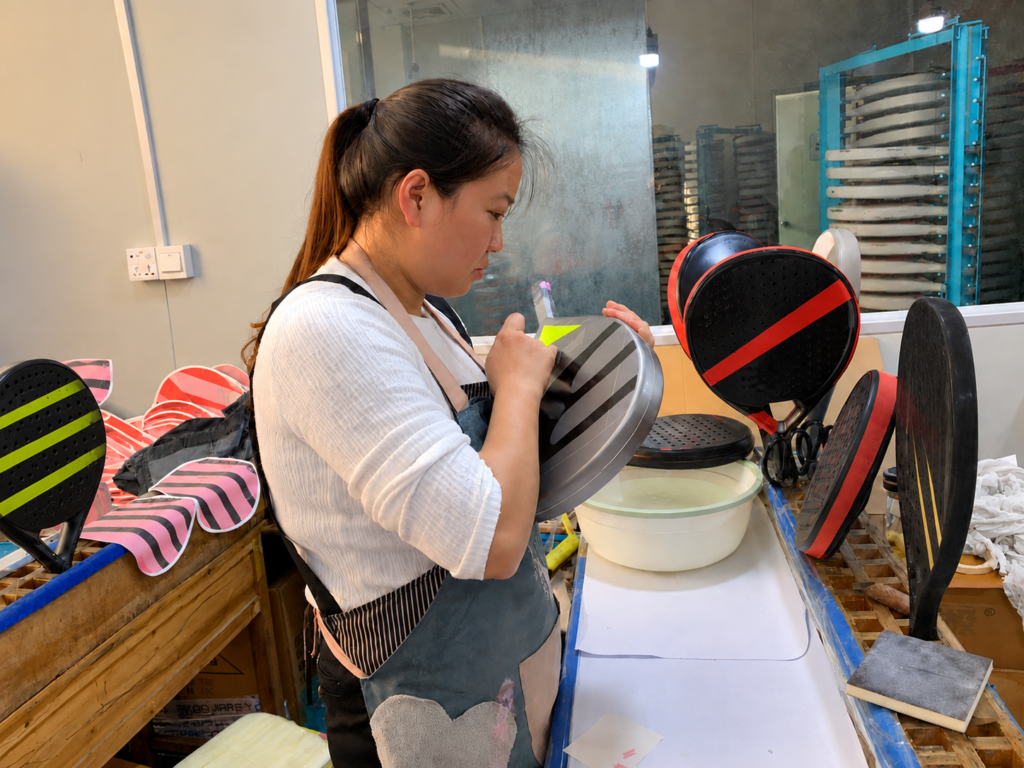
For racket brands, distributors, club suppliers, and professional purchasing teams, carbon selection should start with the target player rather than a marketing number. A reliable factory needs to translate material specifications into a clear playing experience. With in-house design, R&D, production, and sales teams, carbon structure can be developed together with EVA density, racket shape, balance, surface finish, and target price. OEM and ODM experience with established brands also helps reduce the gap between an attractive specification sheet and a product that performs consistently in mass production.
What Do 3K, 12K, 18K, and 24K Actually Mean?
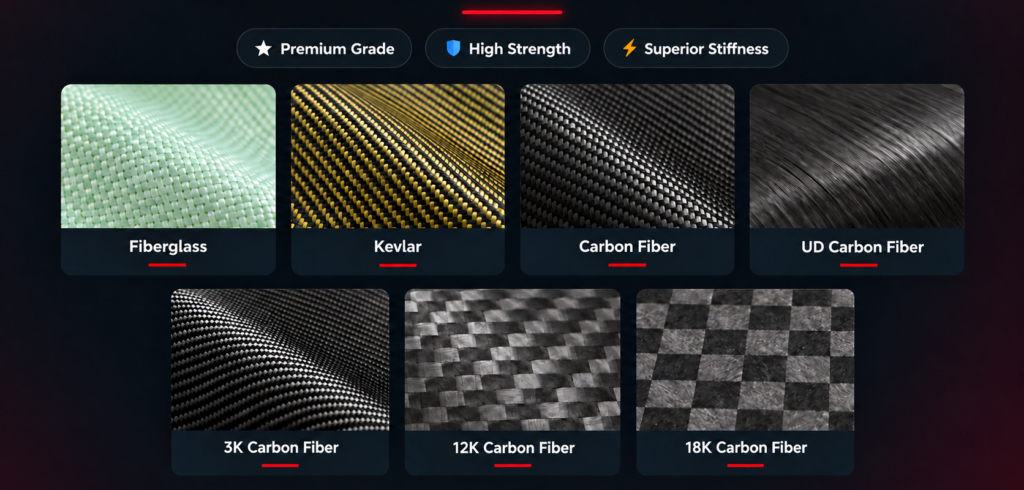
Carbon terminology creates confusion because larger numbers are often treated as automatic performance upgrades. That assumption can lead to expensive product decisions without clear playing benefits.
The K number generally refers to the number of carbon filaments in one tow. A 3K tow contains about 3,000 filaments, while 12K, 18K, and 24K use progressively larger filament bundles.
The K value describes a construction characteristic of the carbon material. It does not work like a simple performance score.
| Carbon Type | Approximate Filaments per Tow | Typical Visual Character | Common Product Positioning |
|---|---|---|---|
| 3K | 3,000 | Fine weave | Balanced and classic carbon models |
| 12K | 12,000 | Larger weave | Performance-focused models |
| 18K | 18,000 | More visible broad weave | Premium performance collections |
| 24K | 24,000 | Wide and distinctive weave | High-end or strongly differentiated models |
The real behavior of a carbon face depends on more variables than tow count. Fiber modulus, fabric weight, weave direction, number of layers, resin content, curing conditions, EVA density, and frame reinforcement all influence the final racket.
This matters during sourcing. A 24K specification from one supplier cannot automatically be considered harder, stronger, or more advanced than every 12K construction from another supplier.
A factory with in-house R&D should treat the carbon label as one part of the complete structure. Sample development should confirm ball response, stiffness, comfort, balance, and durability before mass production.
For commercial product planning, the better question is not which K number is highest. The better question is which carbon construction supports the intended player, price level, and brand positioning.
How Does 3K Carbon Perform in a Padel Racket?
3K carbon is sometimes overlooked because higher K numbers sound more advanced. However, a well-engineered 3K racket can provide an excellent balance of response, durability, control, and commercial value.
3K carbon uses relatively fine filament bundles and can create a compact, recognizable carbon weave. Its final stiffness still depends on fabric specification and the complete racket layup.
3K carbon is useful when a product line requires predictable performance rather than an extreme stiffness message.
Where 3K Carbon Fits
A typical 3K racket can work well for:
- Intermediate players
- Control-oriented product lines
- Club collections
- All-round racket models
- Brands requiring visible carbon without pushing into the highest material positioning
A common development mistake is assuming 3K must always feel soft. That is not technically reliable. A 3K face combined with hard EVA and a stiff frame can still create a firm response. The same carbon combined with softer EVA and a more forgiving layup can feel considerably more comfortable.
This interaction is important during OEM and ODM development.
| Design Combination | Possible Playing Direction |
|---|---|
| 3K + Soft EVA | Comfort and easier ball output |
| 3K + Medium EVA | Balanced control and response |
| 3K + Hard EVA | Firmer, faster response |
| 3K + Round Shape | Control-focused positioning |
| 3K + Teardrop Shape | Versatile performance positioning |
A real manufacturing factory can adjust more than the visible surface material. Carbon placement, frame reinforcement, EVA specification, weight range, and balance can all be coordinated during sample development.
For brands concerned about inconsistent production, material identification should also be supported by incoming inspection and controlled lamination processes. A premium material claim has limited value when pressing parameters or resin distribution vary between batches.
Why Is 12K Carbon So Common in Performance Padel Rackets?
12K carbon appears frequently in performance-focused racket collections because it offers a recognizable carbon appearance and can be engineered into firm, responsive constructions.
Its popularity comes from the combination of market familiarity, visual differentiation, and broad development possibilities rather than from the K number alone.
For many brands, 12K creates an effective middle position between conventional carbon products and more aggressively marketed 18K or 24K models.
Typical 12K Development Goals
A 12K model may be designed around:
- Faster ball response
- Strong offensive performance
- Medium-to-firm touch
- Premium visual appearance
- Intermediate-to-advanced player positioning
The final racket still needs careful matching with the core.
A firm 12K surface combined with hard EVA can produce a demanding racket. That combination may work for skilled players but may generate complaints when marketed to recreational customers expecting comfort.
Medium EVA often provides more room to balance the feel. It can support a responsive carbon face without making the complete structure unnecessarily difficult to play.
For purchasing teams, sample evaluation should include more than static specifications. Weight tolerance, balance consistency, surface flatness, hole finishing, frame integrity, and actual playing feedback should be reviewed together.
This is where direct factory cooperation becomes useful. An in-house R&D team can modify the construction after testing instead of simply replacing graphics on an existing racket.
Experience supplying established brands through OEM and ODM projects also helps identify specifications that look impressive on a catalog but do not always create the intended commercial product.
What Makes 18K Carbon Different From 12K Carbon?
18K carbon is often marketed as a higher-level material than 12K, which can create the impression of a simple upgrade path. In reality, the performance difference depends heavily on the specific fabric and layup.
18K uses larger carbon tow bundles than 12K and can create a broader surface pattern. It is commonly used for premium or performance-oriented rackets where appearance and technical positioning both matter.
The commercial attraction of 18K comes partly from differentiation. A visible 18K weave can help distinguish one product series from another, especially when customers compare racket specifications online.
However, development should remain performance-led.
| Comparison Point | 12K Carbon | 18K Carbon |
|---|---|---|
| Tow Size | Smaller | Larger |
| Weave Appearance | Broad | Broader and more distinctive |
| Common Position | Performance | Premium performance |
| Feel | Depends on construction | Depends on construction |
| Best Use | Wide range of advanced designs | Strong product differentiation |
A premium racket may use 18K carbon with medium EVA to create a balance between direct response and manageable comfort. Another model may pair it with hard EVA for advanced attacking players.
Neither construction is automatically better. They serve different players.
For private-label projects, product architecture becomes important. A collection can use material changes to create clear levels rather than placing multiple K numbers into the market without a meaningful difference.
For example, a balanced model can use 3K, a performance model can use 12K, and a higher-positioned model can use 18K. Shape, EVA, balance, surface texture, and graphics can then reinforce each level.
A factory with design and R&D under the same production system can coordinate these differences more effectively and keep the collection visually and technically consistent.
Is 24K Carbon Automatically Better Than 18K Carbon?
A bigger K number can make 24K carbon look like the obvious premium choice. That can become a costly mistake when material selection is based on specification marketing rather than product engineering.
24K carbon uses larger tow bundles and can provide a bold carbon appearance, but it is not automatically stronger, harder, lighter, or better-performing than 18K or 12K carbon.
The quality of the raw carbon, weave structure, resin system, laminate thickness, curing process, and interaction with the racket core matter greatly.
Where 24K Can Add Value
24K can be useful when a collection needs:
- Strong visual carbon identity
- Premium product differentiation
- High-end specification positioning
- A distinctive surface pattern
- Performance characteristics engineered around a specific target player
The important word is engineered.
A 24K face placed on an unsuitable EVA core can create a racket that fails the target market. A premium specification with poor balance can also make a racket feel difficult even when expensive materials are used.
For brands, this creates a clear sourcing lesson: material labels should be verified through physical samples and performance targets.
A direct manufacturing partner can prepare different combinations for comparison before final approval. Prototype A might use 18K with medium EVA, while Prototype B uses 24K with a slightly different EVA density or carbon layup. Testing can then identify which construction matches the intended customer.
This approach is more reliable than assuming the highest carbon number should automatically become the flagship model.
How Should Carbon Fiber Be Matched With EVA Foam?
Selecting premium carbon without considering EVA is one of the easiest ways to create an unbalanced racket. The face and core work together during every ball impact.
Carbon construction influences surface response and structural behavior, while EVA strongly affects softness, rebound, comfort, and the overall contact feeling.
The following combinations can be used as development directions rather than fixed rules:
| Carbon Direction | EVA Direction | Typical Product Goal |
|---|---|---|
| 3K | Soft/Medium | Comfort and control |
| 12K | Medium | Balanced performance |
| 12K | Hard | Faster response |
| 18K | Medium | Premium balanced performance |
| 18K | Hard | Advanced attacking feel |
| 24K | Customized | High-end differentiated model |
Racket shape also changes the result.
A round 12K racket with medium EVA can still be developed as a control-focused product. A diamond racket using the same face and core may feel more attacking because of its balance and sweet spot position.
Surface finish adds another variable. Matte, glossy, sandy, and raised 3D textures can create different product identities and, depending on the construction, different ball-contact characteristics.
This is why professional customization should not be managed as a list of independent options. Carbon, EVA, shape, weight, balance, drilling, frame structure, and finish need to be treated as one system.
An in-house manufacturing, design, and R&D structure makes this process more efficient. Technical changes can be discussed directly with production rather than being passed through several intermediaries.
How Can Brands Choose the Right Carbon Specification for a Product Line?
Too many carbon choices can make a collection confusing. A successful racket line needs clear differences that customers can understand and sales teams can explain.
Carbon selection should begin with target player level, desired feel, price positioning, and product role. The K number should support that strategy rather than become the strategy itself.
A practical product structure may look like this:
| Product Position | Possible Carbon Direction | Key Selling Focus |
|---|---|---|
| Accessible Carbon Series | 3K | Control, durability, value |
| Performance Series | 12K | Response and versatility |
| Premium Series | 18K | Performance and differentiation |
| Flagship Series | 24K or specialized layup | Distinctive engineering and brand identity |
This structure is not a universal rule. Market positioning should determine the final configuration.
For distributors and brand owners, another important issue is consistency between samples and mass production. A successful prototype is only useful when the same weight range, balance, surface finish, structure, and playing characteristics can be reproduced across larger orders.
A manufacturing partner should therefore provide controlled material sourcing, production records, process checks, and final inspection.
A factory with in-house design, R&D, production, and sales teams can also support later product upgrades. Once market feedback arrives, EVA hardness, carbon layup, graphics, surface finish, or balance can be adjusted for the next generation.
That type of development relationship is especially valuable for companies building long-term racket collections rather than purchasing one isolated model.
What Should Buyers Check Before Approving a Carbon Fiber Padel Racket?
A carbon specification on a quotation is not enough to approve a racket. Product performance and production consistency need to be checked before a large order moves forward.
A structured sample approval process helps reduce quality disputes, late changes, and problems after products reach the market.
Important checks include:
- Carbon material and weave specification
- EVA hardness and rebound characteristics
- Finished racket weight
- Balance point
- Frame thickness and structural consistency
- Surface finish
- Hole quality
- Graphic and logo accuracy
- Edge and paint quality
- Packaging requirements
- Playing test feedback
Weight and balance deserve special attention. Two rackets may use the same 12K carbon and the same EVA but feel different when their balance points vary.
Visual quality is equally important for premium collections. Exposed carbon surfaces make weave alignment, resin appearance, finishing quality, and coating consistency easier to notice.
A reliable factory should therefore control both performance and appearance.
For companies purchasing from China, direct communication with the actual manufacturing team can also reduce a common sourcing problem: sales information that does not match production reality. When design, R&D, manufacturing, quality control, and sales operate within the same factory system, technical questions can reach the responsible team faster.
Experience with established OEM and ODM projects adds another advantage because international brands usually require detailed specifications, repeatable quality, production scheduling, and clear issue handling.
Conclusion
3K, 12K, 18K, and 24K carbon each have a place in padel racket development, but the highest K number is not automatically the best choice. The strongest products combine the right carbon, EVA, shape, balance, craftsmanship, and quality control. For custom carbon fiber padel racket development, send an inquiry and leave contact details to discuss the target market and product specification.