Choosing the right padel racket size starts with the handle and the way the racket moves in your hand. Many adult rackets use similar overall dimensions, yet differences in grip circumference, usable handle length, weight, and balance can make them feel noticeably different during play.
For adults, begin with a handle you can hold securely without excessive squeezing, then compare preparation and recovery during short volleys. For children, assess racket length, handle fit, and weight together with a coach. A comfortable ready position and a controlled swing tell you more than age alone.
Padelico manufactures padel rackets in China for brands, clubs, and distributors. A clear size specification helps individual players compare rackets and helps commercial buyers define a consistent product for their intended users.
What Does Padel Racket Size Actually Include?
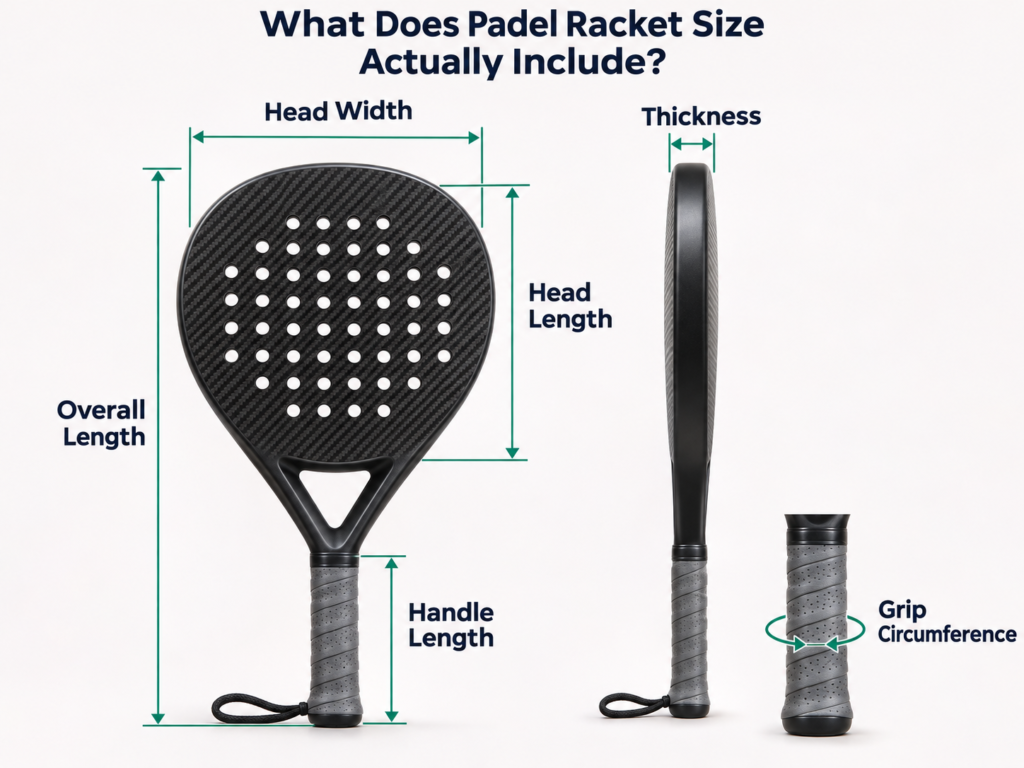
A racket has several dimensions, and each answers a different question. Overall length determines the distance from the end of the handle to the tip. Head width and outline affect the available face geometry. Frame thickness describes the distance through the racket head. Handle length and circumference determine the space and fit available to your hand.
Weight and balance are measured separately, but they belong in a fitting assessment. A racket can fit your hand comfortably and still take too much effort to reposition. Another can feel manageable in motion but have a grip that is difficult to hold securely.
| Dimension or specification | What it describes | What to assess |
|---|---|---|
| Overall length | Distance from the handle butt to the tip | Whether preparation and contact feel natural |
| Head width and shape | The outline and geometry of the hitting head | Whether ordinary contact feels easy to repeat |
| Frame thickness | Profile through the racket head | The complete construction and its intended response |
| Usable handle length | Space available for your hand or hands | Whether the grip position feels comfortable |
| Grip circumference | Distance around the assembled grip | Whether you can secure the handle with a relaxed hold |
| Weight and balance | Total mass and its distribution | Whether you can move the racket comfortably throughout a session |
When a racket feels too large, identify which of these features creates the sensation. If the handle prevents a natural hold, start with circumference. If you repeatedly arrive late despite comfortable grip fit, compare weight distribution and preparation. This makes the next comparison more specific.
Official Padel Racket Dimensions
The current rules set maximum dimensions for rackets used in play. These are limits for equipment design and inspection.
| Measurement | Maximum specified dimension |
|---|---|
| Overall length, including handle | 455 mm |
| Head width | 260 mm |
| Head thickness | 38 mm |
| Handle length | 200 mm |
The rules also provide a thickness allowance during measurement. For a custom project, agree on a nominal dimension and production tolerance with the manufacturer, then review the finished product against applicable requirements.
The 38 mm figure concerns the racket head profile. Grip circumference is a separate measurement around the handle. A 200 mm maximum handle length is also a regulatory limit, with the actual usable hand space determined by the model and its fitted grip.
How to Choose the Right Grip Circumference
Grip fit is often the most useful place to start because it affects every shot. Pick up the racket in your usual playing hold and allow the fingers to close naturally. The handle should feel secure without forcing your hand into an awkward position.
Then make several small movements. Turn the face for a forehand block, recover to the ready position, and prepare a backhand volley. Notice whether the grip feels natural as the face changes direction. A handle that seems comfortable while you stand still can feel different during a quick exchange.
Assess your actual playing hold
Use the hold you would use on court. Keep the wrist strap fitted and include the overgrip you expect to play with. If you normally position your hand low on the handle, check the shape of the end cap and the grip transition around it.
A gap between the fingertips and palm can be a useful visual observation, but it should be considered alongside how securely and comfortably the handle sits. Hand shape, finger length, grip material, and wrapping all influence that fit. A single finger-spacing test gives only part of the picture.
If the grip seems small, observe whether you keep tightening your hand to stop movement. If it seems large, notice whether you struggle to turn the face naturally or establish a comfortable hold. Compare another circumference under similar conditions and judge which one feels easier to manage.
Measure a grip that already works
A borrowed or demo racket can provide a practical reference. If its handle feels good, measure the circumference at a defined point within the usual hand position. Use a flexible measuring tape with consistent tension and record the fitted grip layers.
For an OEM order, define the measurement location in the specification. A handle can change cross-section toward the cap or throat, so two readings taken at different points may disagree. The assembled sample should establish the reference used for production.
Grip shape also affects the experience. Two handles can have similar circumference and feel different because of their cross-section, bevel definition, or cap shape. Keep a physical reference where handle feel is an important part of the product brief.
How Overgrips Change Racket Fit
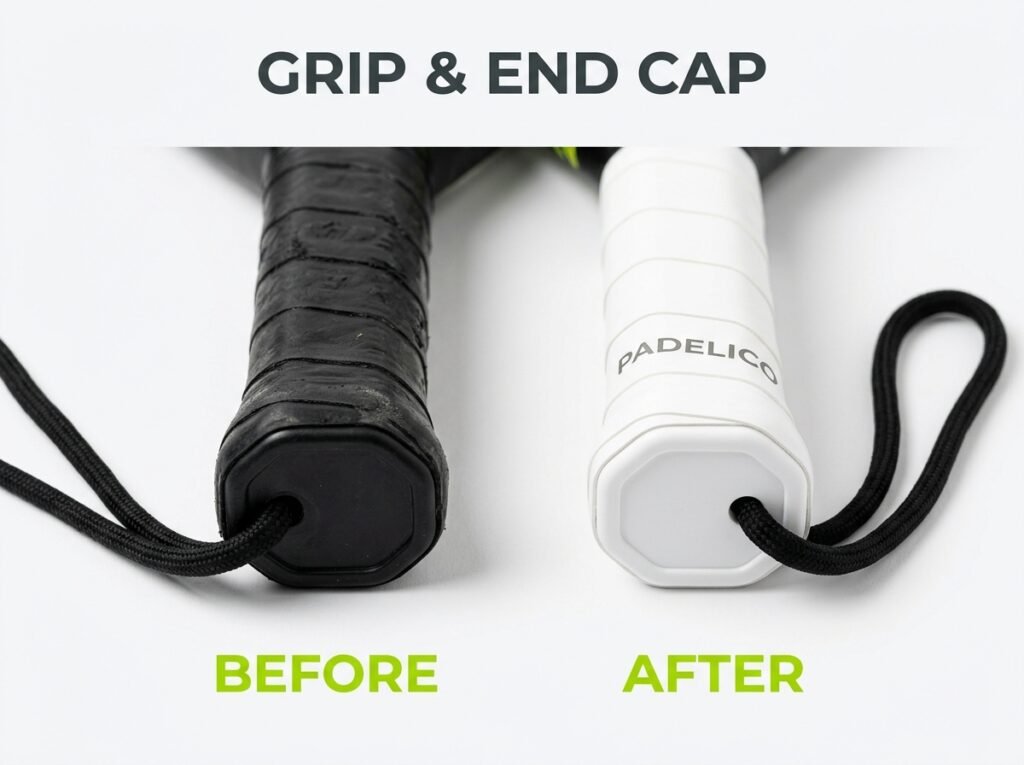
An overgrip can make a modest adjustment to handle circumference and surface feel. It also adds mass near the hand. The amount of change depends on the product and how it is installed, including overlap and wrapping tension.
Make one adjustment at a time. Fit the intended overgrip, play a short sequence of volleys, and compare the result with the previous setup. Keep enough consistency in the wrap to judge the change fairly.
If the handle feels too thick, review the existing setup before adding more material. There may already be extra wraps or a thicker replacement grip. Removing an optional layer can change the fit, while the base construction and installed components still need to remain appropriate for use.
Multiple layers can soften the definition of the handle shape and change how the cap feels. If your preferred arrangement needs substantial alteration, compare a model with a more suitable base handle. A closely matched starting configuration is easier to maintain over repeated grip replacements.
For clubs, record the agreed replacement procedure. The same racket wrapped differently by two staff members can feel like a different grip size to a returning player. Consistent materials and installation make a demo fleet more useful.
Handle Length and Overall Length Are Separate Decisions
Overall length is measured from the handle butt to the racket tip. Usable handle length concerns the space where you can position your hand. A model with a longer handle can still remain within the same overall limit by changing the proportions of the racket.
Players who use two hands for selected strokes should assess the assembled handle directly. Check how the second hand fits near the throat, whether the grip covers the intended area, and how naturally the racket transitions back to a one-handed position.
For a one-handed player, the lower part of the handle and cap may matter more than additional space near the throat. Try a few compact volleys and controlled overheads. Notice whether the hand sits where you expect and whether the grip ends create an uncomfortable transition.
A longer overall racket changes the distance from the hand to the hitting area. The result needs to be evaluated with its mass distribution. If a player feels consistently late, compare another configuration and observe contact during the same drill. Preparation, weight, and balance can all contribute to the sensation.
For a custom design, clarify whether the requested change concerns hand space or overall reach. A longer gripping area may require a different handle or throat geometry, while a longer complete racket introduces a separate dimensional requirement.
Head Size, Shape, and the Usable Hitting Area
Head width describes one dimension of the face. Shape determines the outline, and the complete construction affects the response across that outline. Two rackets with similar external dimensions can give different feedback when contact moves away from the centre.
A round racket is a practical starting option when you want a more central preferred hitting area. An accessible teardrop can suit a player seeking a versatile response. Diamond designs often place greater emphasis on contact higher on the face.
During a trial, make the comparison practical. Play controlled feeds and notice whether you can make repeatable contact without reaching or changing your usual preparation. Include a few slightly awkward balls to see how manageable the response remains.
A wider-looking face is only one consideration. Weight distribution and resistance to twisting also influence the result of an off-centre strike. If a sample turns noticeably in the hand, compare it with another racket using similar feeds and grip fit.
For a club or retail collection, request the outline and key dimensions for the selected model. Then approve the playable sample. This lets the buyer connect the geometry on the drawing with the hitting area experienced by the intended player.
What Racket Thickness Means for Fit
Many adult models use a profile close to the permitted maximum, while some junior or specialist designs use a thinner head. Thickness affects the available construction space and should be reviewed alongside the face, frame, and core.
A thinner racket can have a different structure, mass, and impact feel, but thickness alone does not establish how easily a player can control it. Compare finished products through compact returns, blocks, and overhead recovery.
For a junior selection, a thinner profile may be one part of an adapted design that also changes weight and grip. Assess the combination. A child should be able to hold the racket comfortably and move it through the intended stroke without needing an exaggerated adjustment.
For manufacturing, specify where thickness is measured and whether the reading includes the finished coating. A drawing and approved sample provide the reference. If the desired profile differs from the selected mold, the manufacturer needs to assess compatibility and tooling requirements.
Size, Weight, and Balance Need One Court Trial
A racket can meet the required external dimensions and still feel demanding to swing. Weight is its total mass, while balance describes where that mass is distributed. Swingweight concerns resistance to rotation near the handle.
These differences explain why a player may describe a head-heavy racket as feeling too big. If the handle fits and the overall length is familiar, a change in weight distribution may address the concern more directly than a change in physical length.
Try two rackets with similar dimensions and different handling characteristics. Use repeated forehand and backhand blocks and return to the ready position between each shot. Then add a controlled overhead and the movement needed to recover for the next ball.
The more suitable configuration should let you maintain timing and a comfortable hold through the sequence. A steady response at impact is useful, provided the player can present the face on time.
Include your protector and grip arrangement in the comparison. A protector adds mass toward the head, while an overgrip adds it near the hand. Their effect on the final setup should be part of both an individual trial and a commercial sample approval.
Choosing the Right Padel Racket Size for Children
Junior fitting should consider hand size, strength, coordination, and playing experience together. Age is a starting description, while the child’s ability to hold and move the actual racket gives the more useful answer.
Junior equipment may combine a smaller grip, reduced weight, a shorter overall length, or a thinner profile. Different designs use different combinations. Ask which dimensions and components are adapted, then have the child try the complete racket with a coach.
Begin with the ready position
Check whether the child can hold the racket in front of the body comfortably and maintain that position through a short explanation or drill. Then feed a few gentle balls on each side.
Watch preparation and recovery. A child who consistently lowers the racket after each shot, changes the grip awkwardly, or needs an exaggerated swing may benefit from a different configuration. A coach can assess these observations alongside technique.
Check the grip independently
A lightweight racket can still have a handle that feels too large. Have the child close the hand naturally and turn the face for a forehand and backhand. Confirm that the grip and cap feel manageable in the usual hand position.
Use the intended grip arrangement during the trial. An added overgrip may be helpful for surface feel but also increases circumference. Check the result again after any adjustment.
Assess progression through a direct comparison
When considering a move to an adult configuration, compare it with the familiar junior racket using the same short drills. Look for comfortable preparation, stable contact, and natural recovery after an overhead.
A child may adapt to an adult-length frame while still preferring a lighter build and suitable grip. Make changes according to what the comparison shows. A coach can help judge whether the new setup supports the player’s current movements.
For a coaching program, keep notes on the racket each learner handles comfortably. These observations provide a better basis for the next selection than a fixed age-to-size chart alone.
Choosing a Size for Adults With Smaller or Larger Hands
Adult players with different hand sizes may share similar preferences for overall racket dimensions. Handle fit can often be addressed through the base grip, wrapping arrangement, and compatible handle options.
For smaller hands, begin by checking the circumference of the factory setup. Try compact blocks and confirm that you can establish a secure hold without difficulty changing face angle. If the handle is already heavily wrapped, compare a simpler grip setup before deciding the entire racket is unsuitable.
For larger hands, assess whether the fingers close naturally and whether there is enough usable length in the preferred grip position. An overgrip can provide a modest adjustment, while a substantially different requirement deserves comparison with another handle configuration.
Height alone provides limited information about hand fit and racket handling. A tall player may prefer a compact grip and quick preparation. Another player may value a more substantial feel. Let the actual hand position and trial determine the preference.
For brands serving a defined audience, gather feedback from that audience during sampling. A label such as “lightweight adult” should be supported by the finished specification, and the handle should be assessed with the same care as total mass.
Is There a Universal Padel Racket Size Chart?
A useful chart can organize which features to assess. It should allow room for individual differences in hand shape, coordination, and playing preference.
| Player or application | Useful starting comparison | What confirms the fit |
|---|---|---|
| Adult beginner | Adult configuration with comfortable grip and manageable balance | Timely preparation and repeatable short returns |
| Adult with smaller hands | Suitable base handle circumference and modest grip layering | Secure handling through quick changes of face angle |
| Player using two hands on selected shots | Adequate usable gripping area | Natural second-hand placement and release |
| Younger junior | An adapted junior configuration | Comfortable ready position and controlled swings |
| Junior moving toward adult equipment | A manageable adult option alongside the current racket | Comparable timing across the same drills |
| Club demo fleet | A clear range of grip and handling options | Representative learners can identify comfortable setups |
| Private-label collection | Defined dimensions and assembled measurements | Approved samples meet the intended player brief |
For commercial buying, these categories should lead to measurable sample requirements. The buyer can describe who will use the racket and which fit problems need attention, then agree the relevant dimensions with the manufacturer.
A Practical Fit Test Before Buying
Check the assembled handle first
Hold the racket in the playing position you normally use. Fit the intended overgrip and wrist strap, then make short forehand and backhand preparation movements. Notice any pressure point, slipping, or difficulty changing the face angle.
Compare short volleys
Ask a partner for manageable feeds to both sides. Keep the stroke compact and recover after each return. A suitable setup should let you present the face without needing a larger movement than expected.
If one option feels too slow, identify whether the problem seems to be gripping space, overall length, or weight distribution. Try a second racket with a clear difference rather than changing all of them at once.
Test low returns and overhead recovery
Play a few controlled returns off the glass, then add comfortable overheads. Notice whether contact occurs where you expect and whether you can recover for the next feed.
Write down what changed
Feedback such as “the thicker wrap feels secure but makes quick face changes awkward” is useful. So is “the handle fits, but the head takes longer to recover after an overhead.” These notes help a coach, retailer, or manufacturer suggest a more specific comparison.
How to Describe a Size Problem Clearly
Consider an adult player whose current racket feels secure on a forehand but awkward when changing to a backhand block. The player calls it too large. A useful comparison begins by checking the assembled grip, then repeating the same drill with a different circumference. If the new grip makes face changes easier while the overall length remains familiar, the result points toward handle fit as the relevant preference.
A second player may hold the same handle comfortably but feel late during every quick exchange. Compare a racket with similar length and grip fit but more manageable mass distribution. If preparation improves, record the handling difference before requesting a shorter frame. This gives the next selection a clearer basis.
The same approach helps a club brief a supplier. “We need a smaller racket” could mean less reach, a slimmer handle, less swing effort, or a junior product. A better request identifies the user and the task. For example, the coaches may want learners to change forehand and backhand positions more naturally while retaining a familiar hitting area.
For a custom project, connect the observation to a proposed measurement or component. Ask which handle circumference, grip material, or balance adjustment can be sampled on the chosen model. Review the revision with the same users and drill before changing another variable.
This process keeps the discussion precise. The player describes what feels difficult, the coach checks the movement, and the manufacturer proposes a measurable configuration. The approved sample then represents a fit decision that can be repeated on a future order.
Measuring a Racket When Buying Online
Ask for overall length, head width, profile thickness, usable handle length, and assembled grip circumference where available. Confirm whether grip figures refer to the bare structure or the fitted product.
If a familiar racket fits well, use it as a reference. Record the installed grip layers and measure at a defined point. Include its finished weight and any protector so the seller understands the setup you are comparing.
A numbered grip label should be checked against the manufacturer’s own description and measurements. The final grip shape and wrapping still affect how the handle feels. A physical trial provides the strongest confirmation when two specifications appear similar.
For a custom order, provide photos and measurements of the reference racket and identify which qualities matter. Explain whether you want more hand space, a smaller circumference, or easier preparation. Each request can lead to a different production decision.
Specifying Padel Racket Size for Your Brand
A commercial size brief needs enough detail for sample development and inspection. Identify the intended player, starting model, overall dimensions, handle requirements, and desired handling. Where a dimension is critical, explain the reason.
A China-based padel racket manufacturer can review the selected mold against the requested geometry. Some changes may be accommodated through compatible components, while others require structural review or different tooling.
| Specification to agree | How to make it measurable |
|---|---|
| Overall length | Define the endpoints and measure the finished racket |
| Head width | Identify the maximum-width location |
| Head thickness | Agree the measurement position and finished condition |
| Handle length | Distinguish structural length from usable grip area |
| Grip circumference | Define the measurement point, grip material, and wrap |
| Finished weight and balance | State fitted accessories and the reference method |
| Acceptable variation | Record the agreed tolerance for each relevant measurement |
Padelico’s custom padel racket specifications cover dimensions, handle configuration, weight, balance, and model-dependent customization. A project should be reviewed for feasibility before samples are approved.
For example, a club may want a familiar adult outline with a slimmer assembled grip. The factory needs the target circumference and grip arrangement. A brand developing more hand space near the throat needs to discuss handle geometry and the selected mold. These are different briefs, even if both begin as a request for a better-fitting size.
Approving the Size of a Custom Sample
Review the finished sample in its intended playing configuration. Check the handle with the approved grip and cap, and measure the overall dimensions after finishing. Evaluate weight and balance with all agreed fitted components.
Have representative users complete the same court trial. If a revision is needed, record which dimension or component changes and retain the previous version for comparison. That preserves a clear connection between feedback and the revised specification.
Once approved, keep the reference sample with the written dimensions and tolerances. The production inspection can then use the same measurement locations and setup. Padelico’s custom racket development process supports sample evaluation and specification confirmation before bulk manufacturing.
A club can use the approved setup to maintain consistent demo equipment. A retailer can use it to describe the product accurately and compare future reorders. The measurements become more valuable when they represent the same assembled condition throughout the product’s life.
Frequently Asked Questions
What is the maximum size of a padel racket?
The maximum overall length is 455 mm, with head width up to 260 mm and nominal head thickness up to 38 mm. The rules also specify handle dimensions and a thickness allowance during inspection.
Do all adult padel rackets have the same size?
Many adult models use similar overall dimensions, while shapes, handle proportions, and fitted grips vary. Similar external measurements can also produce different handling because weight distribution and construction differ.
How do I choose the right padel grip size?
Assess the handle in your normal playing hold, including the overgrip you intend to use. Check for a secure but relaxed grip during short volleys and changes in face angle. Measure a familiar comfortable setup if you need a reference.
Can an overgrip make a handle fit better?
It can provide a modest increase in circumference and change surface feel. Fit one adjustment at a time and test again. Record the wrapping method if you need the setup reproduced across a club fleet or custom order.
Should I choose racket length based on my height?
Height is one observation, while hand fit, preparation, coordination, and preferred handling are more directly useful in a trial. Compare the complete racket during blocks, low returns, and overhead recovery.
How do I select a padel racket size for a child?
Assess grip fit, length, weight, and the ability to maintain a comfortable ready position. Use gentle feeds and involve a coach. A child’s movement and control should guide progression between available configurations.
Does a 38 mm profile mean the grip is 38 mm?
No. Head thickness is measured through the racket head. Grip circumference is measured around the assembled handle and needs its own specification.
Can Padelico customize handle dimensions and racket size?
Padelico reviews dimensional and handle requirements for the chosen model. Changes depend on mold compatibility and development feasibility. Define the target measurements and confirm them through a finished sample.