Padel racket technology is changing quickly. Outdated materials, unstable molding, and weak quality control can leave brands with heavier rackets, inconsistent performance, and difficult product differentiation.
The latest advances focus on smarter carbon layups, multi-density cores, improved molding, aerodynamic structures, durable 3D surfaces, sustainable composites, and tighter production control. These technologies help create lighter, more consistent, and more specialized padel rackets.
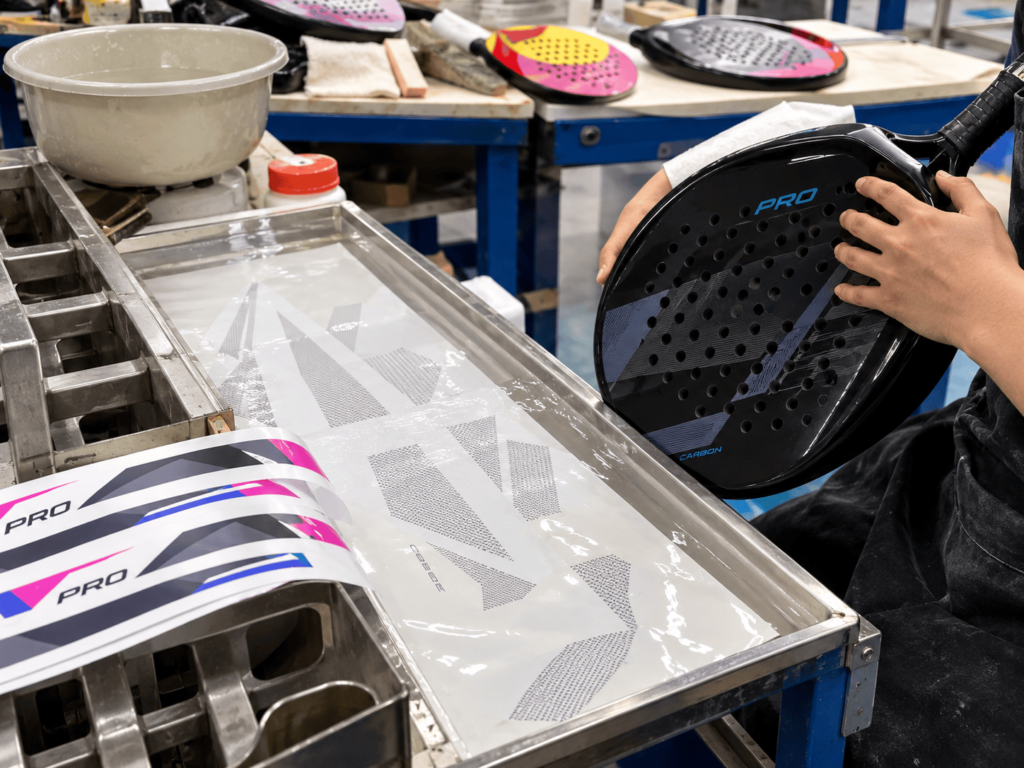
Modern racket development is moving beyond simple claims such as 12K carbon or hard EVA. The most important improvement is the ability to engineer the racket as a complete system. Carbon orientation, core density, balance, frame reinforcement, hole layout, surface texture, resin control, and molding conditions can now be adjusted together. For brands, distributors, clubs, and professional purchasing teams, these advances create more opportunities to develop clearly differentiated products instead of changing only colors and logos.
How Is Advanced Carbon Fiber Layup Changing Padel Racket Manufacturing?
Adding more carbon does not automatically create a better racket. Poor fiber orientation can produce unnecessary stiffness, unstable off-center response, and inconsistent weight.
Modern carbon layup focuses on fiber direction, layer location, material combination, and reinforcement zones instead of relying only on the visible K-number of the carbon fabric.
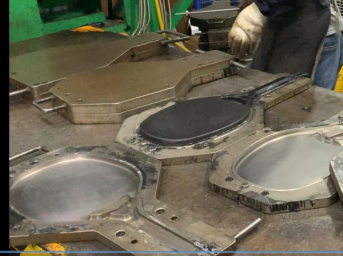
A carbon racket is built from several composite layers. The direction of those layers affects how the structure responds to impact.
Modern development can combine fibers positioned in different orientations, such as longitudinal, transverse, and diagonal directions. This allows engineers to control torsional stability and stiffness more precisely. Current manufacturing references describe carbon and fiberglass plies being arranged around the foam core and cured under pressure, while fiber orientation and layup influence stiffness, weight, and balance.
Zoned Reinforcement Is Becoming More Important
Not every section of a racket requires the same amount of carbon.
Extra reinforcement may be placed around:
- The racket perimeter
- The throat
- High-impact areas
- The upper frame
- The connection between handle and head
This approach can increase strength without simply adding material everywhere.
| Traditional Approach | Advanced Layup Approach |
|---|---|
| Similar reinforcement across large areas | Reinforcement concentrated where needed |
| Carbon type used as main selling point | Carbon orientation and structure optimized |
| Limited control over local stiffness | Different areas can have different behavior |
| Higher risk of unnecessary weight | Better weight distribution potential |
Recent patent developments also describe integrated ribs and structural features formed as part of the frame rather than adding separate reinforcing pieces.
For custom racket projects, this creates a major advantage. A control racket, comfort racket, and aggressive tournament model can use different internal structures even when the external shape appears similar.
A factory with in-house design, R&D, and production teams can test these layups during prototype development and maintain approved structures during mass production.
How Are Multi-Density EVA Cores Improving Racket Performance?
A single EVA hardness cannot satisfy every performance requirement. Extremely soft foam may improve comfort but reduce precision, while very hard foam can become demanding for a large group of players.
Newer racket development increasingly treats the core as a performance system. Different foam densities, layered structures, and hybrid core designs allow manufacturers to adjust rebound, comfort, control, and response more precisely.
EVA remains one of the main core materials used in padel rackets. Its hardness, density, compression behavior, and recovery influence the playing feel.
Recent technical descriptions show that racket cores can use different structural configurations and even different characteristics between different parts or striking sides of a racket.
That opens more development possibilities than simply choosing "soft EVA" or "hard EVA."
Modern Core Development Can Target Several Goals
| Core Direction | Main Development Goal |
|---|---|
| Softer EVA | Comfort and easy ball output |
| Medium EVA | Balanced performance |
| Harder EVA | Precision and faster response |
| Layered Density | Different response under different impact levels |
| Hybrid Core | Broader performance range |
For product developers, the important point is that the core must match the face.
A stiff carbon surface combined with extremely hard foam can create a racket that feels very direct and demanding. That may suit an advanced attacking model but create unnecessary customer complaints when used in a recreational series.
The better approach is to develop carbon, EVA, shape, balance, and sweet spot together.
This is especially important for brands building several price or performance levels. An entry comfort series, all-round series, and professional line should have real structural differences rather than cosmetic differences only.
How Are Precision Molding and Curing Improving Quality Consistency?
An excellent prototype has little commercial value when mass-production rackets feel different from the approved sample. Temperature, pressure, resin distribution, and curing consistency all affect composite quality.
Modern padel racket manufacturing increasingly depends on tighter molding and curing control to improve repeatability in weight, stiffness, frame strength, and overall playing feel.
The basic composite process remains familiar: carbon or fiberglass material is arranged around a foam structure, placed in a mold, and cured using pressure and heat.
The improvement comes from controlling that process more carefully.
Important parameters include:
- Mold temperature
- Heating time
- Pressure
- Resin distribution
- Carbon layer placement
- Foam dimensions
- Cooling conditions
Even small variations can change finished weight or stiffness.
Why This Matters for Large Orders
A sample may feel perfect because its balance, carbon placement, and resin content happen to be ideal. If the manufacturing process is not controlled, later rackets can move away from that reference.
For purchasing teams, consistency should therefore be checked through measurable specifications.
| Quality Item | Manufacturing Goal |
|---|---|
| Finished Weight | Controlled production range |
| Balance | Repeatable distribution |
| Surface Flatness | Stable molding |
| Frame Structure | Consistent strength |
| EVA Thickness | Controlled core dimensions |
| Carbon Position | Repeatable layup |
Direct cooperation with an actual factory makes this process easier because manufacturing feedback can move directly between R&D, production, quality control, and sales.
That becomes especially important when launch deadlines are fixed. Repeated sample failures or inconsistent production can cause shipment delays and missed selling seasons.
How Are Aerodynamic Frame and Hole Designs Becoming More Advanced?
Racket aerodynamics were once treated mainly as a shape issue. Current development is paying more attention to holes, throat structures, frame contours, and local geometry.
Improved aerodynamic design can reduce unnecessary resistance, adjust weight distribution, and help create faster handling without simply lowering total racket weight.
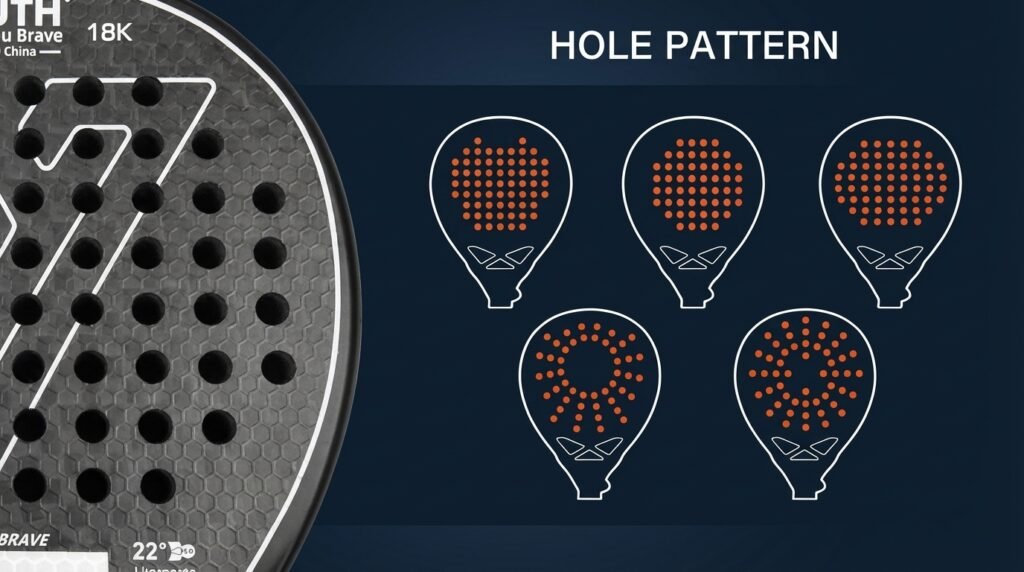
Padel rackets contain multiple holes through the hitting surface, and those holes influence more than appearance.
Recent racket patents describe holes as contributing to weight reduction and aerodynamic resistance. Other developments introduce shaped frame edges, integrated ribs, and different structural geometries around the racket.
This gives R&D teams several variables to adjust:
Hole Layout
Changes in hole size, position, and distribution can influence local mass and structural behavior.
Throat Geometry
Different bridge and throat structures can adjust stiffness and airflow while creating stronger visual identity.
Frame Profile
The outer frame can be optimized for strength, balance, and aerodynamic movement.
Internal Reinforcement
Structural ribs can provide support without relying only on additional material.
These features should not be treated as decoration.
A highly open structure may reduce mass but still needs enough structural stability. A new hole pattern may look different but must work with the carbon layers underneath.
For custom racket brands, aerodynamic engineering can become a useful product-development direction because it creates visible differentiation supported by structural changes.
How Is 3D Surface Technology Becoming More Sophisticated?
Surface texture has become a major padel racket selling point, but simple sand-effect coatings can wear over time. That creates a gap between initial appearance and long-term customer experience.
Modern manufacturing is moving toward molded textures, structured surfaces, and more durable roughness systems designed into the racket rather than relying only on top coatings.
Traditional surface solutions often include:
- Smooth glossy coating
- Matte coating
- Sand-effect finishing
- Raised 3D patterns
The newer direction is to integrate texture more closely with the structural surface.
Recent patent work describes asymmetric surface roughness and different structural characteristics on opposite striking sides. Another 2025 international patent application describes an interchangeable injection-molded polymer striking surface designed to maintain more pronounced texture rather than depending only on rough paint.
These concepts show where product development may move next.
| Surface Technology | Development Value |
|---|---|
| Matte | Premium visual positioning |
| Sand Finish | Added surface roughness |
| Molded 3D Texture | More structural surface effect |
| Variable Texture | Different roughness zones |
| Replaceable Surface Concept | Emerging durability and customization direction |
Not every emerging technology is already standard mass production. Patented concepts should therefore be treated as development signals rather than universal industry practice.
For established custom manufacturing, molded 3D textures already offer useful differentiation because the texture can be designed together with the racket graphics and overall product identity.
Are Two-Sided Padel Rackets Becoming Technically Different?
Traditional rackets normally aim to provide similar performance on both hitting surfaces. Emerging engineering concepts challenge that assumption.
Recent patented designs describe padel rackets where the two striking sides can have different stiffness, materials, roughness, or structural characteristics, creating different playing behavior from each surface.
This is one of the more interesting emerging directions in padel racket engineering.
A granted European patent describes racket structures where one striking side can differ from the other in properties such as stiffness, density, hardness, roughness, elasticity, or force-transfer characteristics.
Potential future product concepts could therefore include:
- One softer and one firmer face
- Different surface roughness on each side
- Different carbon configurations
- Different response characteristics
- Specialized defensive and attacking surfaces
This technology is still better described as an emerging structural concept than a mainstream manufacturing standard.
However, it demonstrates how far custom racket engineering can move beyond simple graphic customization.
For brands searching for strong product differentiation, this type of structural innovation may become increasingly important. The commercial challenge will be making the benefit easy to explain while ensuring production remains reliable.
Factories with internal R&D capability are better positioned to evaluate these concepts because structural changes require prototype testing rather than simple artwork modification.
How Are Sustainable Materials Changing Carbon Fiber Racket Production?
Carbon composite rackets provide strong performance, but traditional thermoset composite structures are difficult to recycle. Sustainability is therefore becoming a new engineering challenge rather than only a packaging issue.
Emerging manufacturing approaches are exploring recyclable carbon systems, alternative resin technologies, longer-lasting surfaces, and structures designed to reduce material waste.
One recent commercial development promotes a padel racket built with recyclable carbon fiber and a continuous carbon shell rather than a conventional internal-frame construction.
This does not mean recyclable carbon has replaced traditional epoxy composite production across the industry.
It does show an important direction.
Sustainability Can Enter Manufacturing Through Several Routes
- Recyclable composite systems
- Lower-waste layup processes
- More durable surface treatments
- Reduced production defects
- Longer product life
- More efficient material cutting
- Packaging reduction
For purchasing teams, sustainability claims should still be examined carefully.
A material being described as environmentally improved does not automatically mean the entire racket is recyclable. Adhesives, foam, paint, mixed materials, grips, and protective components can affect the final recycling route.
For factories, reducing scrap and quality failures can also create immediate sustainability and cost benefits.
Better cutting plans, stable molding, accurate drilling, and controlled surface finishing reduce rejected products and wasted carbon materials.
That creates a practical advantage for brands as well: lower defect rates can improve both environmental performance and production economics.
How Is Digital Quality Control Improving Custom Padel Racket Production?
Advanced material technology loses value when production results cannot be repeated. For commercial orders, manufacturing data and consistent inspection are becoming as important as new carbon names.
Modern quality control focuses on tracking weight, balance, dimensions, appearance, and production parameters so approved samples can be reproduced more reliably.
Quality control is moving from simple final visual inspection toward a more complete production system.
Important inspection points can include:
| Inspection Item | Reason |
|---|---|
| Raw Carbon | Confirms material specification |
| EVA Core | Controls density and thickness |
| Molded Weight | Detects production variation |
| Finished Weight | Maintains commercial specification |
| Balance Point | Maintains playing consistency |
| Dimensions | Confirms mold accuracy |
| Hole Position | Maintains structural consistency |
| Surface Finish | Protects premium appearance |
| Packaging | Prevents shipment errors |
The approved sample should become a manufacturing reference rather than a one-time sales sample.
This is especially important for repeat orders.
A customer purchasing the same racket six months later expects approximately the same weight distribution, touch, appearance, and performance. Large variation damages confidence even when no single racket is technically defective.
A factory with in-house production, design, R&D, sales, and quality control can manage these requirements under one manufacturing system. OEM and ODM experience with established international brands also helps because mature brands normally demand clearer specifications, repeatable quality, delivery planning, and structured problem solving.
How Can Brands Use New Manufacturing Technology Without Overengineering a Racket?
New technologies can create differentiation, but adding every available feature can increase cost without improving the playing experience.
The strongest custom padel racket projects start with a target customer and performance goal, then select only the manufacturing technologies that support that position.
A professional product-development process can begin with four questions:
| Development Question | Manufacturing Decision |
|---|---|
| Which player level is targeted? | Shape, sweet spot, balance |
| What playing feel is required? | EVA and carbon structure |
| What makes the model different? | Texture, geometry, material technology |
| What price level is required? | Material and process selection |
A beginner-focused racket does not need every advanced carbon technology available.
A larger sweet spot, comfortable EVA, stable balance, durable construction, and consistent production may create much more market value.
A professional attacking racket may benefit from more complex carbon layups, firmer cores, aerodynamic structures, and specialized textures.
The manufacturing technology should follow the product strategy.
As a custom carbon fiber racket factory, Padelico integrates design, R&D, production, and sales rather than operating only as an intermediary. OEM and ODM experience with established brands supports development from material selection and prototype testing through mass production and quality control.
For brand owners, distributors, club operators, and purchasing teams, this factory-direct structure can also improve communication when samples need changes or production issues need fast decisions.
Conclusion
The latest padel racket manufacturing advances are moving toward smarter carbon structures, advanced EVA cores, precision molding, aerodynamic engineering, durable textures, sustainable composites, and tighter quality control. Send an inquiry and leave contact details to develop a customized carbon fiber padel racket with the right technology for the target market.