The surface of a padel racket is one of the first things customers notice, but appearance alone does not determine product success. A well-designed surface must balance visual appeal, playing performance, durability, and production cost.
Many rackets look similar from a distance, yet the surface technology can create completely different experiences. Texture, coating, finishing process, and material selection all influence grip, spin ability, durability, and brand value.
For manufacturers, brands, and distributors, choosing the right surface is not only a design decision. It is also a technical and financial decision. The best surface solution combines attractive aesthetics with reliable performance and reasonable production efficiency.
A professional padel racket manufacturer understands that surface development requires cooperation between design, engineering, and manufacturing teams.
Why Padel Racket Surface Design Matters More Than Appearance?
The surface of a padel racket plays two different roles. The first role is marketing. The second role is actual performance.
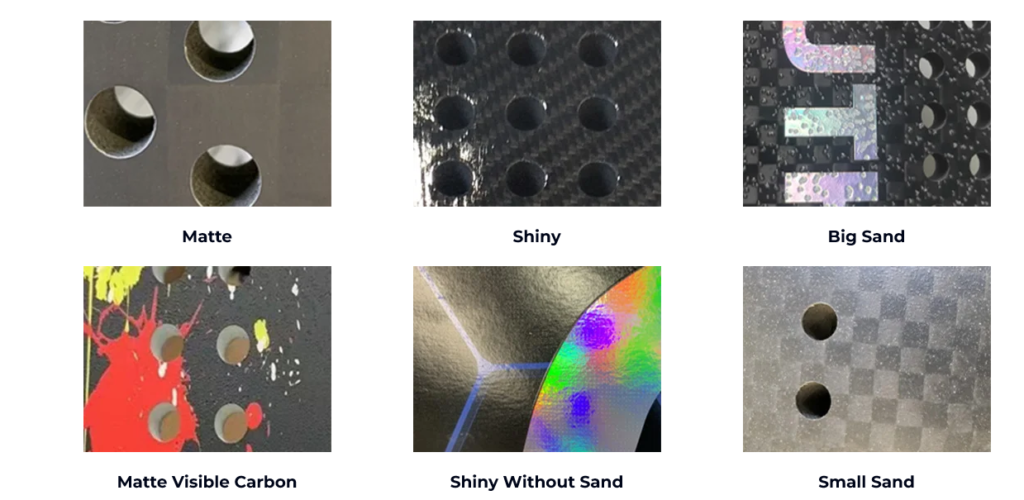
From a marketing perspective, surface design creates the first impression. Colors, textures, matte or glossy finishes, and visual details help products stand out in competitive markets. A unique appearance can strengthen brand recognition and create a premium product image.
However, surface design is not only about beauty. The surface directly influences playing characteristics. A textured surface can improve ball contact and help generate more spin. A smoother surface may provide a different feeling and easier maintenance.
The challenge is finding the correct balance. A highly textured surface may improve grip but increase production difficulty. A simple coating may reduce manufacturing cost but provide fewer performance advantages.
Professional factories evaluate surface options based on:
| Surface Factor | Impact |
|---|---|
| Texture depth | Influences spin and ball contact |
| Coating type | Affects durability and appearance |
| Surface hardness | Changes playing feedback |
| Finishing method | Determines visual quality |
A strong manufacturing partner does not simply apply attractive graphics. It understands how surface technology connects with real player experience.
Marketing Value of Padel Racket Surface Design
Surface appearance has become an important part of product positioning. In a growing market, visual differentiation helps products attract attention and communicate their identity.
Premium rackets often use special surface treatments to create a stronger brand impression. Matte carbon finishes, 3D textures, glossy coatings, and customized patterns can create different emotional responses from customers.
For example, a professional competition racket may use a high-tech carbon appearance to communicate performance and innovation. A beginner-friendly model may use brighter colors and a simpler design to create an approachable image.
However, successful surface design should support the product message. A premium-looking surface should match premium performance. If appearance and actual performance do not match, customer trust can decrease.
Modern factories with internal design teams can help connect marketing ideas with realistic production methods. They understand which visual concepts can be produced efficiently while maintaining quality.
A complete product development system, such as the solutions provided through padelico, combines design capability with manufacturing experience to create surfaces that support both branding and performance goals.
Real Performance Factors Behind Padel Racket Surface Technology
Although aesthetics attract attention, performance determines long-term product value.
One important factor is spin capability. Surface texture affects how the ball interacts with the racket face. A carefully designed texture can increase friction and improve spin generation.
Another factor is durability. Some surface treatments look impressive but wear quickly during regular use. A professional surface must maintain its appearance and function after repeated matches.
The connection between surface and carbon structure is also important. Surface finishing cannot compensate for poor internal construction. The best performance comes from combining strong frame engineering, suitable EVA foam, and appropriate surface technology.
Different player groups also require different surface characteristics. Advanced players may prefer stronger spin response and sharper feedback. Recreational players may prioritize comfort, stability, and easier control.
Manufacturers need to understand these differences before selecting surface solutions. The correct choice depends on product positioning, target users, and expected market price.
Padel Racket Cost Structure Breakdown
Understanding cost structure helps companies make better production decisions. The final price of a padel racket is influenced by multiple components rather than a single material cost.
The main cost categories include:
| Cost Category | Main Factors |
|---|---|
| Raw materials | Carbon fiber, EVA foam, resin, paint, accessories |
| Mold cost | Design complexity and development requirements |
| Labor cost | Production skills and manufacturing processes |
| Surface finishing | Texture, coating, printing, special effects |
| Quality control | Testing and inspection procedures |
| Packaging | Custom boxes, labels, and protection materials |
Carbon fiber is usually one of the most important cost factors because different grades and structures create different performance levels.
Surface finishing can also influence cost significantly. Simple paint designs are usually more efficient, while advanced textures, special coatings, and multi-layer graphics require additional production steps.
A professional manufacturer helps balance cost and performance by recommending suitable materials and processes according to the target market.
Material, Labor and Manufacturing Cost Analysis
Material selection has a direct impact on both performance and production cost.
Carbon fiber quality is one of the biggest factors. Higher-grade carbon can improve stiffness, durability, and response, but it also increases material expenses. The challenge is selecting the correct material combination instead of simply choosing the most expensive option.
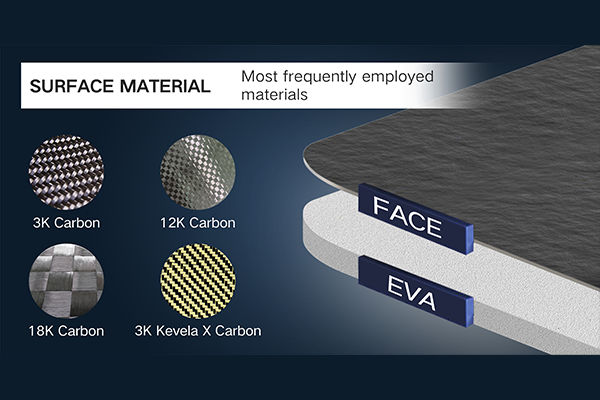
EVA foam is another important cost element. Different densities create different playing experiences and production costs. The right foam choice depends on whether the product focuses on control, power, comfort, or professional performance.
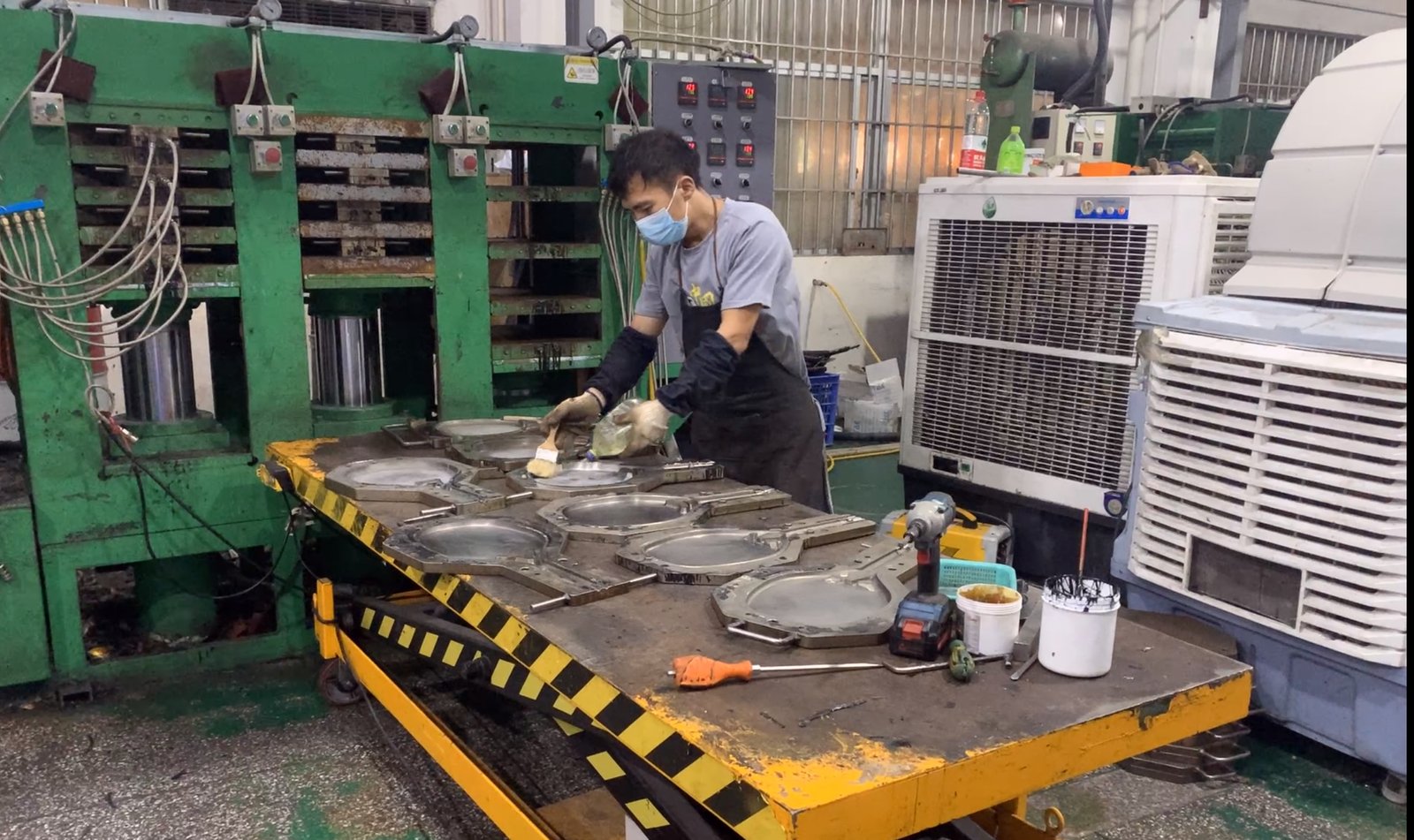
Labor cost depends on manufacturing complexity. Processes such as carbon layering, molding, sanding, coating, and quality inspection require skilled workers and careful management.
Manufacturing efficiency also affects final pricing. Factories with optimized production systems can reduce waste, improve consistency, and control unnecessary costs.
A factory with internal engineering and production teams can often provide better cost management because design decisions and manufacturing decisions are connected from the beginning.
How to Optimize Cost in OEM Production?
Cost optimization does not mean choosing the cheapest materials. It means creating the best balance between performance, quality, and production efficiency.
The first method is product planning before development. Clear positioning prevents unnecessary design changes and reduces repeated sampling costs.
The second method is material optimization. Engineers can adjust carbon layers, foam density, and surface technology to achieve the required performance without excessive cost.
The third method is production efficiency improvement. Better mold design, standardized processes, and accurate quality control reduce waste and improve manufacturing stability.
The fourth method is selecting the right customization level. Not every product requires the most complex surface treatment. Sometimes a simpler but well-designed solution creates better commercial results.
Professional OEM production depends on cooperation between design teams, engineers, and production specialists. This creates products that achieve market goals while maintaining reasonable cost structures.
How Surface Selection Influences Product Success
The surface of a padel racket represents the connection between technology, marketing, and customer experience.
A successful product does not simply use the most expensive surface technology. It uses the right technology for the intended market.
For premium models, advanced textures and special coatings may create stronger differentiation. For mass-market products, durability and cost efficiency may be more important.
Factories with strong development capabilities can create different surface solutions for different product categories. This allows brands to build complete product lines instead of relying on one standard model.
Future padel racket development will continue moving toward more personalized designs, smarter material combinations, and better balance between appearance and performance.
Conclusion
Choosing a padel racket surface requires understanding more than visual design. Marketing value, player experience, material selection, and production cost all influence the final product.
The best surface solution combines attractive appearance with real performance and efficient manufacturing.
Working with an experienced manufacturer that has design, R&D, and production capabilities helps create rackets with stronger market positioning, reliable quality, and optimized production costs.