Choosing a carbon layup for an OEM padel racket involves more than selecting a marketable K number. Brands need a construction that meets the intended impact feel, durability requirements, production cost, and product positioning. Combining 3K and 18K fabrics offers another design option, but does not automatically deliver better performance.
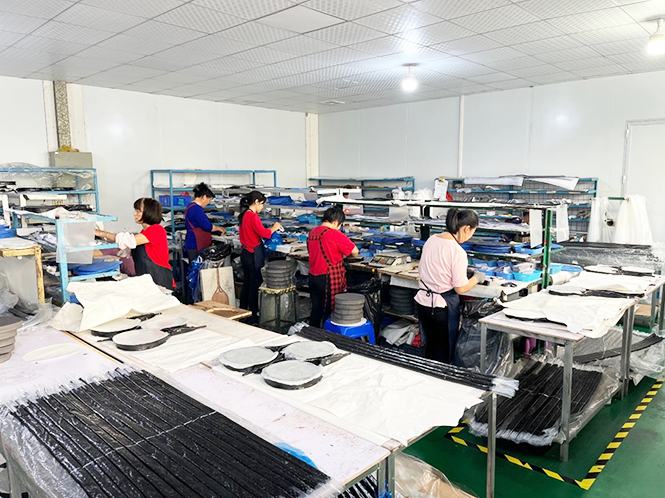
A 3K–18K hybrid layup uses fabrics with different tow sizes within the same composite structure. Neither designation alone establishes softness or stiffness. The result depends on fiber properties, fabric weight, layer placement, orientation, resin content, and interaction with the foam core and racket geometry.
This guide examines when a mixed carbon construction may suit an OEM collection, which layup variables deserve attention, and how to evaluate the commercial trade-offs. It also explains what to include in a sampling specification so brands and manufacturers can assess the finished racket against clear product goals.
What Does a 3K–18K Hybrid Layup Mean?
A 3K–18K hybrid combines carbon fabrics with different tow sizes within one racket construction. 3K contains approximately 3,000 filaments per tow, while 18K contains approximately 18,000. These numbers do not establish a ranking of stiffness, strength, or quality.
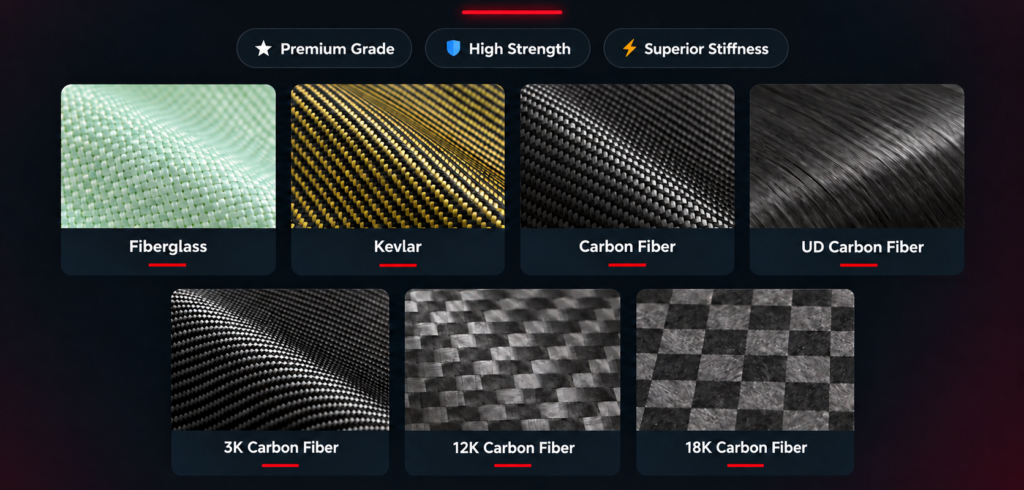
The finished composite also depends on fiber grade, fabric weight, weave, layer orientation, resin content, and curing conditions. Two rackets with the same carbon label can therefore deliver noticeably different responses.
Define Where Each Fabric Is Used
“Hybrid” is not a complete construction specification. It may describe stacked face layers, reinforcement in selected areas, or different materials used in the face and frame.
| Hybrid Arrangement | What the Specification Should Identify |
|---|---|
| Layered face | Outer and inner fabrics, layer sequence, orientation, and coverage |
| Local reinforcement | Reinforced areas, overlap, and transitions between materials |
| Different face and frame constructions | Material placement and connection between structural sections |
A visible carbon layer may contribute to both appearance and structure. Its role should be documented rather than inferred from a catalog name or surface photograph.
Evaluate the Face, Core, and Frame Together
The carbon skin works with the foam core and racket geometry. Changing core firmness, throat reinforcement, or mass distribution can alter impact feel even when the face fabrics remain unchanged.
For a useful sample comparison, keep other specifications as consistent as practical. Record the mold, core, finished weight, balance, hole pattern, and surface treatment. This makes it easier to assess the contribution of the layup rather than several simultaneous changes.
When Does a Mixed Carbon Layup Make Commercial Sense?
A hybrid construction is worth developing when it addresses a defined product requirement. Combining two carbon designations is not, by itself, a reason to charge more or expect better performance.
Potential commercial objectives include:
- Creating a distinct model within an existing collection
- Achieving a specified impact response without changing the mold
- Combining a visible carbon appearance with an engineered supporting laminate
- Revising an existing construction to meet cost or durability targets
- Developing a product between established comfort- and power-oriented models
Each objective requires validation. A hybrid is not inherently softer, more forgiving, or less expensive than a single-fabric construction.
Example: Developing a Middle-Tier Model
A brand with a flexible introductory racket and a firm, attacking flagship may need an intermediate option. A 3K–18K construction could be evaluated for that role alongside a suitable core, geometry, and weight distribution.
The development brief should define the intended difference: manageable swing effort, predictable response, suitable comfort, and a clear visual identity. Samples must demonstrate those characteristics before the product is positioned as an upgrade.
Its commercial value comes from the finished racket’s distinction within the range—not simply the presence of two carbon fabrics.
When a Simpler Construction Is Better
A mixed layup may be unnecessary when an existing construction already meets the required performance, appearance, and price. Additional materials can introduce sourcing, handling, layup, and inspection variables without delivering a meaningful customer benefit.
Compare the full commercial picture: development charges, material availability, production yield, finishing, inspection, and repeat-order consistency. If the hybrid cannot demonstrate a useful advantage at the intended margin, a simpler laminate may be the stronger product choice.
How a 3K–18K Layup Influences Racket Performance
Tow size alone cannot predict impact feel, rebound, or durability. The contribution of 3K and 18K fabrics depends on their weight, fiber properties, orientation, placement, and integration with the rest of the racket.
A heavier 3K layer may produce a stiffer construction than a lighter 18K layer. Likewise, changing reinforcement orientation can alter directional stiffness without changing the visible carbon designation. Evaluate the actual laminate rather than assigning a fixed playing character to each K number.
Impact Response and Off-Center Stability
The development goal should be a predictable response across the intended hitting area. A hybrid construction may help achieve that target, but any improvement must be demonstrated against a suitable reference racket.
Compare center and off-center impacts under consistent conditions. Assess rebound, deformation, vibration characteristics, and player feedback separately rather than treating them as one measure of “control.”
Local reinforcement can change face stiffness and mass distribution. Whether it improves stability without compromising handling depends on its location, coverage, and weight.
Finished Weight and Balance
Additional reinforcement, resin, coatings, graphics, and accessories all contribute to finished weight. Their positions also affect balance and swing effort.
Specify weight and balance together, including:
- The acceptable range for each measurement
- The measurement method and reference point
- Whether the grip, wrist strap, and protector are installed
- The finished coating and surface treatment
- Any permitted production adjustments
Two rackets with the same total weight can handle differently because their mass is distributed differently. Where appropriate, swing-weight measurements can provide an additional comparison beyond weight and balance alone.
Durability Depends on Construction and Processing
A mixed-carbon layup requires reliable bonding between layers and controlled transitions around reinforced areas. However, combining tow sizes does not inherently make a racket more or less durable.
Review potential stress concentrations around holes, the face-to-frame transition, throat geometry, and reinforcement terminations. Material placement, resin distribution, consolidation, and curing should follow the approved construction.
| Evaluation Area | What to Review |
|---|---|
| Visible workmanship | Wrinkles, exposed defects, weave distortion, and edge damage |
| Process consistency | Layer placement, resin control, and curing records |
| Dimensional consistency | Finished weight, balance, geometry, and hole positioning |
| Structural performance | Agreed impact and fatigue tests with defined acceptance criteria |
Visual inspection cannot establish internal bonding quality by itself. Combine appearance checks with suitable process controls and structural testing. Use representative samples and documented test conditions to confirm that the approved design can be reproduced consistently.
Cost, MOQ, and Lead-Time Planning
A mixed-carbon construction can introduce additional material sourcing, cutting, placement, and inspection requirements. Its cost should be assessed against the complete racket specification rather than a generic premium for an “18K hybrid” label.
Request an itemized quotation that identifies what is included:
| Cost Area | Details to Confirm |
|---|---|
| Development | Sampling, revisions, tooling, and ownership arrangements |
| Construction | Carbon fabrics, laminate, core, reinforcement, and molding |
| Finishing | Graphics, protective coating, texture, and frame protection |
| Assembly | Grip, wrist strap, and other fitted components |
| Packaging | Individual protection, retail packaging, labels, and export cartons |
| Validation | Inspection, testing, documentation, and defect-resolution terms |
Confirm minimum quantities for each model, artwork, and configuration. Material and packaging suppliers may impose separate minimums that affect the final order.
Build the schedule around clear milestones: technical approval, sampling, testing, revisions, pre-production approval, manufacturing, inspection, and shipping. Distinguish factory completion from arrival at the destination, and allow time to address failed tests or sample revisions.
Keep Production Aligned With the Approved Construction
The approved reference sample should be supported by a controlled specification sheet. Appearance alone cannot confirm that production uses the same reinforcement, core, or laminate.
Define measurable requirements for finished weight, balance, dimensions, hole position, surface finish, artwork, grip installation, and packaging. For subjective characteristics such as impact feel, establish a consistent evaluation method and reference.
Production-Control Priorities
- Verify incoming fabric, foam, resin, and other specified components.
- Document layer sequence, orientation, coverage, and permitted overlaps.
- Record relevant molding and curing conditions.
- Check finished units using an agreed sampling plan.
- Conduct suitable impact or fatigue tests with defined acceptance criteria.
- Document defects, corrective actions, and shipment-release decisions.
Material and batch records should connect the approved specification to production. Any proposed substitution should require review before implementation.
Independent inspection may be useful for selected orders, but it supplements the manufacturer’s process controls rather than replacing them. Visual inspection alone cannot establish internal laminate quality.
Position the Hybrid Through Verified Benefits
Marketing should describe the finished racket’s demonstrated characteristics rather than assign performance to the K numbers.
Do not claim that 18K automatically adds power or that 3K guarantees control. If testing supports a medium-firm response, manageable handling, or consistent off-center behavior, communicate those findings with appropriate context.
Describe material placement accurately. If 18K forms the visible outer face and 3K provides underlying reinforcement, explain that arrangement without implying that both materials appear throughout the entire racket.
Give the Model a Clear Role in the Collection
Compare the hybrid with adjacent models using meaningful differences: geometry, core, finished weight, balance, impact response, and price. Player suitability should follow sample evaluation rather than assumptions about carbon labels.
A concise distributor comparison can help explain why a customer would choose the hybrid over an existing model. If that distinction remains unclear, reconsider whether the additional construction complexity creates sufficient commercial value.
Conclusion
A 3K–18K hybrid can make commercial sense when it meets a defined performance target and creates a useful distinction within the product range. Its value depends on the complete construction, validated samples, and repeatable manufacturing—not the combination of two carbon names.
For an OEM or ODM project, contact padelico to discuss your target player, construction preferences, branding, packaging, and order requirements. Confirm available development options and quotation details against the proposed specification.