An accurate custom padel racket quotation requires more than a logo and reference image. Suppliers need sufficient detail about the construction, dimensions, materials, finishing, and order scope to assess feasibility and estimate costs. Missing information can lead to different assumptions and quotations that are difficult to compare.
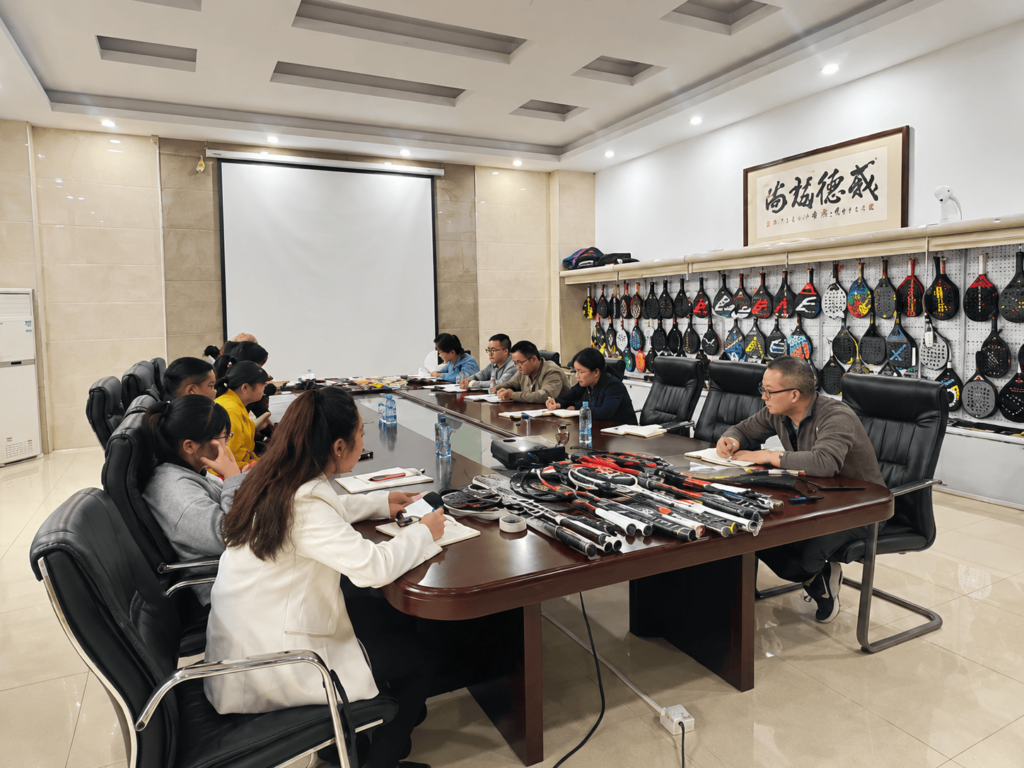
A padel racket OEM tech pack brings the product requirements into one controlled reference. It should distinguish confirmed specifications from development targets and identify where the manufacturer is expected to propose options. This supports clearer discussions during costing, sampling, and production planning.
This guide explains what to include in your tech pack, which specifications influence pricing, and how to prepare a complete quotation request. It also outlines how to document revisions and supplier proposals so the approved design remains clear as the project develops.
Why a Padel Racket OEM Tech Pack Matters
A tech pack establishes what the manufacturer should quote, develop, and produce. It gives purchasing, engineering, design, and quality teams a shared reference for evaluating proposals and approving samples.
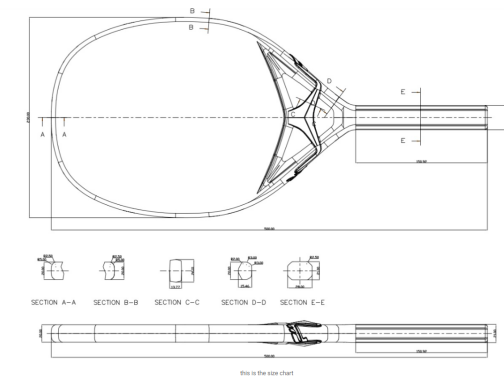
The document should be detailed enough to define the product without adding unnecessary complexity. An existing-mold project may need fewer development drawings than a new design, but both require clear materials, dimensions, finishing, packaging, and acceptance criteria.
Without this information, suppliers may price different constructions under the same product description. A complete specification makes those differences visible and helps reduce avoidable clarification, sample revisions, and disagreements during production.
Distinguish Requirements From Development Options
Assign a status to each important specification:
| Status | Meaning |
|---|---|
| Required | Must be met unless a change is approved |
| Preferred | Desired, but alternatives may be considered |
| Optional | Quoted separately as an addition or upgrade |
| Supplier proposal | Manufacturer to recommend a solution for review |
For example, a finished weight range may be mandatory while the supporting laminate remains open to development. Ask the supplier to identify deviations and price alternatives separately rather than incorporating unapproved changes into the base quotation.
Define the Intended Player and Product Targets
Begin with the target user, playing priorities, and commercial position. A junior model, rental racket, and competitive adult racket may require different dimensions, handling characteristics, and durability evaluations.
Provide a target retail price and, where useful, a purchasing-cost range. Clarify whether that budget includes accessories, packaging, testing, and development charges.
Terms such as “comfortable,” “powerful,” and “forgiving” are useful starting points, but should be supported by reference samples and agreed evaluation methods.
Specify Geometry and Construction Interfaces
Identify the shape and existing mold reference, or supply dimensioned drawings for a custom design. Define the measurements that matter rather than asking the factory to interpret a photograph.
| Specification | Information to Record |
|---|---|
| Overall geometry | Length, maximum width, thickness, profile, and tolerances |
| Mold | Approved existing platform or custom-tooling requirements |
| Hole layout | Positions, diameters, spacing, and drilling-quality criteria |
| Handle | Length, cross-section, grip circumference, and butt-cap details |
| Accessories | Grip, wrist strap, protector, and attachment requirements |
| Reference racket | Identified sample and the characteristics to retain or change |
If 38 mm is the intended nominal thickness, state it explicitly and confirm the applicable dimensional requirements. Do not leave the factory to assume a standard configuration.
Define Finished Weight and Balance Together
Specify an acceptable weight range and the exact configuration used for measurement. For example, a development brief might request 360–370 g with the standard grip and wrist strap installed, excluding removable packaging. This is an illustrative target, not a universal recommendation.
Define balance using a reference point, measurement method, and allowable range. Record the position of loose accessories during measurement so results are comparable.
Weight and balance do not fully describe handling. Where maneuverability is important, consider an agreed swing-weight measurement or controlled comparison with a reference racket.
Use Reference Samples With Clear Instructions
A physical benchmark can help communicate impact feel, handling, and appearance. Explain precisely what should match and what should differ.
A request such as “similar handling with improved off-center response” should be treated as a development target requiring evaluation—not a guaranteed result from changing the shape or carbon label.
For a project with padelico, share the completed requirements and any unresolved targets, then confirm which existing-mold or custom-development options are available. Record the selected approach and sample revisions before approving the production specification.
Specify Materials and Internal Construction
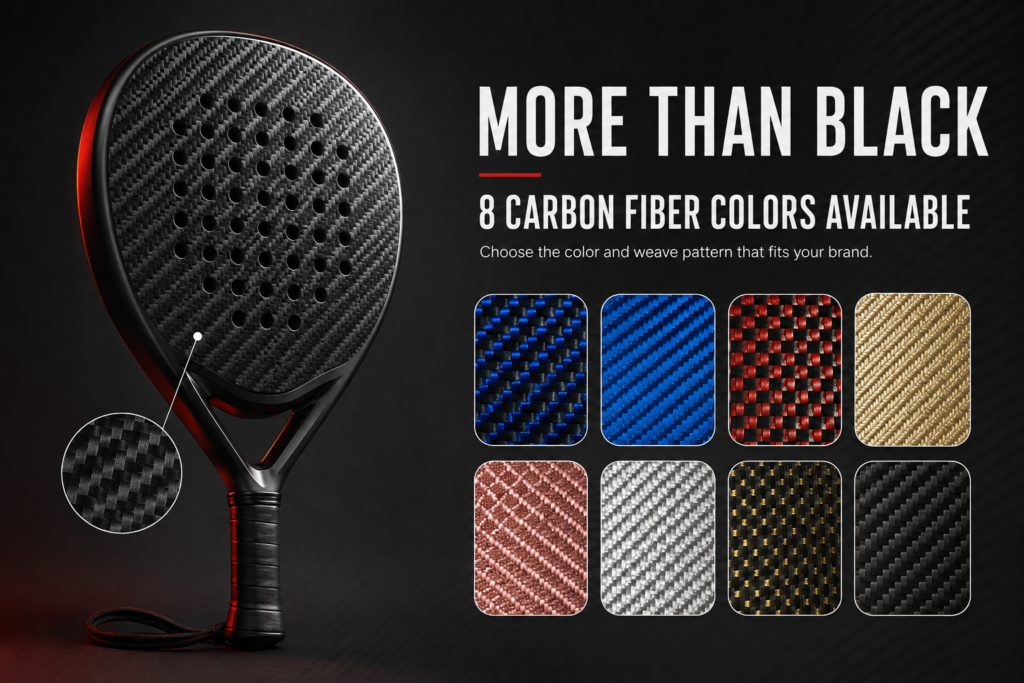
A useful material specification distinguishes the visible surface from the reinforcement beneath it. Describe the face, frame, and core separately so suppliers can quote the intended construction rather than interpret a marketing label.
Carbon terminology describes different attributes. For example, 3K, 12K, and 18K identify tow size; plain and twill describe weave patterns; spread tow describes how bundles are spread; and unidirectional reinforcement describes fiber alignment. These terms are not interchangeable performance grades.
Define the Face, Frame, and Core
| Component | Details to Include |
|---|---|
| Face | Visible fabric, supporting layers, coverage, and orientation where specified |
| Frame and throat | Reinforcement materials, construction approach, and locally reinforced areas |
| Core | Foam reference, relevant density and hardness properties, and layer arrangement |
| Resin system | Approved reference and critical processing requirements, where applicable |
| Additional components | Protector, inserts, adhesives, and any specified damping elements |
For foam, identify the hardness scale, test method, and measurement conditions where numerical requirements are used. Density and hardness are different properties, and supplier descriptions such as “medium EVA” are not necessarily comparable.
If the manufacturer is expected to engineer the laminate, state the development targets and request a documented proposal. Proprietary details may require confidentiality arrangements, but the approved construction must remain identifiable.
Connect Construction to Evaluation
Describe the intended impact feel and handling using a reference racket where possible. Translate goals such as vibration reduction or torsional stability into agreed comparisons or tests rather than assuming a material choice will deliver them.
Include any destination-market material requirements and the supporting documentation expected. Require written review of substitutions, with the proposed material, reason for change, price effect, and validation needs clearly identified.
Provide Production-Ready Artwork and Branding Instructions
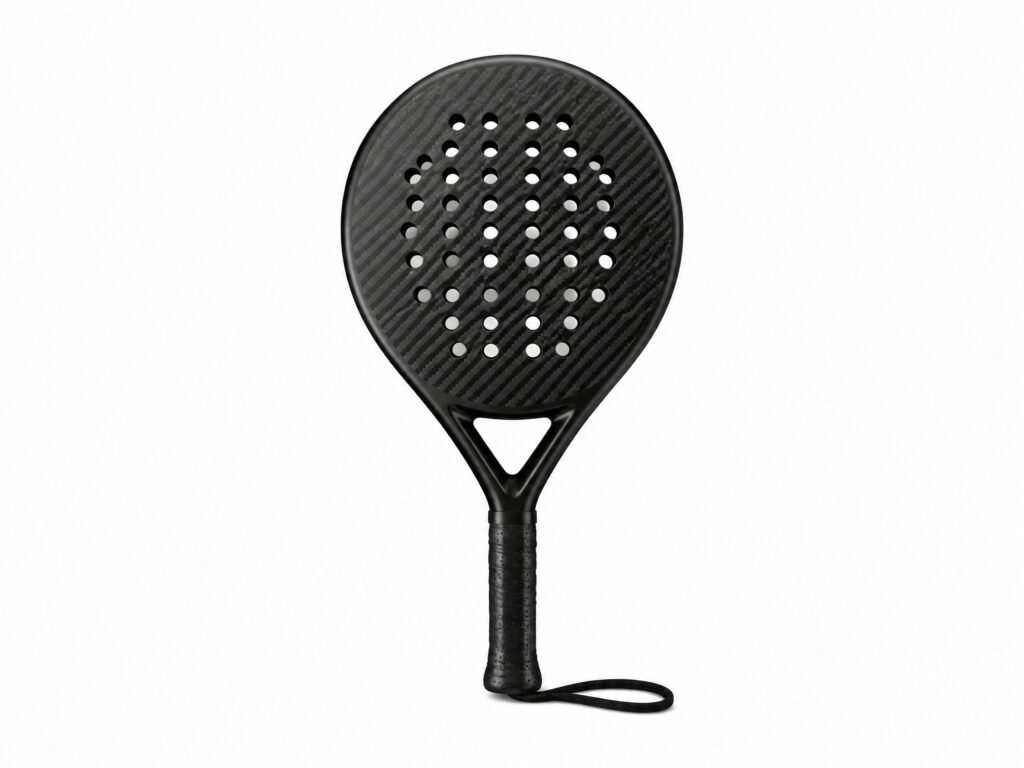
Artwork should define placement, dimensions, colors, and application methods—not simply show the desired appearance.
Supply files in the manufacturer’s agreed production format. Vector artwork is generally preferable for logos and text; raster images may be suitable when supplied at the required resolution and final print size. Keep editable source files and provide an approved production copy with fonts embedded or outlined as agreed.
Map the Design to the Racket
Provide front, back, frame, and component views using the approved template. Separate artwork layers so production teams can distinguish:
- Base colors and printed graphics
- Clear or exposed-carbon areas
- Texture and raised effects
- Spot gloss or other selective coatings
- Product identification and required markings
Specify placement tolerances, artwork orientation, and areas that must remain clear. Confirm that the design is compatible with curved surfaces, holes, and the selected application process.
Approve Color and Finish Physically
Use identified color references where practical, including the reference system and substrate where relevant. A screen image or color code alone cannot establish the final appearance on a coated composite surface.
For important colors, approve a panel or decorated racket made with the intended coating system. Define gloss level and texture separately, with physical references or measurement methods where appropriate.
Effects such as metallic paint, translucent coatings, raised graphics, and textured zones should have defined locations and acceptance criteria rather than a general instruction to create a “premium finish.”
Include Accessories and Packaging
Extend the artwork specification to the grip, wrist strap, butt cap, protector, cover, labels, retail box, and shipping carton where applicable. Identify who supplies the artwork, who prepares production layouts, and who approves each version.
Confirm authorization to use trademarks and other supplied designs. Request separate pricing for decoration setup, tooling, custom components, and packaging so their commercial impact is visible.
Release one controlled artwork revision for production. Any later change should be documented and reviewed for its effect on cost, appearance, and delivery.
Include Commercial Requirements in Your Quote Request
A complete tech pack defines both the product and the purchasing scope. Alongside technical specifications, provide quantities, packaging requirements, delivery expectations, and the commercial terms suppliers should use when pricing.
Separate confirmed orders from forecasts. Estimated annual demand can support planning, but should not be presented as a committed purchase unless agreed.
| Commercial Item | Information to Provide |
|---|---|
| Order quantities | Units per model, construction, artwork, and colorway |
| Forecast demand | Estimated repeat quantities and purchasing frequency |
| Budget | Target purchasing range and what it should include |
| Schedule | Sample deadline, required arrival date, and launch timing |
| Delivery | Destination, requested trade term, and freight scope |
| Packaging | Individual protection, retail packaging, labels, and carton requirements |
| Tooling | Ownership, maintenance, storage, access, and any exclusivity |
| Order terms | Payment, quotation validity, defect resolution, and warranty responsibilities |
Request quantity breaks that reflect realistic purchasing scenarios. Confirm whether minimums apply separately to molds, materials, artwork, accessories, or packaging.
Request an Itemized Quotation
Ask suppliers to distinguish recurring unit costs from development and setup charges. Identify tooling, samples, artwork preparation, accessories, packaging, testing, inspection, and transportation separately where applicable.
The quotation should state its assumptions and exclusions. Confirm the named location associated with the delivery term and clarify responsibility for applicable taxes, duties, and other destination charges.
A comparable quotation is one based on the same approved scope—not simply the same number of rackets.
Build a Milestone-Based Schedule
Separate development from repeat production. Request estimated durations for technical review, tooling, samples, revisions, material preparation, manufacturing, inspection, and shipping.
Identify dependencies and the event that starts each lead time, such as deposit receipt or sample approval. Allow for review and corrective work rather than treating the quoted manufacturing period as the complete launch schedule.
Submit a Controlled RFQ Package
Organize the submission so the manufacturer can identify the current requirements easily. Include the dated tech pack, drawings, artwork, reference images, quantity table, and unresolved questions.
Use consistent model names and revision numbers across files. Ask the supplier to return a specification confirmation and a list of deviations, alternatives, or missing information with the quotation.
Review those exceptions before comparing prices. A lower offer may reflect a different construction, omitted packaging, or reduced inspection scope.
Conclusion
An effective padel racket OEM tech pack connects a defined product with clear approval criteria and commercial requirements. Document the construction, geometry, weight, balance, artwork, finishing, packaging, testing, quantities, and delivery expectations. Mark open decisions and require proposed changes to be disclosed.
For your next project, contact padelico with your product brief and purchasing requirements. Discuss available development routes, sampling arrangements, and quotation scope to establish a clear starting point for your OEM or ODM racket.