
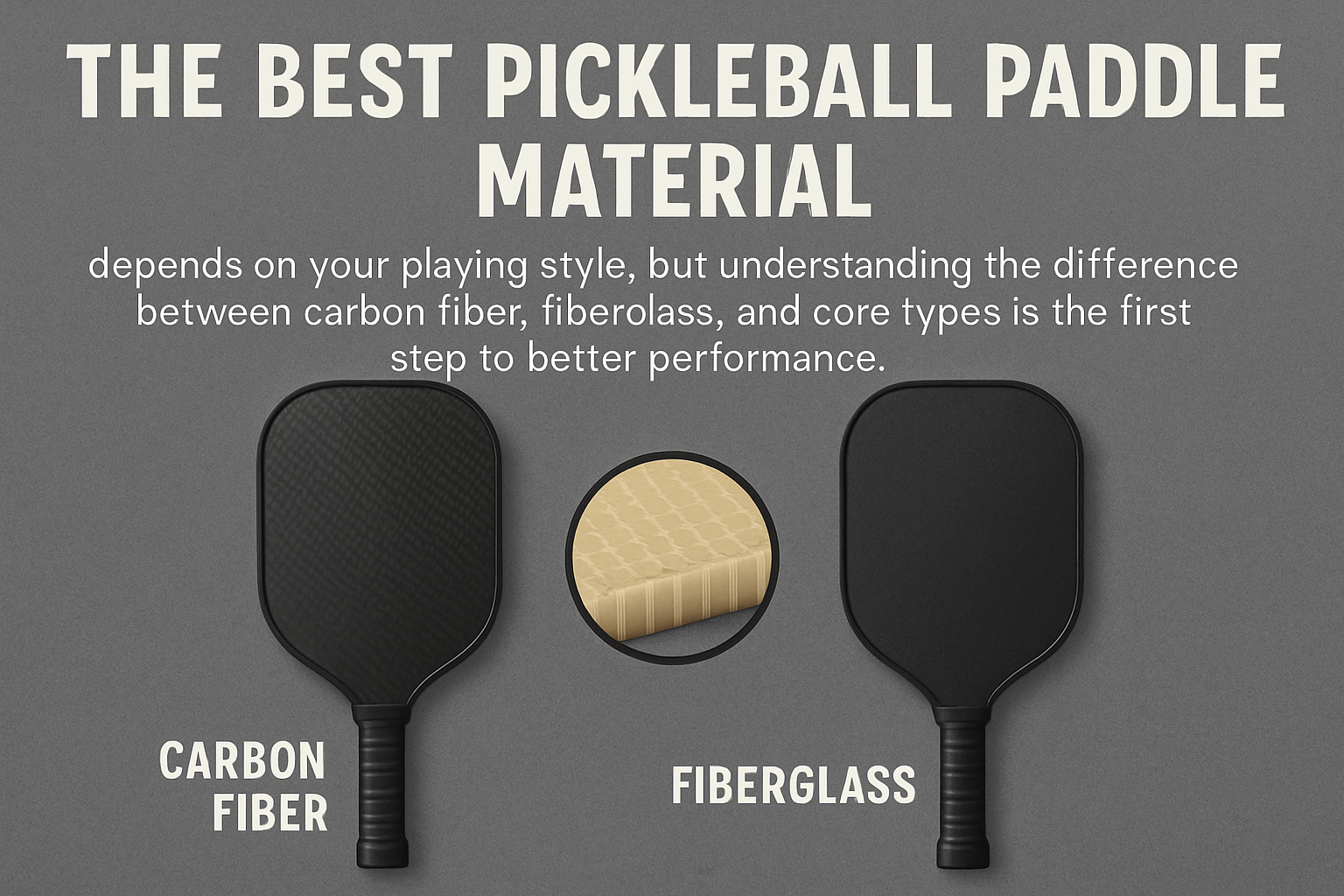
If your shots feel off, your control inconsistent, or your paddle lacks power, the material might be the real problem—not your technique.
The best pickleball paddle material depends on your playing style, but understanding the difference between carbon fiber, fiberglass, and core types is the first step to better performance.
When I started working with paddle designs, I realized many players choose paddles based on brand, not performance. After testing and manufacturing hundreds of samples, I’ve seen how much the right material can change a player’s feel, spin, and control. Materials matter. Choosing right can instantly elevate your game.
What materials are most commonly used in pickleball paddles?
Some paddles hit hard but feel dull. Others give you spin but lack power. These are not defects—they’re material choices.
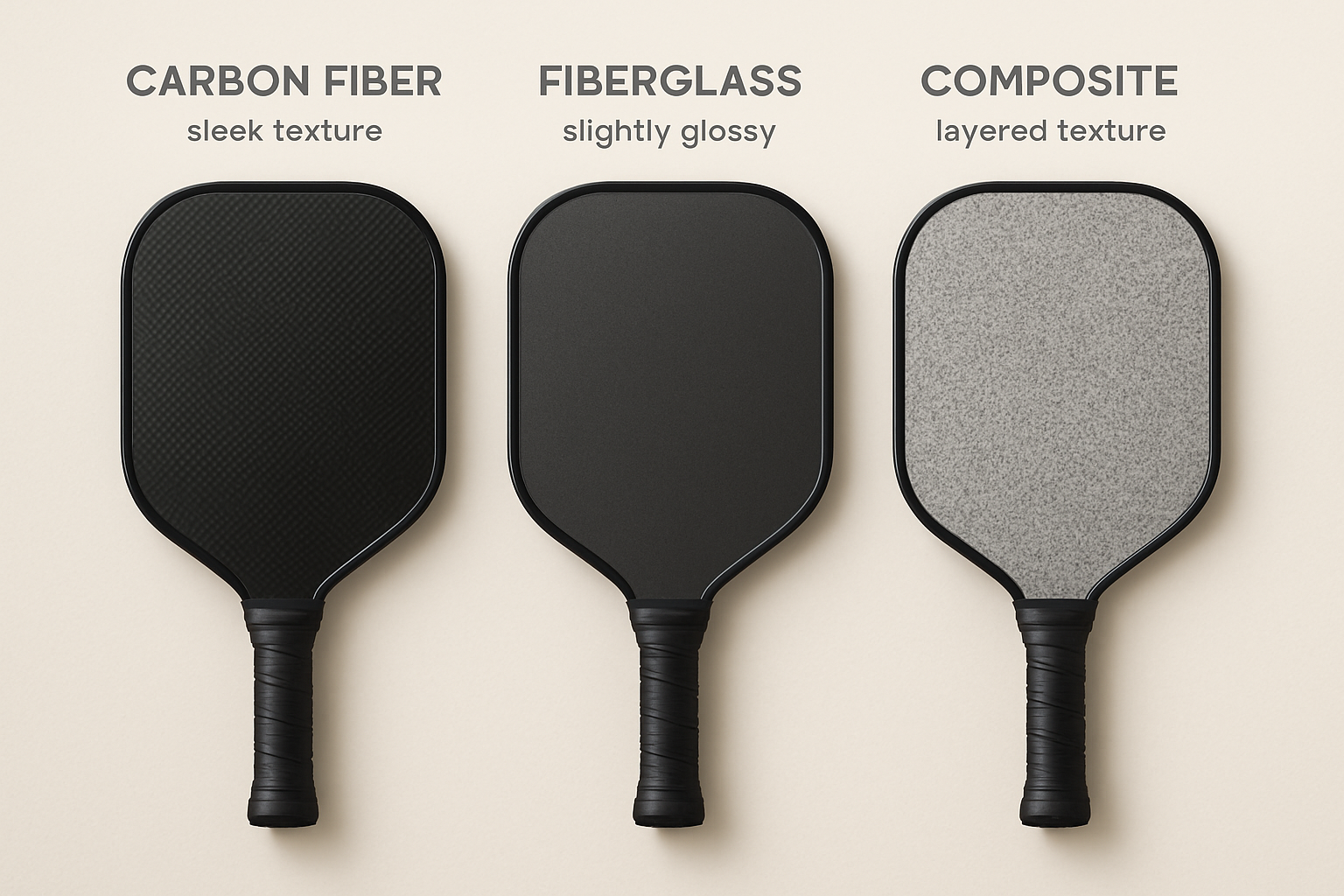
Pickleball paddle faces are typically made from carbon fiber, fiberglass, or a composite blend. Each material plays differently and suits different skill levels.
Carbon Fiber
Carbon fiber is stiff and light. It doesn’t bend much, so it gives you consistent control, especially in soft play and net shots. Players who like control and spin often prefer carbon fiber. The texture holds the ball longer, helping generate spin. But it sacrifices power. It’s also the most expensive because the weaving and molding process takes time.
Fiberglass
Fiberglass is more flexible and elastic. It creates more pop, which makes it easier to hit powerful shots. That’s helpful for players who want power without needing a fast swing. Fiberglass is heavier than carbon and doesn’t hold spin as well. But it costs less and is more forgiving for casual players.
Composite or Blended Faces
These combine layers of carbon, fiberglass, or even Kevlar. They aim to mix power and control, but usually lean toward one side depending on the build. I often recommend composite paddles for players who don’t have a strong preference yet and want a paddle that does a bit of everything.
| Face Material | Control | Power | Spin | Durability | Price Range |
|---|---|---|---|---|---|
| Carbon Fiber | ★★★★★ | ★★☆☆☆ | ★★★★☆ | ★★★★★ | High |
| Fiberglass | ★★☆☆☆ | ★★★★☆ | ★★☆☆☆ | ★★★★☆ | Medium |
| Composite | ★★★☆☆ | ★★★☆☆ | ★★★☆☆ | ★★★★☆ | Medium |
How does each material affect performance?
You might be practicing for weeks, but if the paddle doesn’t match your game, you won’t see progress.
Different face materials and core structures affect how energy transfers to the ball, changing the paddle's control, feel, power, and spin.
Power vs Control Balance
Carbon fiber absorbs more energy. That means less rebound and more control. It’s perfect for drop shots, resets, and dinks. Fiberglass reflects more energy, giving your shots more speed. This tradeoff makes it important to match material to how you play. Control players often go for carbon; power players lean fiberglass.
Feel and Feedback
Feel refers to how much feedback you get in your hand after a shot. Carbon fiber gives a sharper, more direct feeling, which helps experienced players make adjustments. Fiberglass feels softer and more muted. It’s easier on the arm, but sometimes hard to read how clean your contact was.
Spin Generation
Surface texture matters. A rough carbon fiber face grips the ball longer and produces more spin. Fiberglass can generate spin too, but not as efficiently. For players who rely on topspin or slice, carbon usually gives the edge.
Which paddle core material is best for your playing style?
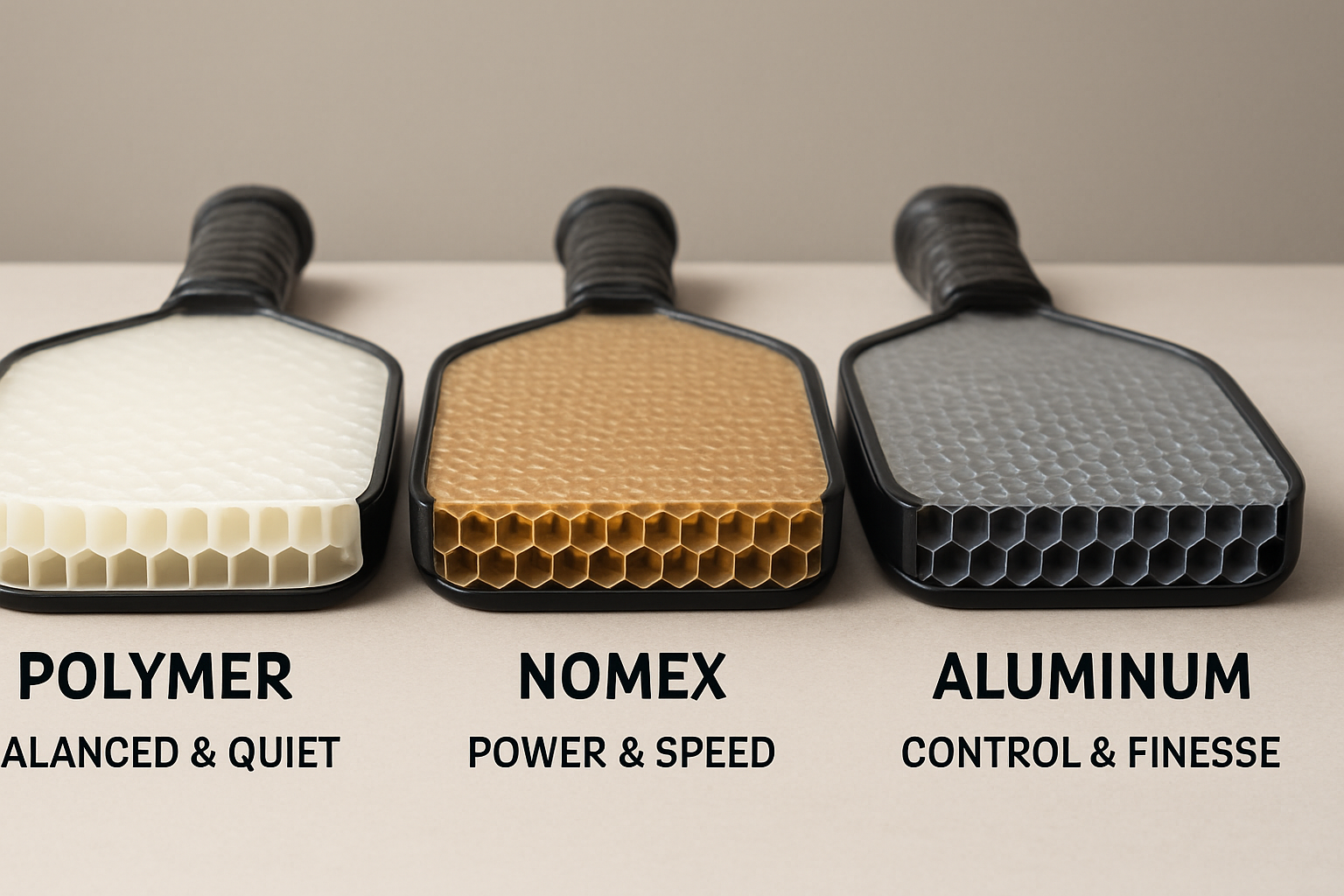
The face is only half the story. What’s inside your paddle changes everything from how it sounds to how it feels.
The three common core materials—polymer, Nomex, and aluminum—change paddle weight, vibration, power level, and feel. Each suits a different type of player.
Polymer Honeycomb
This is the most widely used core today. It’s made from a plastic honeycomb structure. It gives balanced control, dampens vibration, and feels comfortable. I recommend it to 80% of players, especially those who want a quiet paddle with good touch and all-around performance. Polymer also lasts longer in extreme conditions like heat or cold.
Nomex Core
Nomex is harder and louder. It’s made from resin-coated paper in a honeycomb shape. It sends more energy into the ball, which means more power. But it’s noisy, less forgiving, and offers less touch for delicate shots. I only recommend it for players who prioritize speed and smash-heavy play.
Aluminum Core
Aluminum cores offer great control and quick reactions. But they lack power and wear out faster. They’re light and work well for people who like quick hand movements and placement shots. I rarely recommend them unless someone values finesse above all else.
| Core Material | Power | Control | Noise Level | Durability | Weight |
|---|---|---|---|---|---|
| Polymer | ★★★☆☆ | ★★★★☆ | Low | ★★★★★ | Medium |
| Nomex | ★★★★★ | ★★☆☆☆ | High | ★★★★☆ | Light |
| Aluminum | ★★☆☆☆ | ★★★★★ | Medium | ★★☆☆☆ | Light |
Conclusion
If you want more spin, go carbon fiber. If you want more pop, choose fiberglass. And if you want a quiet, all-around paddle, pick a polymer core.
Choosing the best material for your pickleball paddle isn’t just about price or design—it’s about matching your paddle to your play. I’ve seen players unlock new levels of confidence just by switching to a paddle that fits their style. Whether you’re aiming for control, spin, or raw power, there’s a face and core material that can help you get there. And once you find that match, the game starts to feel more natural. Less struggle, more wins. That’s why material matters.