
Many players assume all pickleball paddles are the same size, but this is not correct. Although paddles must comply with official regulations, subtle differences in dimensions and design significantly influence play style, control, and shot performance.

Pickleball paddles must fall within specific length and width limits, but variations in shape, balance, and weight create distinct playing characteristics suited for different player needs and strategies.
Official rules set boundaries to ensure fairness. According to USA Pickleball (USAPA), paddles cannot exceed 17 inches in length, and the combined length plus width must not surpass 24 inches. Within these limits, manufacturers can vary paddle length, width, shape, and balance, producing equipment that emphasizes control, power, or reach. This allows players to select paddles based on personal preference and playing style.
What are the official size limits for paddles?

Regulations define the maximum dimensions for paddles to standardize competitive play.
Maximum length: 17 inches
Maximum combined length and width: 24 inches (including edge guard and butt cap) ([USAPA Equipment Standards]
- Most paddles range from 15 to 17 inches in length.
- Width typically varies between 7 and 8.25 inches.
- Paddle face designs often aim for about 16 inches in length and 7.5–8 inches in width for balanced performance.
These specifications provide a framework for manufacturing, yet they leave room for performance optimization through design.
How do paddle shapes vary within size limits?

Despite regulation limits, paddle shapes differ to support specific playing characteristics.
Manufacturers create paddles in wide-body, elongated, and hybrid shapes to emphasize sweet spot size, reach, or balance.
Shape characteristics
- Wide-body paddles: Wider faces maximize the sweet spot for greater forgiveness and control, ideal for doubles or beginners.
- Elongated paddles: Longer length enhances reach and leverage for aggressive baseline play, though sweet spot is smaller and requires more precision.
- Hybrid paddles: Intermediate designs balance reach, sweet spot size, and maneuverability for versatile play.
| Paddle Shape | Advantages | Trade-offs |
|---|---|---|
| Wide-body | Large sweet spot, control | Reduced reach, less leverage |
| Elongated | Better reach, more power | Smaller sweet spot, less forgiving |
| Hybrid | Balanced control and reach | Compromises on extremes |
These variations ensure that paddle choice aligns with both skill level and play strategy.
How do weight and balance interact with size?
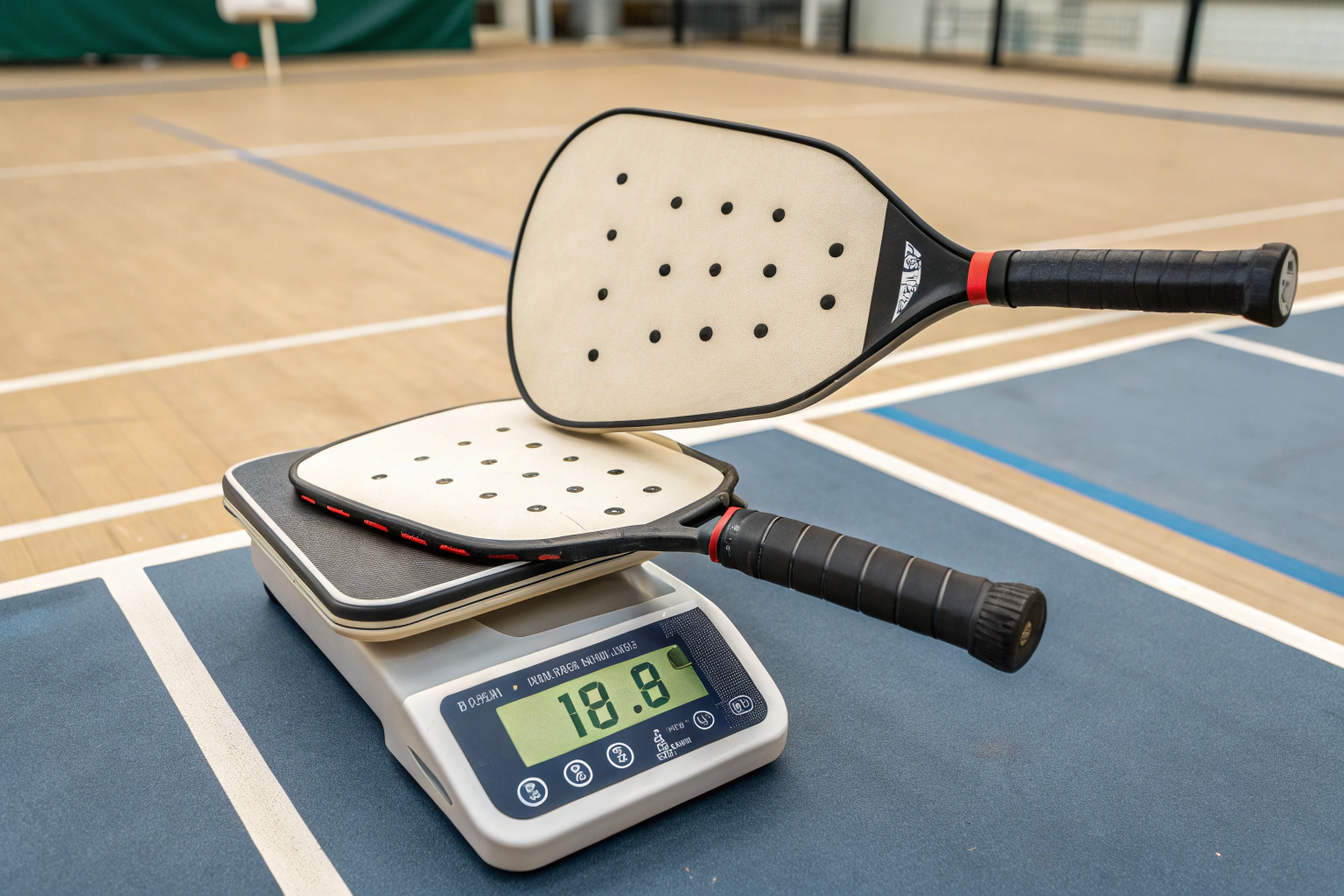
Size alone does not define performance. Weight distribution and balance significantly affect how a paddle handles.
Balanced weight and strategic distribution allow precise control, while head-heavy paddles increase power. Paddle feel depends on design as much as dimensions.
Technical considerations
- Weight: Light paddles (7–7.5 oz) improve reaction speed and reduce fatigue; heavier paddles (8.5 oz+) increase stability and shot power.
- Balance: Low-balance paddles favor net play and quick maneuvering; high-balance paddles favor powerful strokes from the baseline.
- Grip length and thickness: These affect handling, wrist mobility, and overall comfort during extended play.
| Feature | Effect on Play |
|---|---|
| Lightweight | Faster swings, less fatigue |
| Head-heavy | Increased power, more momentum |
| Balanced | Versatile for control and reach |
| Grip size | Comfort and wrist control |
Designing paddles that integrate size, weight, and balance is critical for achieving optimal performance.
How do material choices relate to paddle size?
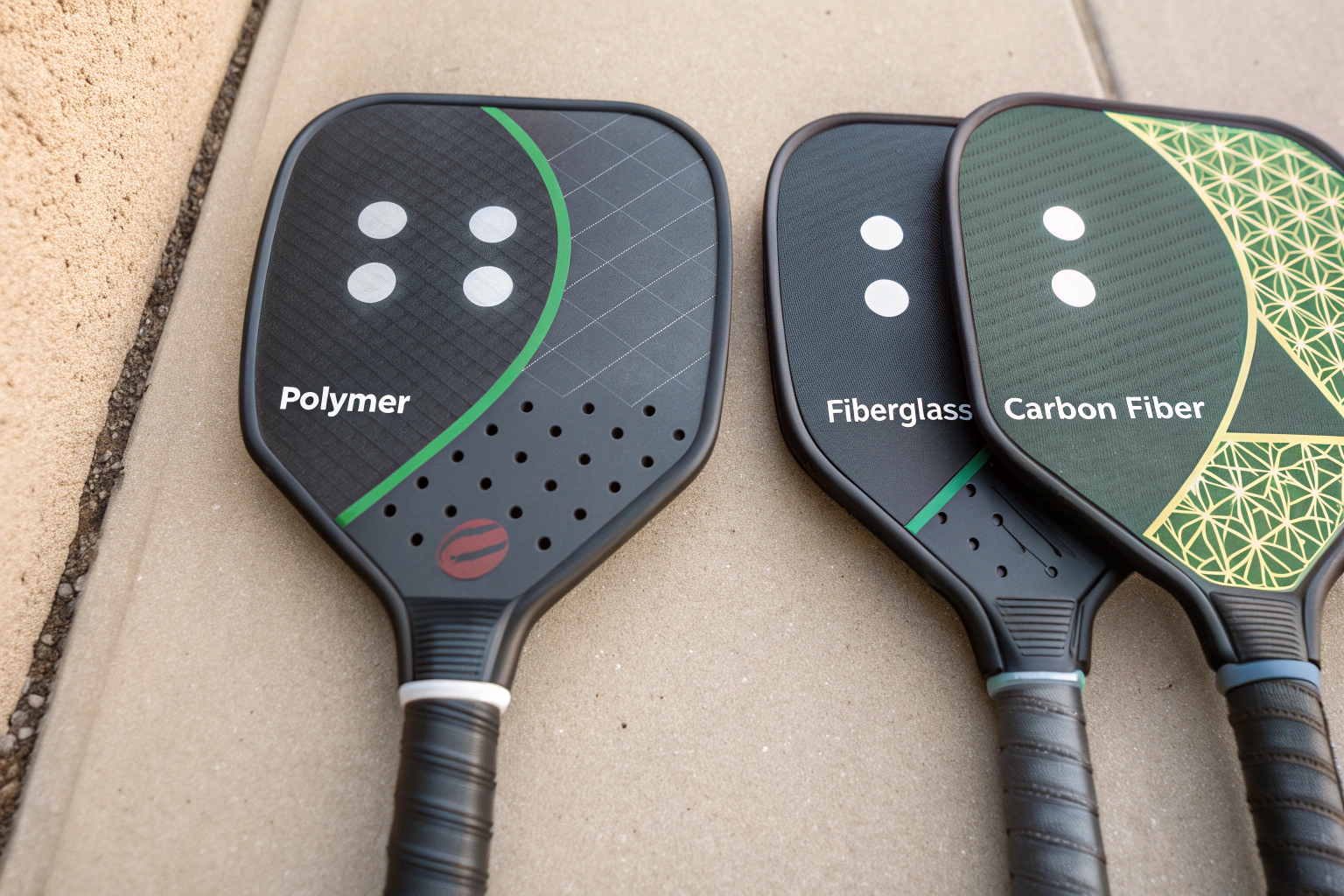
Materials influence how a paddle behaves regardless of its dimensions. Core and face composition determine vibration control, ball response, and sweet spot consistency.
Soft polymer cores enhance touch and control, while fiberglass and carbon fiber faces provide feedback, durability, and precision.
Material and performance integration
- Polymer cores: Allow consistent rebound, low vibration, and a forgiving feel, especially beneficial for control-oriented paddles.
- Fiberglass faces: Provide balanced rebound and enhanced control for recreational to intermediate players.
- Carbon fiber faces: Deliver high precision, stiffness, and energy transfer suitable for competitive and advanced play.
| Material Type | Effect | Best Use |
|---|---|---|
| Polymer Core | Soft, forgiving | Beginners, control paddles |
| Fiberglass Face | Balanced rebound and touch | Recreational/intermediate |
| Carbon Fiber Face | High stiffness, precise energy transfer | Advanced and tournament play |
Material choices complement paddle size, shape, and weight to create a cohesive design for specific playing strategies.
Conclusion
Not all pickleball paddles are the same size. While official rules limit overall length and combined length plus width, variations in shape, weight, balance, and material create a wide range of paddle performance characteristics. Wide-body paddles prioritize forgiveness and control, elongated paddles provide reach and leverage, and hybrid paddles offer a balanced approach. Manufacturers leverage these differences to produce paddles tailored to varying skill levels, playing styles, and performance goals. By understanding how dimensions, weight, balance, and materials interact, players can select paddles that maximize control, accuracy, and shot consistency. From a design perspective, producing a diverse range of paddles ensures that different player needs—from beginners seeking forgiveness to advanced competitors requiring precision—are effectively met, enhancing performance and long-term satisfaction.