Material selection in pickleball paddle production directly influences performance, durability, and player satisfaction. Understanding core and surface materials is essential for product development and differentiation.
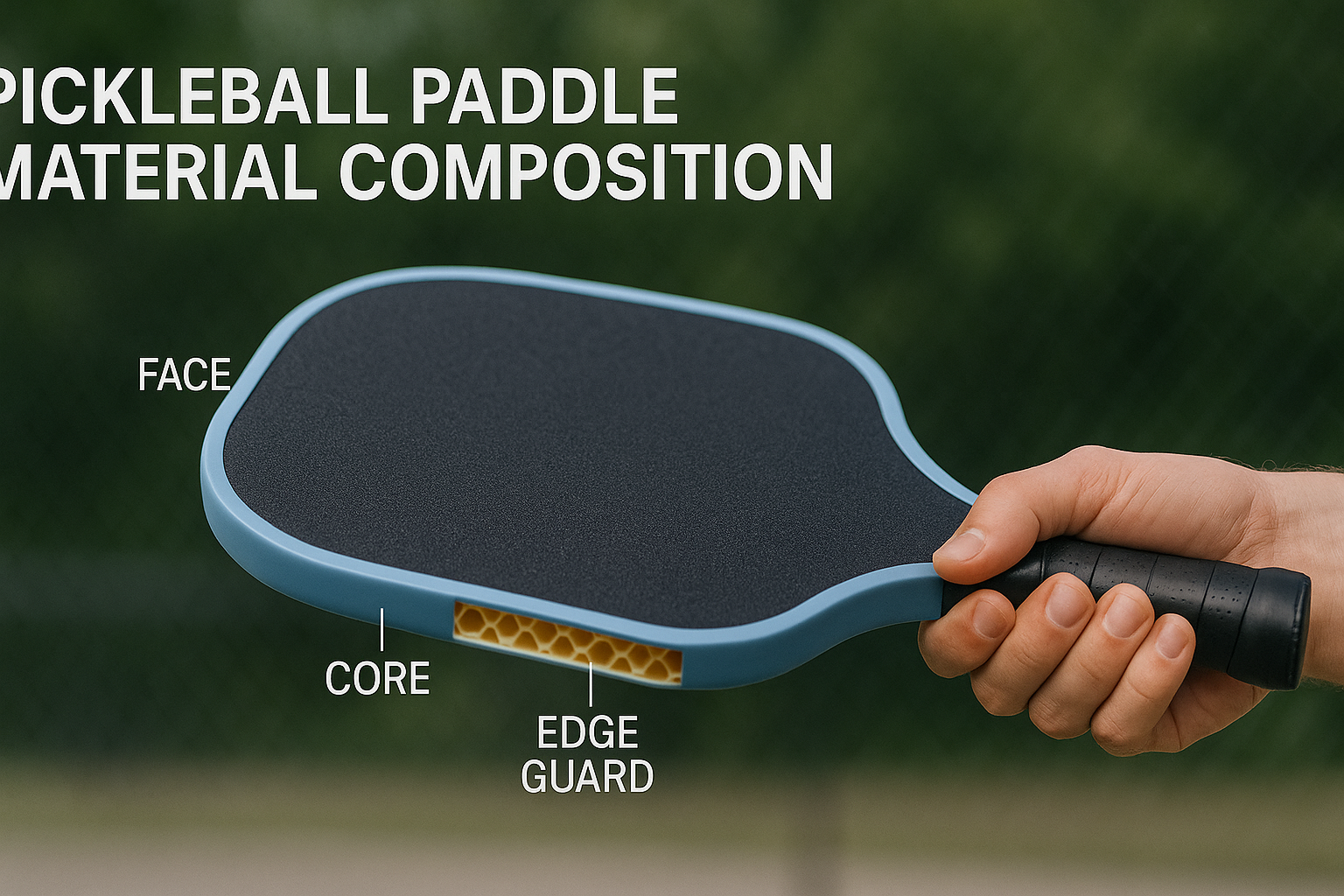
Pickleball paddles are typically composed of a polymer, aluminum, or Nomex core combined with a composite, carbon fiber, or fiberglass surface. Each material affects control, power, weight, and durability.
Product success in the pickleball market depends on balancing cost-efficiency with performance. Material selection is not just a technical decision—it’s a strategic one that shapes brand reputation, user retention, and compliance with USAPA standards.
What are the core materials used in pickleball paddles?
The paddle core is the internal layer that determines rebound, stiffness, and weight. It is one of the most important components for defining playing feel.
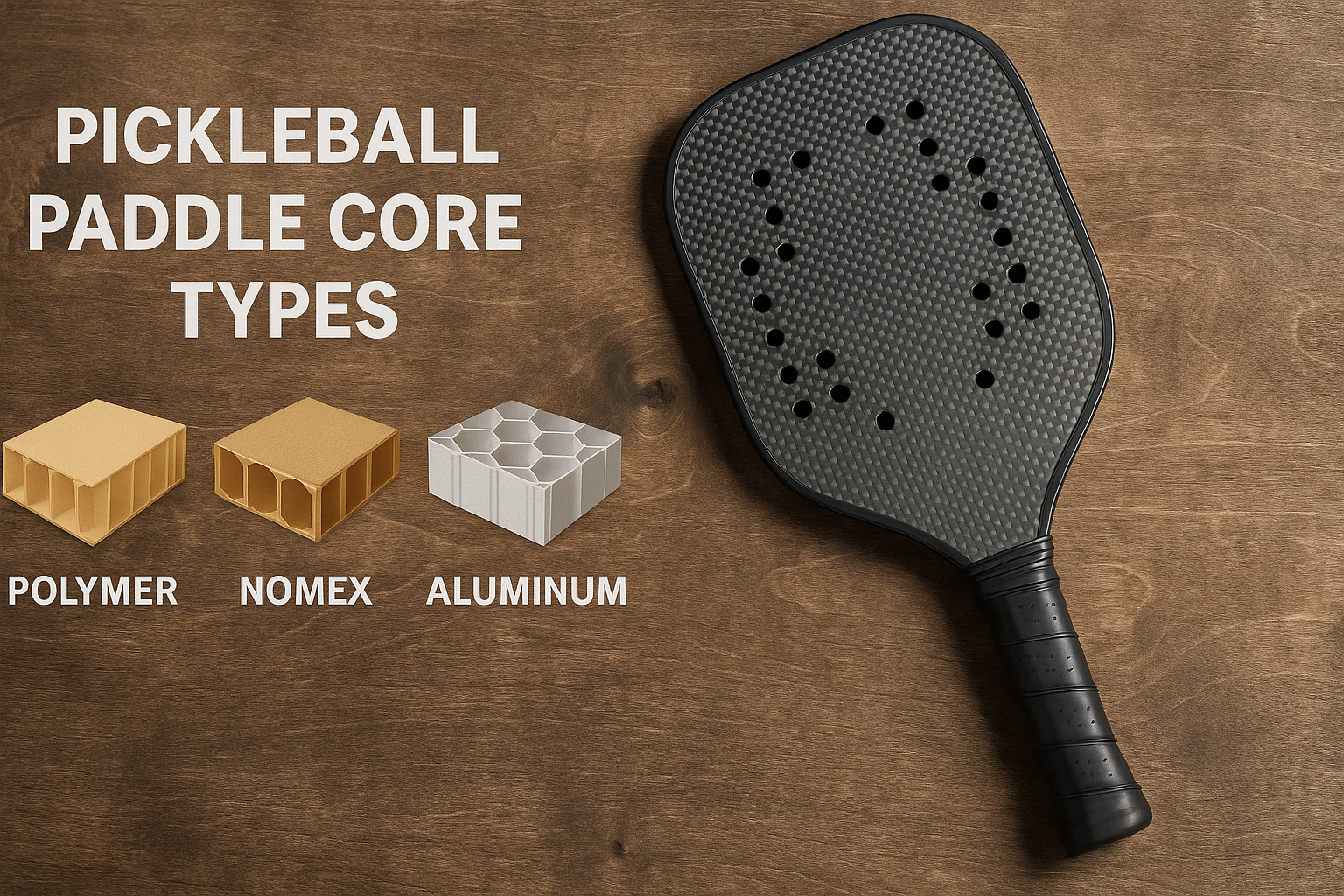
Most modern paddles use polymer honeycomb cores due to their lightweight, noise control, and balanced performance. Aluminum and Nomex are also used for specialized applications.
Core Material Comparison
| Core Type | Description | Performance Features |
|---|---|---|
| Polymer Core | PP Honeycomb (Polypropylene) | Quiet, soft feel, high durability |
| Nomex Core | Hardened paper-based honeycomb | Loud, very firm, high power |
| Aluminum Core | Aluminum cell structure | Lightweight, responsive, less cushioning |
- Polymer is the current industry standard, especially for recreational and professional paddles. Its balance of strength, weight, and sound-dampening meets both player and tournament demands.
- Nomex offers a hard, fast-playing surface preferred by aggressive players but produces a louder hit.
- Aluminum is light and quick but has less shock absorption and lower popularity in competitive segments.
Advanced manufacturing facilities typically offer multiple core configurations to meet different market needs. Customization of core density and cell size is also available in precision-driven production environments.
What surface materials are used, and how do they influence play?
Surface material determines the paddle’s stiffness, control, spin potential, and durability. Selection must align with player segment, price range, and branding strategy.
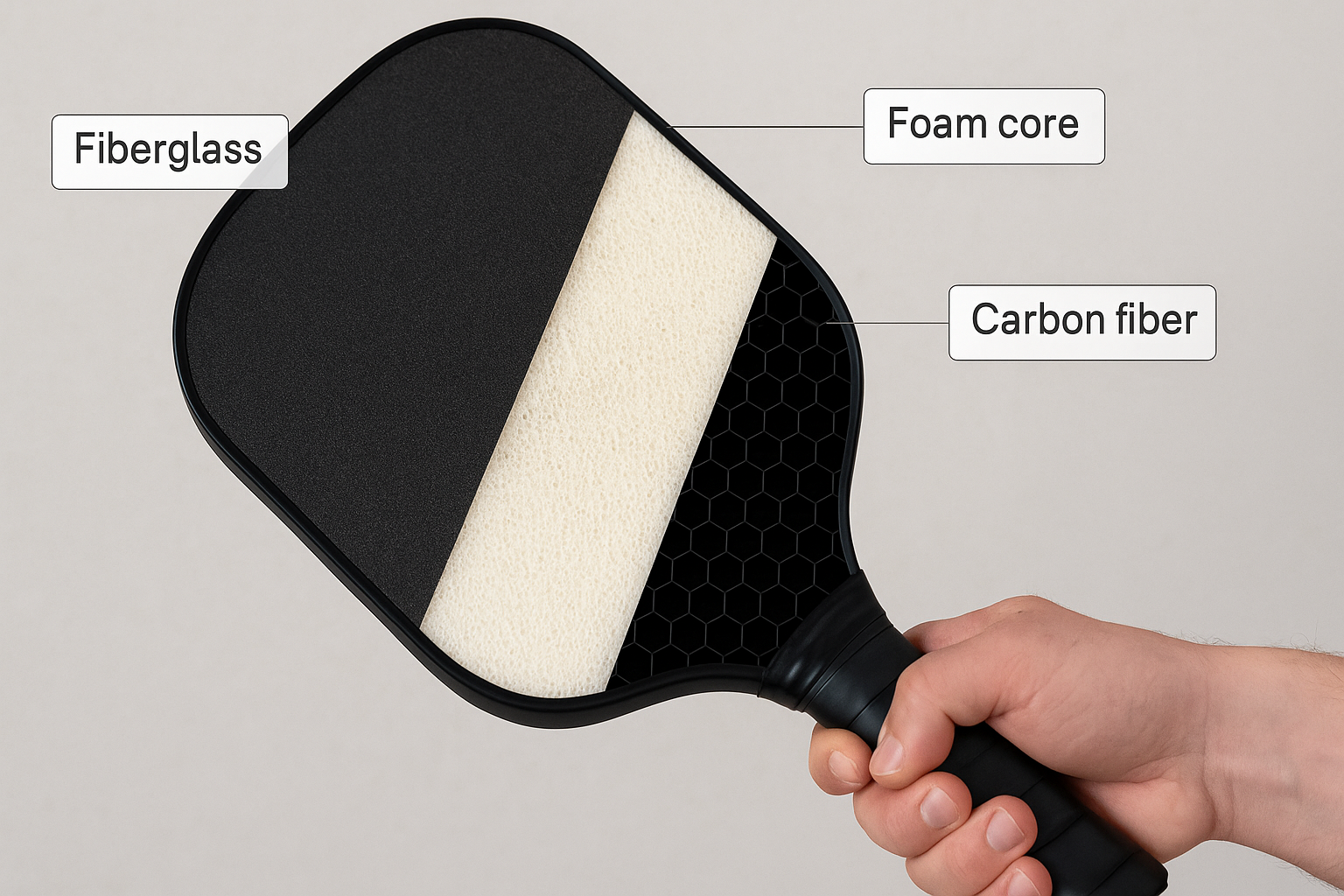
Carbon fiber, fiberglass, and composite blends are the most common surface materials in modern paddles. Each one serves a distinct performance purpose.
Surface Material Properties
| Surface Material | Characteristics | Target Performance Focus |
|---|---|---|
| Carbon Fiber | Rigid, textured, premium | Control, spin, durability |
| Fiberglass | Flexible, high rebound | Power, comfort |
| Composite Blends | Resin-impregnated fibers or mixes | Balanced response, mid-price |
- Carbon fiber surfaces are ideal for advanced players seeking control and spin. It’s more expensive but enhances precision and product longevity.
- Fiberglass offers more flexibility and rebound, suitable for beginner to intermediate players.
- Composites allow tailored balance at mid-range price points. These include proprietary materials that combine carbon, fiberglass, and resin layers.
Manufacturing capability to apply layered coatings, edge-guard integration, and face surface treatment (matte, grit, UV print) is crucial to achieving a premium paddle experience. Consistent lamination and bonding also prevent delamination under intense play.
How does paddle structure affect certification and performance consistency?
Material combinations must comply with international performance standards, especially for products targeting competitive and league play.
All USAPA-approved paddles must meet strict surface friction, deflection, and size criteria. Structural consistency across mass production is key to passing lab testing and field evaluation.
Key Certification Factors
- Surface Roughness: Must stay within specified limits to ensure fair play.
- Deflection Rate: Controlled by face material and core compression behavior.
- Weight Tolerance: Influenced by core density and edge protection system.
- Bonding Durability: Assessed through pressure and impact resistance tests.
An experienced paddle factory integrates pre-production testing, in-line inspections, and batch sampling to ensure compliance across orders. Computer-controlled lamination, CNC cutting, and vacuum heat presses help maintain tolerance accuracy and structural repeatability.
OEM/ODM production partners offering full control over materials, graphics, mold development, and post-processing provide the most efficient path to a compliant and competitive product line.
Conclusion
Material composition is the foundation of a successful pickleball paddle. The right combination of core and surface materials determines power, control, noise level, and longevity—all critical factors in player satisfaction and brand growth.
Reliable manufacturing partners with advanced lamination technology, in-house mold tooling, and flexible sourcing of certified materials are essential for scalable and repeatable paddle production.
📩 To explore custom material combinations, request samples, or receive manufacturing consultation, contact the Youth Padel engineering team at hu@miao-ke.com or WhatsApp: +86-13023656973. Support is available for structural R&D, artwork integration, and test certification preparation.