The playing conditions of a badminton court can vary significantly, and adapting your racket setup accordingly can improve your performance. Whether you’re playing indoors or outdoors, on a synthetic or wooden surface, the right adjustments to your racket can help you handle the changing dynamics of the game.
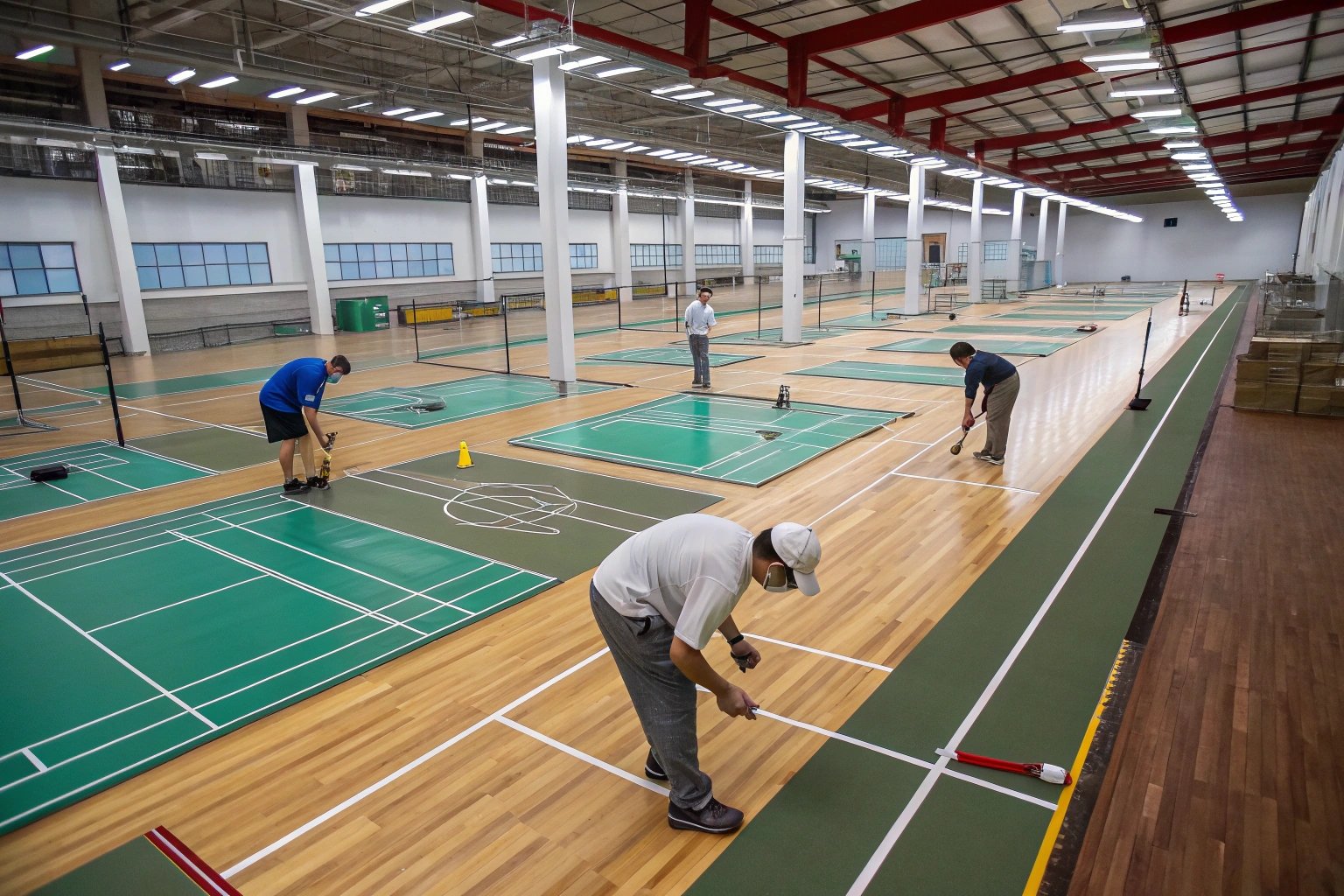
Adjusting your badminton racket to suit different court conditions helps you optimize control, power, and comfort. By modifying string tension, grip size, and other elements, you can adapt to various environments for the best possible play.
Badminton is a dynamic sport that requires quick reflexes and precise shots. The conditions of the court, including temperature, humidity, and surface, can influence the way your racket performs. Adapting your racket to suit these conditions ensures that you maintain the highest level of performance regardless of the court type.
1. Adjusting for Indoor vs. Outdoor Courts
Indoor and outdoor badminton courts offer very different playing conditions, which can impact how your racket performs. Indoor courts tend to have more consistent air conditions, while outdoor courts are exposed to elements like wind and temperature fluctuations.
For indoor play, a standard racket setup is typically sufficient, but for outdoor play, you may need to make specific adjustments.
[image placeholder]
-
Indoor Courts: Indoor courts are controlled environments where the shuttlecock flight is consistent, and wind or temperature changes are minimal. In these conditions, you can use a racket with standard string tension (around 24-26 lbs), as it offers a good balance between power and control. Since there are no wind factors indoors, you can focus on playing your best shots without worrying about unpredictable conditions.
-
Outdoor Courts: Outdoor courts introduce variables like wind and temperature, which can alter the flight of the shuttle. When playing outdoors, you may want to increase the string tension slightly (around 26-28 lbs) to improve control, especially in windy conditions. Higher string tension ensures that the shuttlecock behaves more predictably, giving you better control and precision. Additionally, you might want to choose a slightly heavier racket to counter the effects of wind resistance, as it can help with stability during long rallies.
2. Adjusting for Humidity and Temperature
Humidity and temperature can affect your racket, especially the strings. In humid conditions, strings may lose their tension more quickly, and the grip can become slippery. On the other hand, cold weather can make the strings stiffer and less responsive.
In humid or hot weather, it’s a good idea to check the tension and make sure your grip is in top condition.
[image placeholder]
-
High Humidity: High humidity causes the strings to expand and contract, which can affect the racket’s tension. If you live in a humid area, you might need to restring your racket more frequently, as the strings can lose tension faster. To prevent slipping, consider using a moisture-wicking overgrip, which helps keep your hands dry and improves control.
-
Cold Weather: Cold temperatures can make your strings stiffer, which may reduce power and make the racket feel less responsive. In these conditions, you might want to lower the string tension slightly (around 22-24 lbs) to regain some power. Additionally, your grip may become harder, so adding an overgrip or switching to a more cushioned grip can help improve comfort and prevent your racket from feeling stiff in your hands.
3. Adjusting for Court Surface: Wooden vs. Synthetic Courts
The type of court surface can affect how your racket performs during a match. Wooden courts provide a softer, less slippery surface, while synthetic courts are more durable and often provide a faster bounce for the shuttle.
For wooden courts, where there is less friction, you might want to slightly adjust your racket setup to compensate for the smoother surface. For synthetic courts, you may need to make minimal adjustments.
[image placeholder]
-
Wooden Courts: Wooden courts are generally less slippery and provide a stable, softer surface. On these courts, you don’t need to make drastic adjustments, but you may benefit from slightly lower string tension (around 22-24 lbs) to help generate more power from the racket. The softer surface also means there’s less friction between the shuttlecock and the floor, so a racket that offers a bit more control is ideal for fast-paced rallies.
-
Synthetic Courts: Synthetic surfaces tend to be faster and more durable, which can affect how the shuttle bounces. If you play on synthetic courts, you may want to keep your racket setup more aggressive, with higher string tension (26-28 lbs), to ensure that you maintain control. The speed of the court demands quick reactions, so a racket that gives you fast maneuverability will help you stay ahead in the game.
4. Adjusting for Wind Conditions in Outdoor Play
Wind is one of the biggest challenges in outdoor badminton, as it can dramatically alter the trajectory of the shuttlecock. Wind can cause unpredictable movement, making it harder to control shots, especially clears and smashes.
To handle wind conditions, increase string tension and consider using a heavier racket for added stability.
[image placeholder]
- Handling Wind: In windy conditions, it’s important to have a racket that gives you precise control over your shots. You might want to increase the string tension to around 28 lbs, which will provide more accuracy and prevent the shuttle from drifting too much due to the wind. Additionally, a heavier racket can help stabilize your shots, reducing the impact of wind resistance. Heavier rackets offer better momentum during power shots, such as smashes, which are critical for controlling the shuttle’s flight path.
5. Choosing the Right Grip for Comfort and Control
Your grip is essential for controlling the racket, especially when playing in varying conditions. In hot or humid weather, your hands can become sweaty, affecting how well you hold the racket.
Use an overgrip or change the grip material based on weather conditions to maintain comfort and control.
[image placeholder]
-
Sweaty Hands: If you play in hot, humid conditions, you might find that your grip becomes slippery, making it harder to control your shots. Using a moisture-wicking overgrip can help keep your hands dry and ensure that the racket stays in place during play. You can also replace the grip with a more absorbent material designed for hot or humid conditions.
-
Cold Weather: In cold weather, your hands may feel stiff, which can affect your control over the racket. Switching to a grip with more padding or adding an extra overgrip can help maintain a comfortable hold. A well-padded grip can also reduce strain on your hand and wrist, ensuring that you maintain control during play.
Conclusion
Adjusting your badminton racket for different court conditions is a simple yet effective way to improve your performance. Whether it’s the surface, wind, humidity, or temperature, making small tweaks to your string tension, grip, and racket setup can help you adapt to the conditions and stay competitive. With the right adjustments, you’ll be able to maintain control, power, and comfort no matter where you play.