When selecting a badminton racket, consider factors like weight, balance, material, and your playing style. These will guide you in making the right choice for your needs.

The right racket can elevate your game, helping you hit with more power, control, and precision. In this guide, we’ll walk you through everything you need to know to pick the perfect badminton racket based on your skill level, playing style, and preferences.
What Factors Should I Consider When Choosing a Badminton Racket?
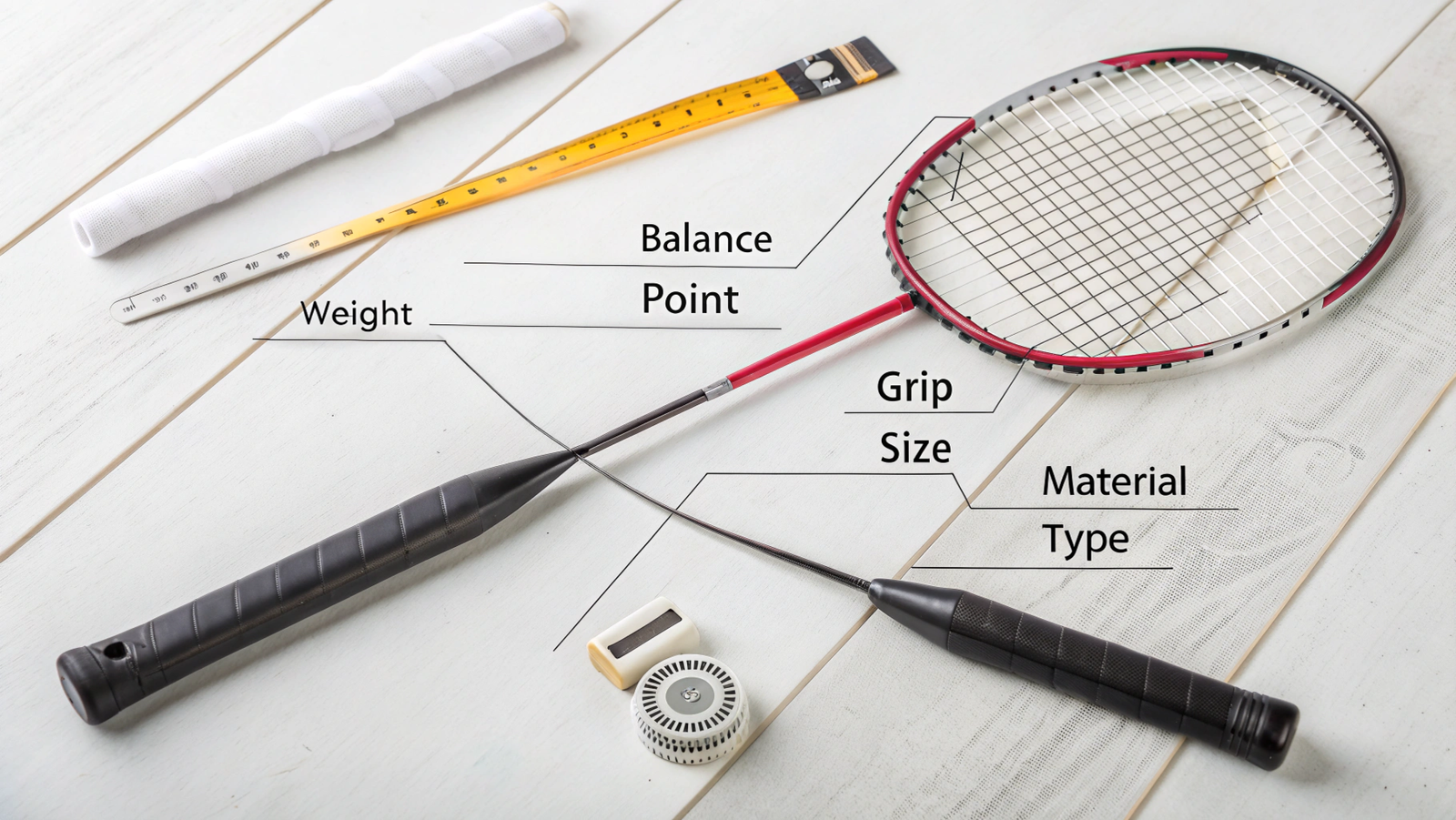
Key factors to consider include weight, balance, grip size, and materials, which all affect your control, power, and comfort.
Weight
Weight is one of the most important factors when selecting a racket. Lighter rackets (70-85 grams) allow for quicker reactions and faster swings, making them ideal for beginners or players focused on speed. Heavier rackets (85-100 grams) offer more power and stability, which are better suited for advanced players who need more control and power for attacking shots.
Balance
The balance of a racket affects how it feels during play. Rackets can be:
- Head-heavy: Provides more power for attacking shots like smashes.
- Head-light: Offers better control and faster swing speed, suitable for defensive or quick players.
- Even-balanced: A good combination of power and control, often preferred by all-around players.
Grip Size
Choosing the right grip size is crucial for comfort and control. A grip that’s too small or too large can affect how well you handle the racket. You should be able to hold the racket comfortably with a slight gap between your fingers and palm. A proper grip size ensures less strain on your hand and wrist.
What’s the Best Racket for Beginners?
Beginners should look for lightweight rackets with an even balance to improve control and reduce strain on the arm.
For beginners, a racket that is easy to swing and doesn’t tire you out quickly is key. Lightweight rackets, between 75-85 grams, are usually best as they allow for quicker reactions and a smoother feel. An even-balanced racket will provide a good mix of power and control, giving you the versatility to play both offensively and defensively.
Grip size is also essential for beginners. Opt for a racket with a grip that fits your hand size to avoid discomfort or injury. A comfortable grip allows you to maintain control without straining your wrist.
What’s the Best Racket for Intermediate Players?
As you improve, you’ll want a racket that allows you to generate more power and precision.
Intermediate players should opt for rackets that offer a balance between power and control, with a slightly heavier weight for stronger shots.
Intermediate players may benefit from rackets in the 85-90 gram range, which offers a bit more weight for power without compromising on speed. You can also experiment with a head-heavy balance to help generate more force for smashes or a flexible shaft for added comfort during long rallies.
An intermediate racket should allow for control, but with more emphasis on power, so a head-heavy or even-balanced racket is ideal. At this stage, you might also want to try rackets that use advanced materials like carbon fiber or graphite for better performance.
What’s the Best Racket for Advanced Players?
Advanced players should look for heavier rackets, head-heavy balance, and stiffer shafts to get more power and control for attacking play.
Advanced players usually prefer rackets in the 90-100 gram range. A head-heavy racket will provide more power for smashes and attacking shots. A stiffer shaft helps with the precision and control needed for more complex shots.
When you’re at an advanced level, materials like high-modulus carbon fiber, titanium, or a combination of both provide the right strength, flexibility, and stability for top-level performance. Look for rackets designed to give you more control during offensive play and enough stability to handle intense smashes.
Conclusion
Choosing the right badminton racket depends on your skill level, playing style, and comfort preferences. Beginners should look for lightweight, even-balanced rackets for easy control, while intermediate and advanced players can benefit from heavier rackets for power and control. Always consider factors like weight, balance, and grip size to ensure the racket suits your needs.