When it comes to pickleball, the type of paddle you use can make a huge difference depending on where you're playing. Indoor and outdoor pickleball paddles have distinct features that cater to the different conditions of each environment.
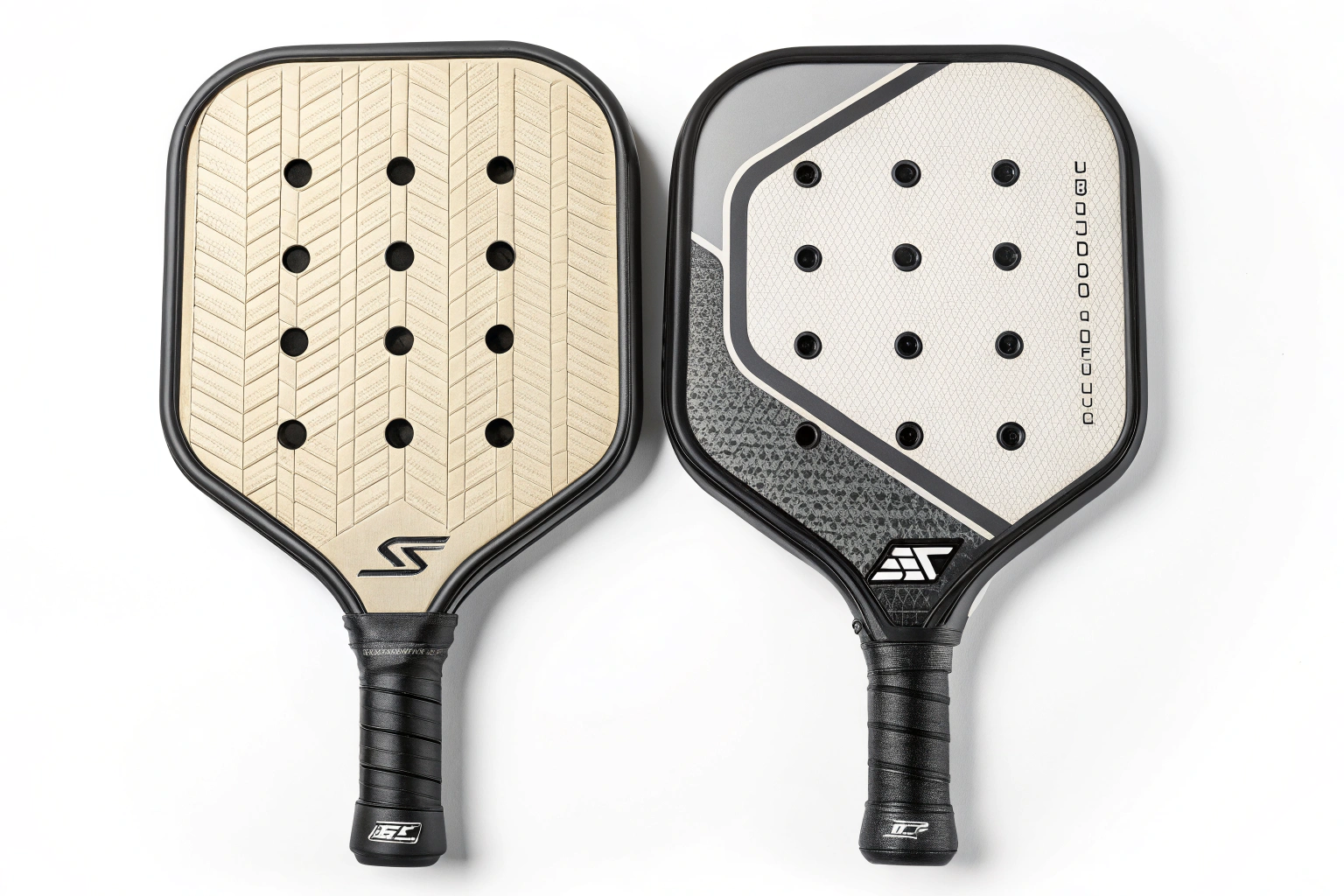
Indoor and outdoor paddles differ in materials, grip, weight, and surface texture. Understanding these differences will help you choose the right paddle for your game.
Choosing the right paddle for indoor or outdoor play can elevate your performance. Here are the six key differences to keep in mind when deciding which paddle is right for you.
What materials are used in indoor vs outdoor paddles?
Indoor and outdoor pickleball paddles are often made from different materials to accommodate the unique conditions of each playing surface.
Outdoor paddles tend to be more durable and robust, while indoor paddles are designed to be lighter and provide more control.
The main difference in materials is that outdoor paddles are designed to withstand the harsher conditions of outdoor courts. They often feature a more durable core material like polymer or Nomex, which helps to resist wear from rough outdoor surfaces and temperature fluctuations.
The materials used in outdoor paddles allow them to stand up to the weather and rougher conditions, while indoor paddles prioritize control and maneuverability on smooth, indoor surfaces.
How does the weight differ between indoor and outdoor paddles?
Weight plays an important role in both indoor and outdoor paddles, but the weight distribution can differ.
Outdoor paddles are generally heavier, providing more stability, while indoor paddles are lighter for faster reflexes and control.
Outdoor paddles are typically heavier, ranging from 7.5 to 8.5 ounces, because players often need additional stability to control their shots on outdoor courts. The extra weight helps players hit with more power and accuracy, especially on rougher surfaces or windy days.
Indoor paddles, on the other hand, are lighter, usually weighing between 6.5 to 7.5 ounces. The lighter weight makes them easier to maneuver and allows for quick reactions, which is essential for indoor games that usually involve faster-paced play and smaller, smoother courts.
The weight differences affect your ability to generate power or finesse on the ball, making the right weight crucial for your specific environment.
What’s the difference in grip and handle size?
Grip size is an important consideration for both indoor and outdoor paddles, but the preferences may vary depending on the environment and player style.
Outdoor paddles often have thicker grips for more stability, while indoor paddles typically feature thinner grips for faster handling.
Outdoor paddles usually have thicker grips because players often want extra stability in windy or variable conditions. A thicker grip helps players maintain control and precision, especially during long rallies or when hitting powerful shots.
Indoor paddles, on the other hand, often feature thinner grips. This allows for quicker wrist action and better control during fast exchanges, especially since indoor courts tend to have smoother surfaces and more consistent play. A thinner grip helps players execute sharp shots and improve handling in tighter spaces.
Choosing the right grip size and handle type will improve comfort and performance, whether you're playing indoors or outdoors.
How does surface texture differ between indoor and outdoor paddles?
Surface texture plays a key role in how the ball interacts with the paddle and the type of shots you can generate.
Outdoor paddles tend to have a rougher surface to generate more spin, while indoor paddles focus on a smoother surface for control and precision.
Outdoor paddles often feature a rougher surface texture, which allows players to generate more spin on the ball. This is particularly useful on outdoor courts where wind and less predictable surfaces can affect ball flight. The added spin helps players compensate for these environmental variables.
Indoor paddles, in contrast, tend to have a smoother surface. This allows for better control, precision, and a quieter hit on the ball. The smoother surface is optimal for the controlled environment of indoor courts, where the game is faster-paced and the ball tends to behave more predictably.
The surface texture directly affects how much spin you can apply and how well you can control your shots, depending on the environment you're playing in.
How do indoor and outdoor paddles handle weather conditions?
Weather conditions play a significant role in outdoor pickleball, and paddles need to be designed to withstand these elements.
Outdoor paddles are built to handle weather elements like rain, sun, and wind, while indoor paddles are designed for more stable, controlled conditions.
Outdoor paddles are made with more durable materials to handle extreme weather conditions. They are designed to resist the effects of moisture, humidity, and UV rays. Many outdoor paddles feature waterproof coatings or materials that won’t warp or lose performance when exposed to the elements.
Indoor paddles, however, are built for controlled environments. These paddles don’t need to withstand rain or direct sunlight, so they’re typically made from lighter materials that prioritize performance and feel over durability in extreme conditions.
If you plan to play regularly outdoors, choosing a paddle that can withstand the elements is crucial for maintaining its longevity and performance.
Conclusion
Understanding the differences between indoor and outdoor pickleball paddles will help you make the right choice for your playing conditions. Whether it’s the material, weight, grip, or surface texture, knowing how each factor affects your game will ensure you get the best performance.