Racket weight determines maneuverability, control, power generation, and overall comfort. Choosing between a light or heavy model depends on playing style, technique, and the physical requirements of the user. The ideal solution is understanding how each weight category behaves and how factory engineering influences performance.
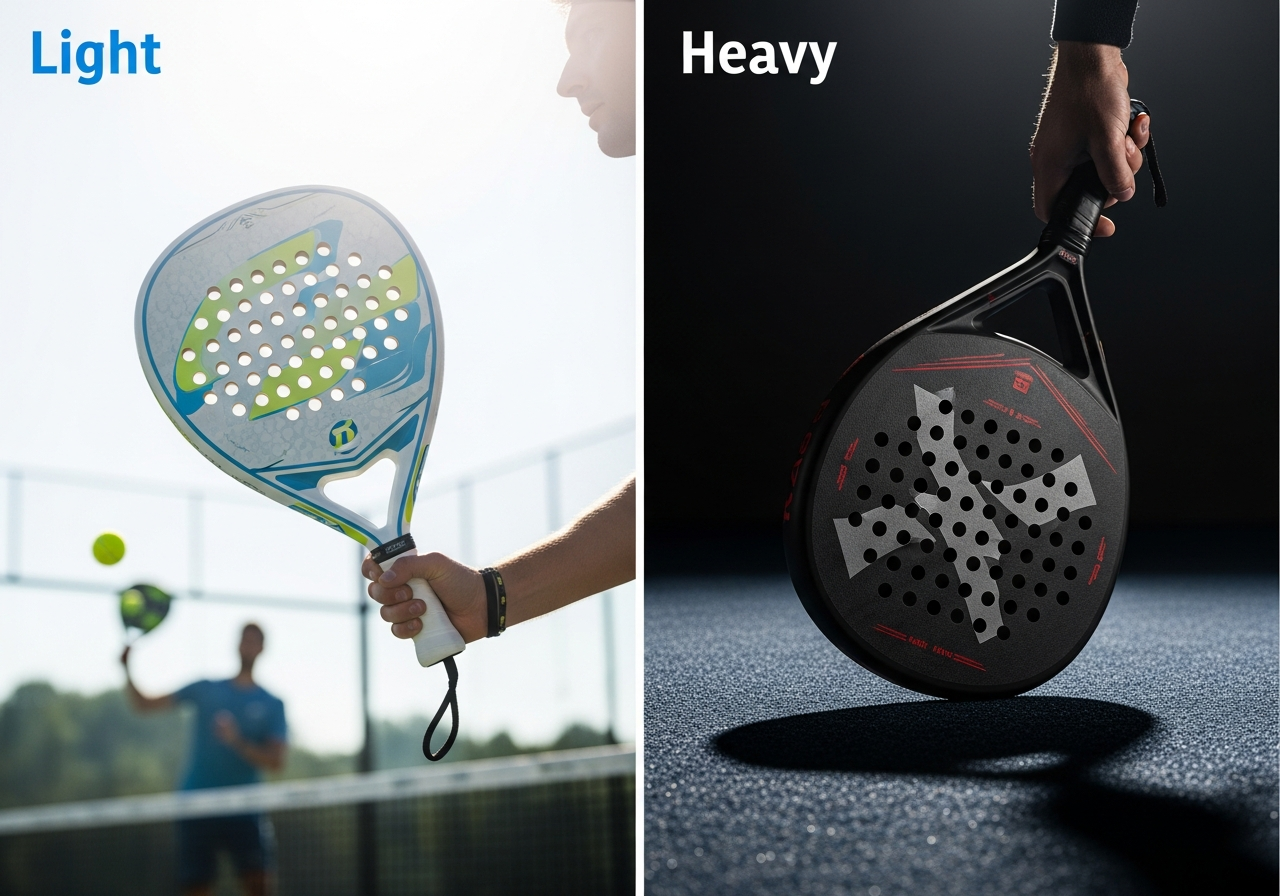
This guidance supports brand owners, distributors, retailers, clubs, and manufacturing partners when selecting weight profiles for product collections or designing rackets for different player groups.
How Does a Light Racket Perform on Court?
Light rackets prioritize maneuverability, quick acceleration, and reduced fatigue.
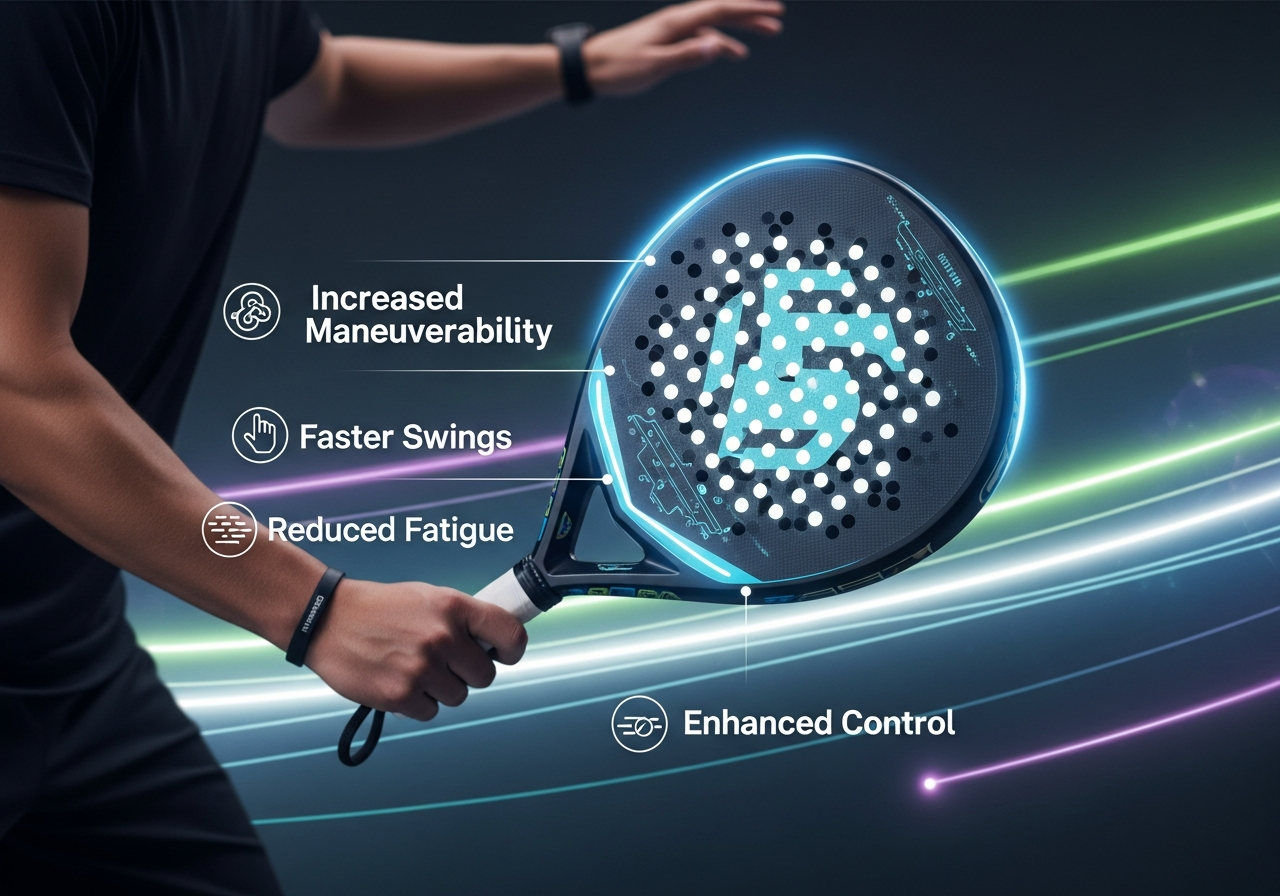
A light racket generally weighs 340–355g and allows faster reaction during volleys and defensive play. This weight reduces wrist strain and supports long training sessions, especially for players who rely on quick positioning. The lighter mass encourages smooth handling during fast exchanges at the net.
Factory production for light models requires careful engineering to preserve structural strength despite reduced mass. Reinforced carbon layers, precise fiber orientation, and accurately calibrated EVA density prevent excess vibration and maintain stability during impact. Consistent weight control is achieved through automated carbon-cutting systems and strict resin management.
How Does a Heavy Racket Influence Power and Stability?
Heavier rackets deliver stronger momentum and more stable impact response.
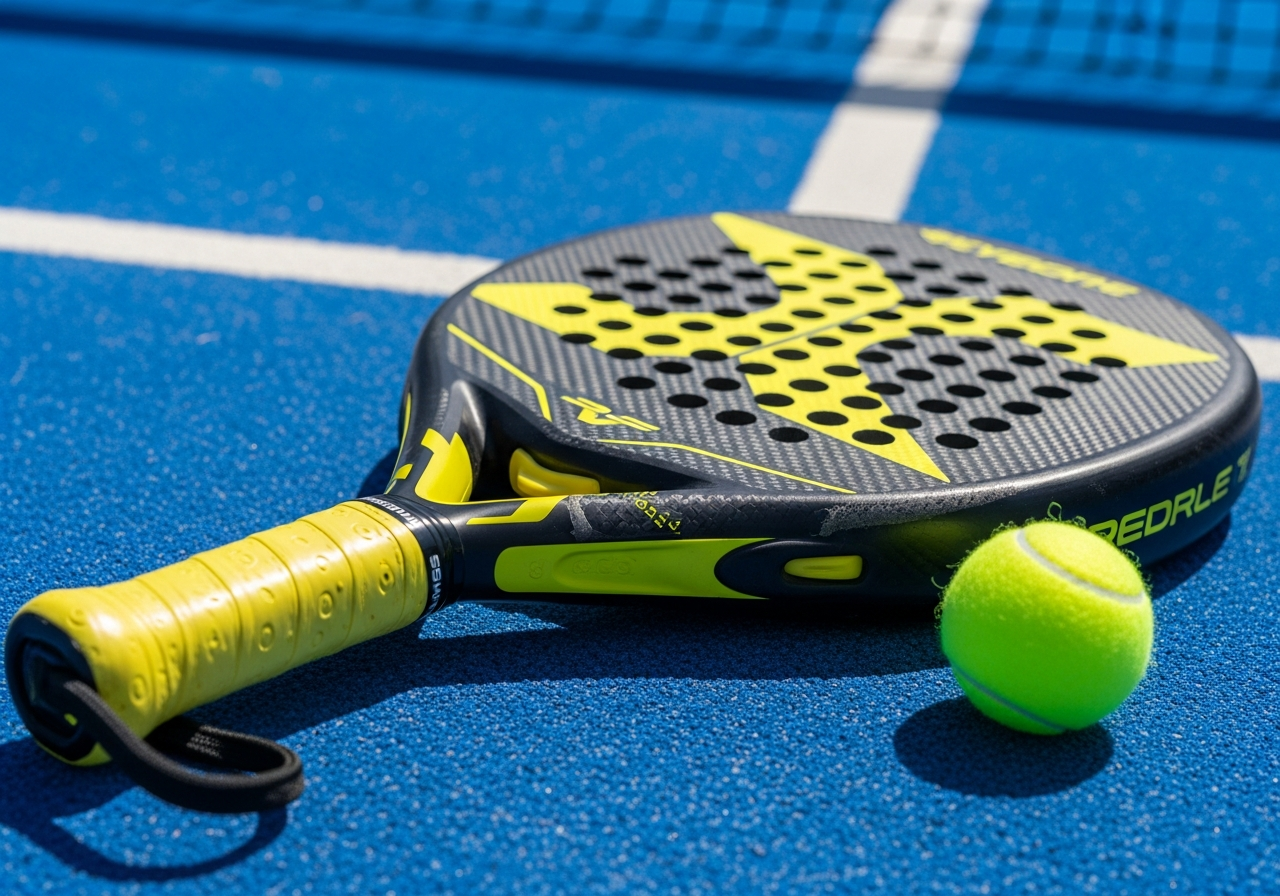
A heavy racket usually weighs 360–375g and generates greater power due to increased mass. This category is effective for aggressive strokes, overhead attacks, and deep volleys. The added weight provides a stable frame that absorbs impact well and maintains directional accuracy.
Manufacturing heavier models involves applying additional carbon layers or higher-density structures in the frame. Curing cycles must be precisely controlled to prevent deformation caused by increased material volume. Quality checks ensure the final weight remains within tight tolerances, so every unit offers identical performance.
How Does Balance Modify the Feel of Light and Heavy Rackets?
Balance distribution determines how weight is perceived during play.
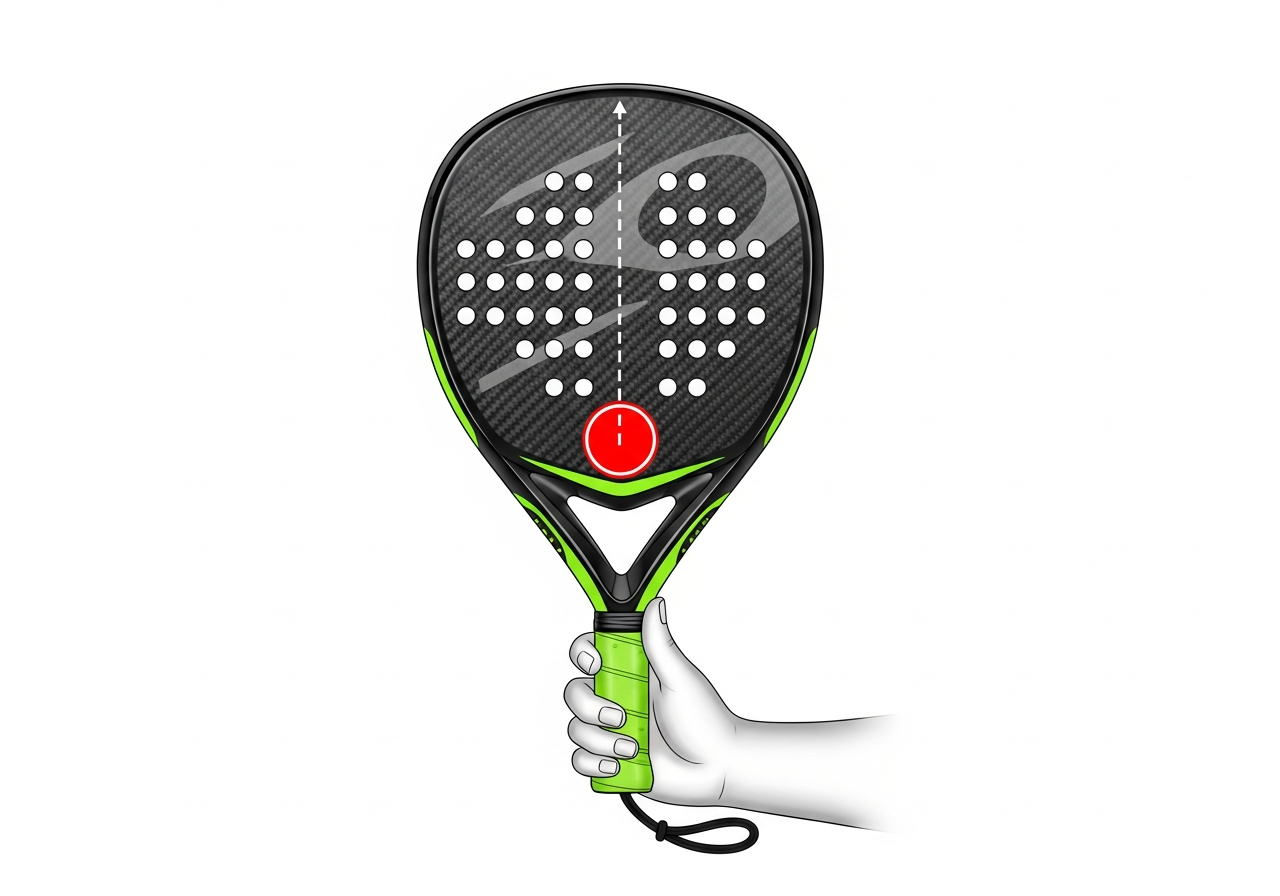
A head-light racket feels easier to maneuver even if the total weight is on the higher side. A head-heavy racket feels more powerful even at moderate weight. Correct balance design enhances control, helps maintain timing, and improves efficiency on both defensive and offensive movements.
Factories use digital measurement tools to fine-tune balance during the finishing stage. Grip layering, resin trimming, and reinforcement placement allow precise adjustment to meet product specifications required by brands and distributors.
Why Does Factory Engineering Matter When Comparing Light vs Heavy Rackets?
Weight alone does not determine quality—factory precision ensures the racket performs as intended.
Production steps such as controlled curing, CNC mold accuracy, carbon layup consistency, and EVA density calibration determine how effectively a light or heavy racket performs. Dust-free surface finishing, pressure-regulated molding, and digital inspection guarantee that each model maintains stable specifications across large orders.
Reliable engineering ensures that the differences between light and heavy rackets remain intentional, consistent, and aligned with performance goals.
Conclusion
A light racket offers maneuverability, comfort, and quick handling, while a heavy racket provides power, momentum, and impact stability. The best choice depends on the player’s style and physical requirements. When supported by precise factory engineering—including controlled carbon layup, calibrated curing, and accurate balance adjustment—both light and heavy rackets deliver reliable performance and structural longevity.
These manufacturing strengths enable brand owners, distributors, retailers, clubs, and manufacturing partners to build well-structured product lines that satisfy diverse markets, ensuring long-term cooperation and competitive advantage.