When shopping for a pickleball paddle, players often encounter a wide variety of options, each claiming to offer distinct advantages. From lightweight to heavy paddles, graphite to fiberglass faces, and polymer to Nomex cores, it’s clear that there are many factors that set paddles apart. But does it really matter which paddle you choose? The answer is yes, and understanding the key differences can help you select a paddle that enhances your playing experience.
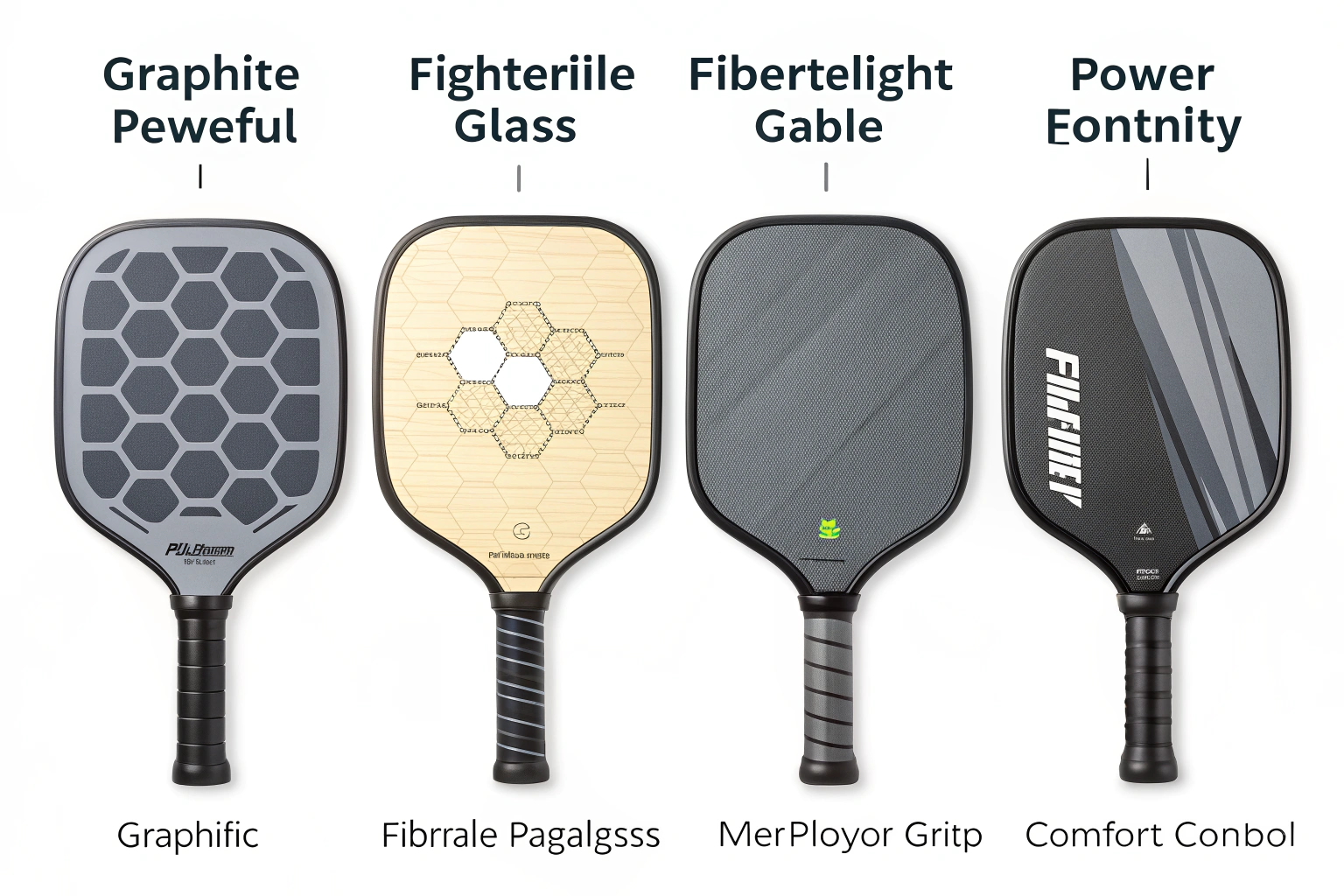
Pickleball paddles vary significantly in terms of materials, weight, grip size, shape, and design. These differences affect your game in areas such as control, power, comfort, and durability.
Key Differences in Pickleball Paddles
Material: The Core and Face
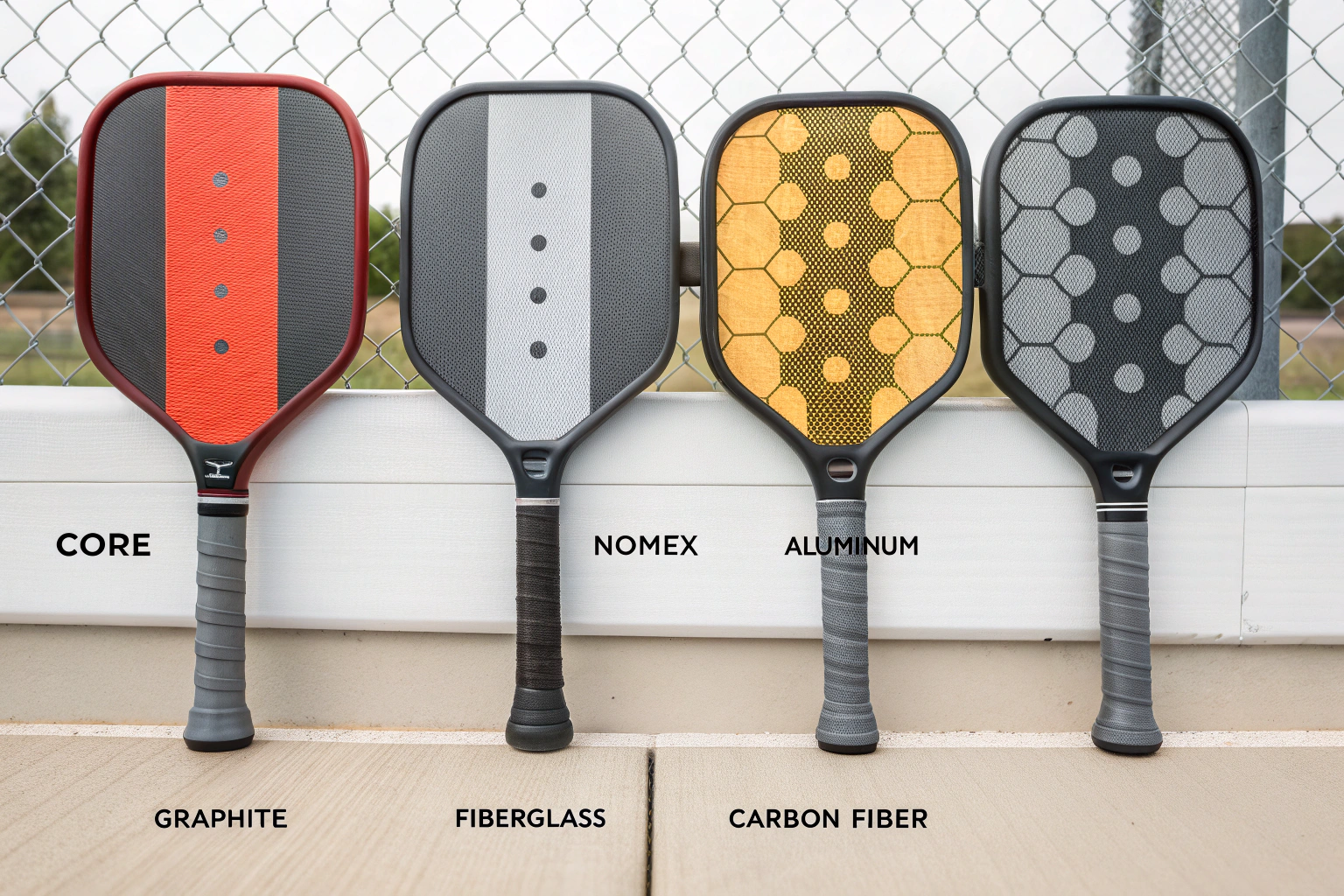
The material used in the construction of the paddle is one of the most important factors in determining its performance. Paddles are generally made from a combination of materials for both the core and the face.
-
Core Material: The core of a pickleball paddle is responsible for power and control. Common core materials include:
- Polymer Core: Known for its durability and shock absorption, polymer cores offer a balanced combination of power and control, making them suitable for a wide range of players.
- Nomex Core: Provides more power due to its stiffer nature, making it a preferred choice for aggressive players. However, it offers less control.
- Aluminum Core: Offers a soft feel and excellent touch, ideal for players who focus on finesse and placement over raw power.
-
Face Material: The material used for the face of the paddle impacts the ball’s response and the amount of control a player has.
- Graphite: Lightweight and stiff, graphite paddles are ideal for players who need precise control and a solid feel.
- Fiberglass: More flexible than graphite, fiberglass paddles offer a good balance of power and control, making them ideal for all-around players.
- Carbon Fiber: Highly durable and lightweight, carbon fiber paddles provide excellent power, control, and performance, often used by competitive players.
| Material Type | Durability | Power | Control |
|---|---|---|---|
| Polymer | High | Balanced | High |
| Nomex | Moderate | High | Moderate |
| Aluminum | Moderate | Balanced | Good |
| Graphite | High | Moderate | High |
| Fiberglass | Moderate to High | High | Balanced |
| Carbon Fiber | Very High | High | Excellent |
The material used for both the core and the face of the paddle plays a significant role in the power, control, and durability of the paddle.
Weight: Power vs. Maneuverability
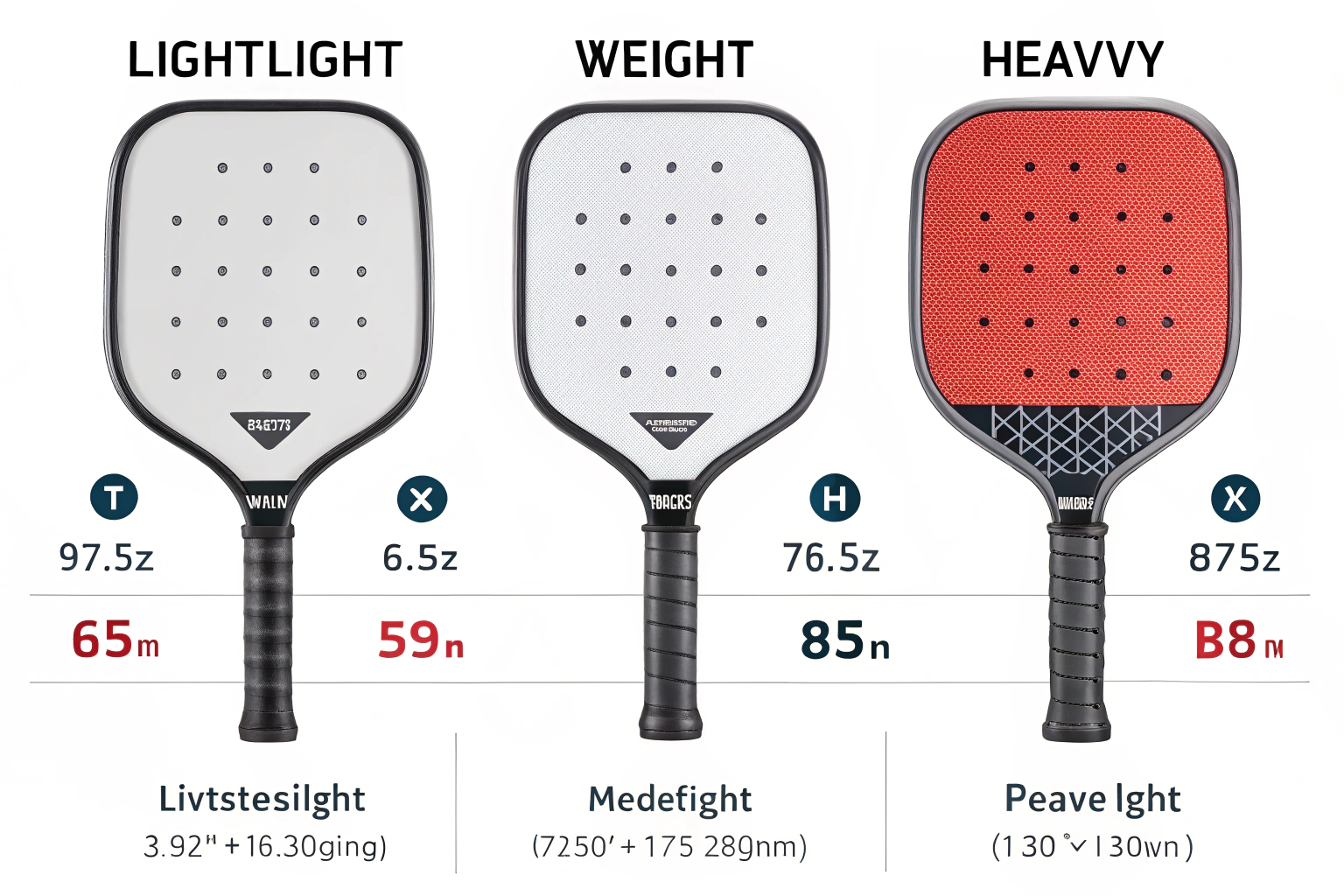
Paddle weight significantly influences a player’s performance. The right weight for your paddle depends on your play style and personal preferences.
- Lightweight Paddles (6–7 oz): These paddles offer excellent maneuverability and are ideal for players who focus on quick reactions and control at the net. Lighter paddles are easier to swing, reducing fatigue during long matches.
- Midweight Paddles (7.5–8 oz): These paddles offer a balanced combination of power and control, making them the most versatile option for a wide range of players. Midweight paddles are perfect for players who play an all-around style.
- Heavy Paddles (8 oz+): Heavier paddles provide more power and stability, particularly useful for baseline players who want to hit deep, powerful shots. However, they are less maneuverable and may cause fatigue over time.
| Weight Category | Power Level | Control Level | Maneuverability |
|---|---|---|---|
| 6–7 oz | Low to Moderate | High | Very High |
| 7.5–8 oz | Balanced | Balanced | Moderate |
| 8 oz+ | High | Moderate | Low to Moderate |
For players who focus on control and quick reflexes, a lightweight paddle is ideal. For players who need more power, a heavier paddle may be better.
Grip Size and Comfort
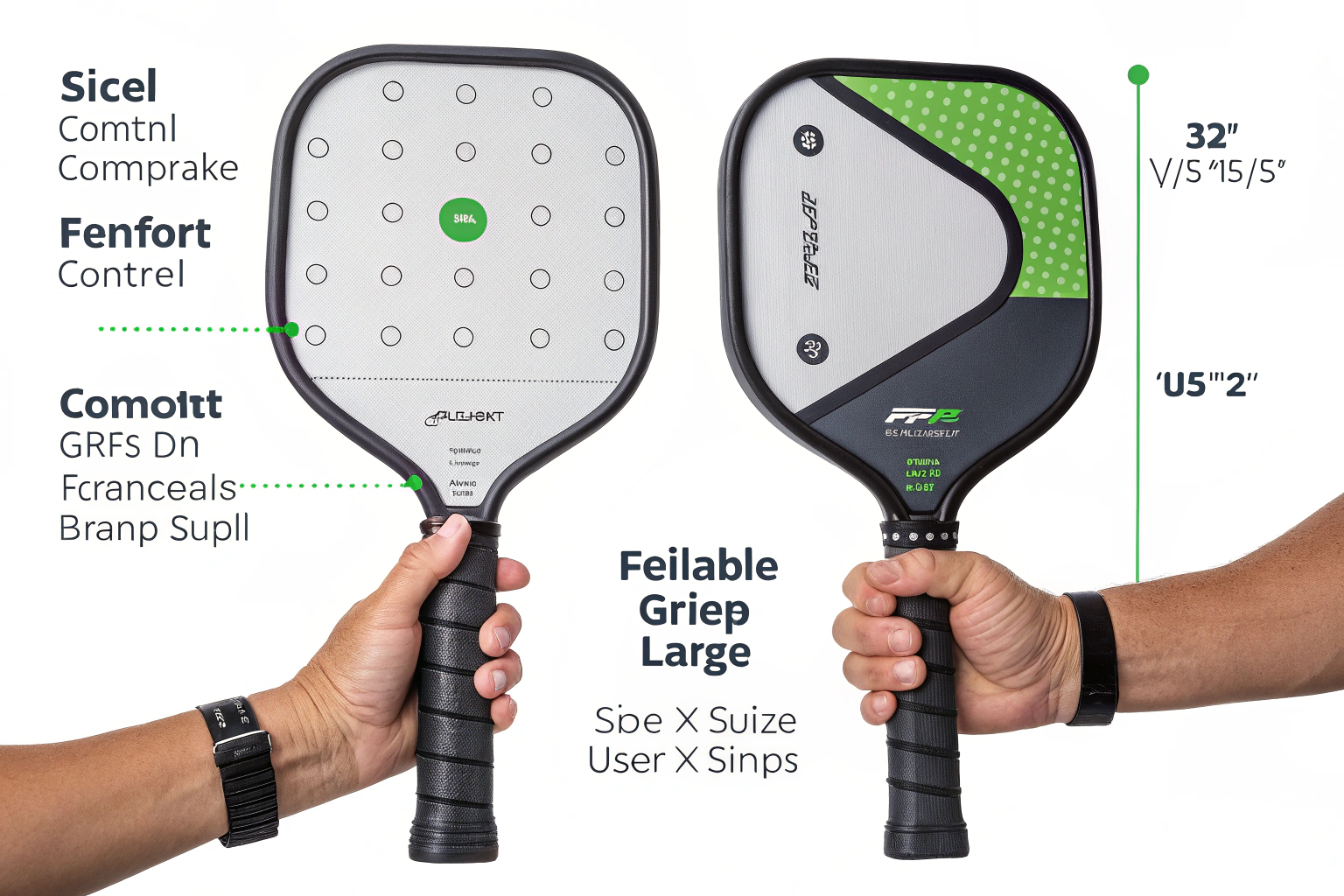
The grip size of a pickleball paddle is crucial for comfort and control. A grip that’s too large or too small can lead to discomfort and poor paddle control, especially during long matches.
- Small Grip Sizes: Ideal for players with smaller hands or those who prefer more wrist action for spin and quick shots.
- Large Grip Sizes: Better for players with larger hands or those who require more stability for powerful shots. A larger grip size helps reduce the strain on the wrist and forearm.
It’s important to find a grip size that feels comfortable and allows for proper control over your shots.
| Grip Size | Ideal For | Characteristics |
|---|---|---|
| 4.0 – 4.25 inches | Smaller hands, control | Faster reactions, better wrist action |
| 4.25 – 4.5 inches | Larger hands, power | More stability, less wrist strain |
Choosing the right grip size ensures better control and prevents injuries caused by an improper fit.
Paddle Shape: Sweet Spot and Reach
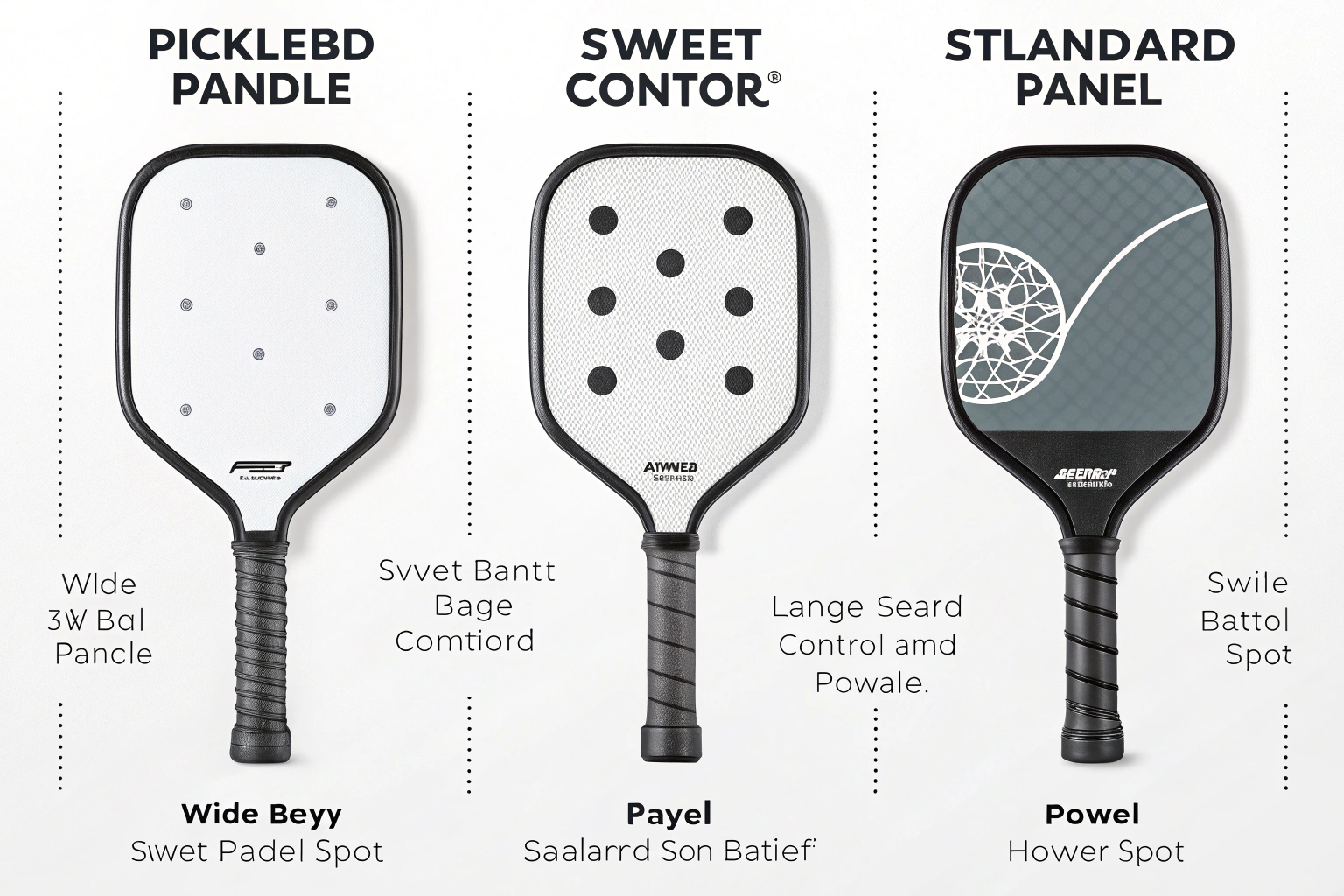
The shape of a pickleball paddle can affect its sweet spot and overall performance. Paddles come in three main shapes: wide-body, standard, and elongated.
- Wide-body Paddles: These paddles have a larger sweet spot, making them forgiving on off-center hits. They are ideal for beginners and players who focus on control and precision.
- Standard Paddles: These paddles offer a balanced approach, providing a combination of power and control. Suitable for players who use both aggressive shots and quick reflexes.
- Elongated Paddles: These paddles are longer and narrower, offering more reach and power but with a smaller sweet spot. Elongated paddles are better for advanced players who rely on precision and aggressive baseline shots.
| Paddle Shape | Sweet Spot Size | Reach | Ideal for |
|---|---|---|---|
| Wide-body | Larger, forgiving | Moderate | Beginners, control-focused |
| Standard | Balanced | Moderate | Intermediate players |
| Elongated | Smaller | Larger | Advanced, power players |
Choosing a paddle shape based on your playing style will help you enhance your strengths and minimize weaknesses on the court.
Durability: Materials and Build Quality
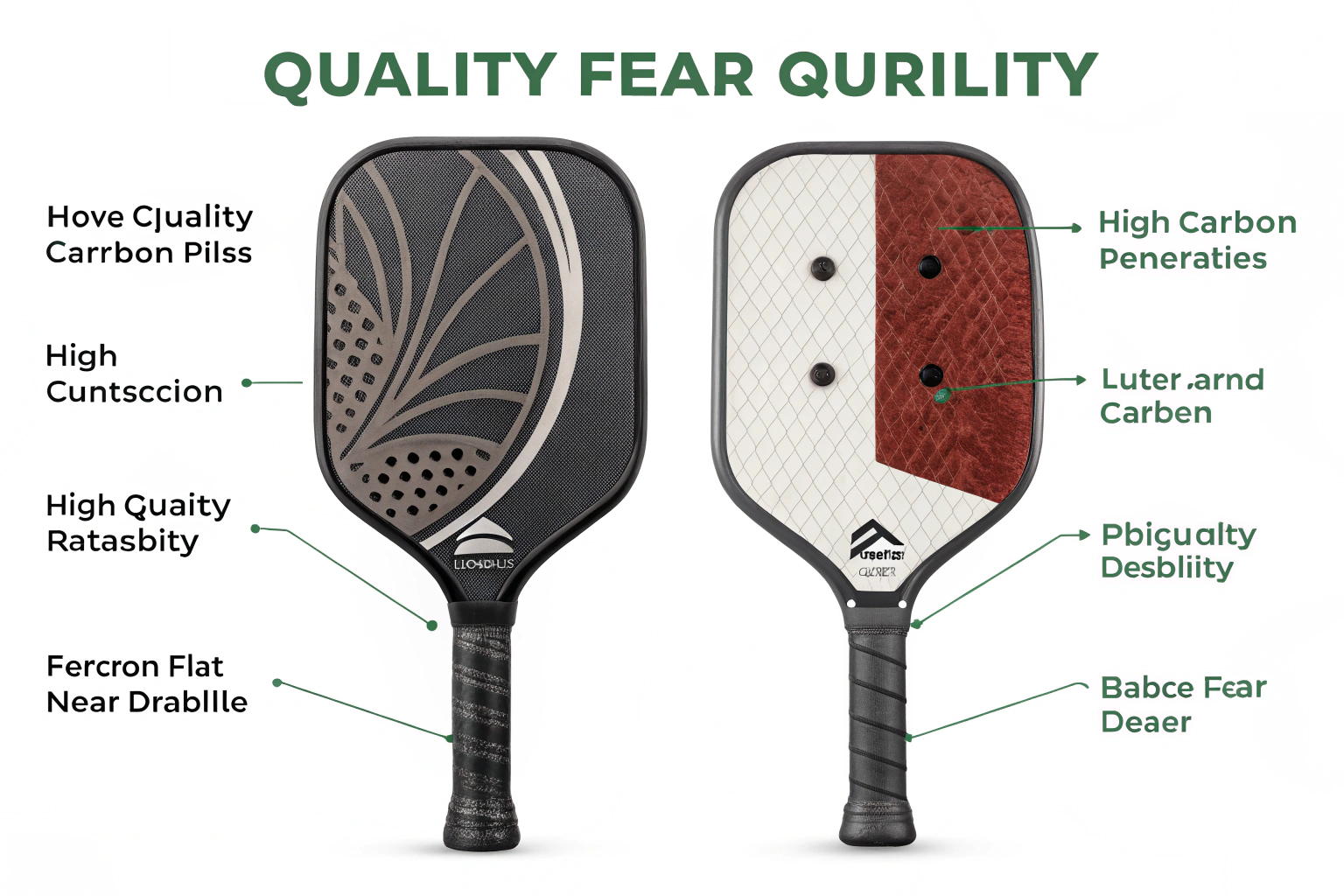
The durability of a pickleball paddle is essential for maintaining consistent performance over time. High-quality paddles made from advanced materials like carbon fiber or fiberglass can withstand the wear and tear of frequent play.
- High-quality paddles are more resistant to cracking, chipping, and warping, ensuring that they maintain their performance even after extended use.
- Lower-quality paddles are typically made from less durable materials and may wear out more quickly, impacting the overall feel and performance.
| Durability | Low-quality Paddle | High-quality Paddle |
|---|---|---|
| Materials | Plastic, low-density | Carbon fiber, fiberglass |
| Lifespan | Short-term | Long-term |
| Impact Resistance | Lower | High |
Investing in a high-quality paddle ensures that it lasts longer and maintains its performance, making it a better choice for players who play frequently.
Conclusion: Does It Really Make a Difference?
Yes, there is a significant difference in pickleball paddles. The materials, weight, grip size, shape, and durability all contribute to the overall performance of a paddle. High-quality paddles made from advanced materials provide better power, control, and comfort, making them ideal for competitive players or those who play regularly.
However, for beginners or recreational players, a mid-range paddle that offers good balance and comfort may be sufficient. As players advance, they may find that more specialized paddles, such as those with a carbon fiber face or a polymer core, enhance their performance on the court.
Ultimately, selecting the right paddle depends on your skill level, playing style, and specific needs. By considering factors such as weight, grip size, and paddle shape, players can choose a paddle that helps them play their best and enjoy the game more.
As a manufacturer, providing a range of paddles with different features, materials, and designs ensures that players of all levels can find the right paddle to match their style and improve their gameplay.