When selecting a pickleball paddle, one of the most critical decisions you’ll make is the weight. The weight of your paddle directly affects your performance on the court, influencing your power, control, maneuverability, and comfort. But how do you know whether you need a heavier or lighter paddle?
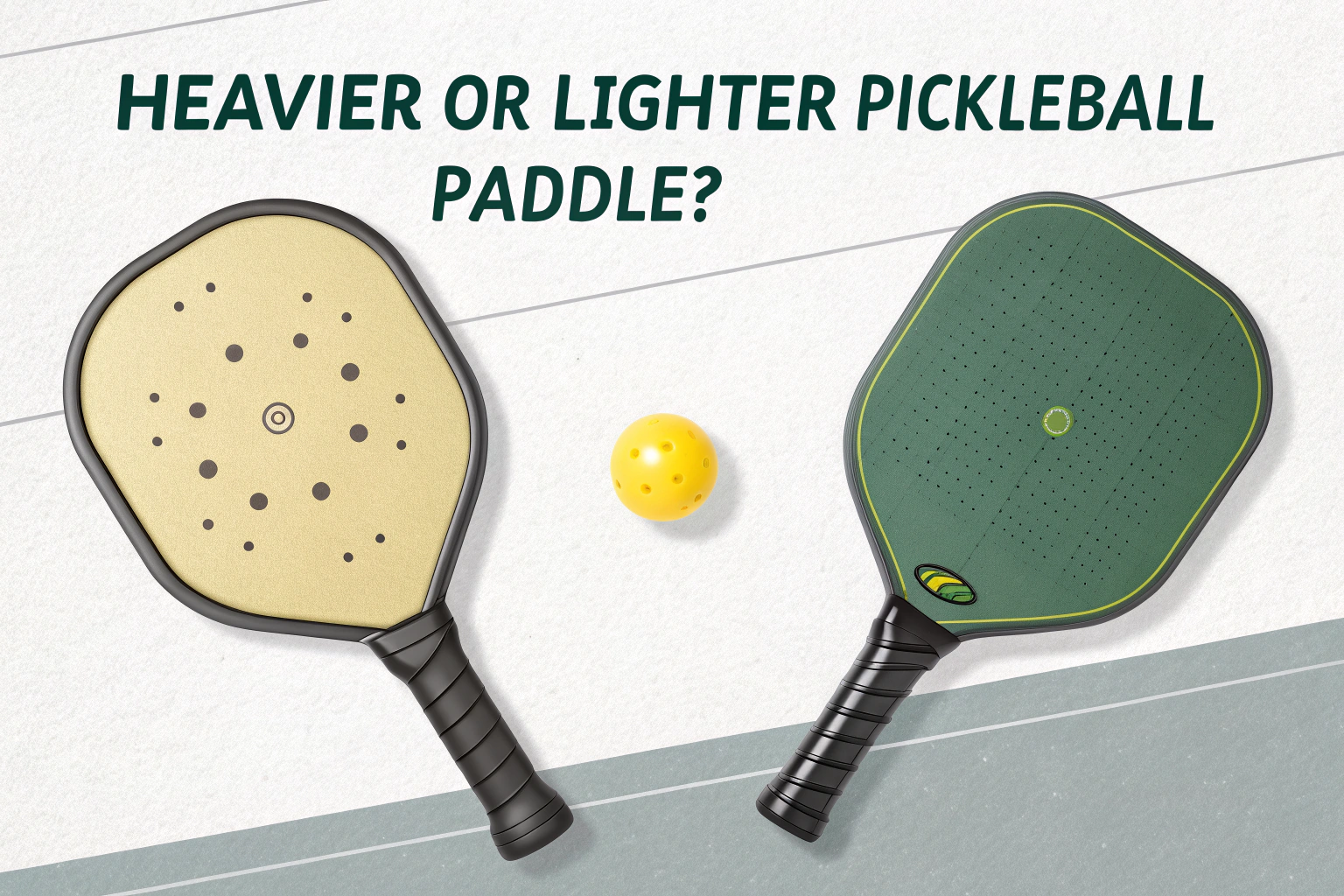
The choice between a heavier or lighter pickleball paddle depends on your playing style, skill level, and personal preferences. A heavier paddle offers more power and stability, while a lighter one provides better maneuverability and control.
This article breaks down the key differences between heavy and light paddles to help you decide which is best for your game.
How Does Paddle Weight Affect Power?
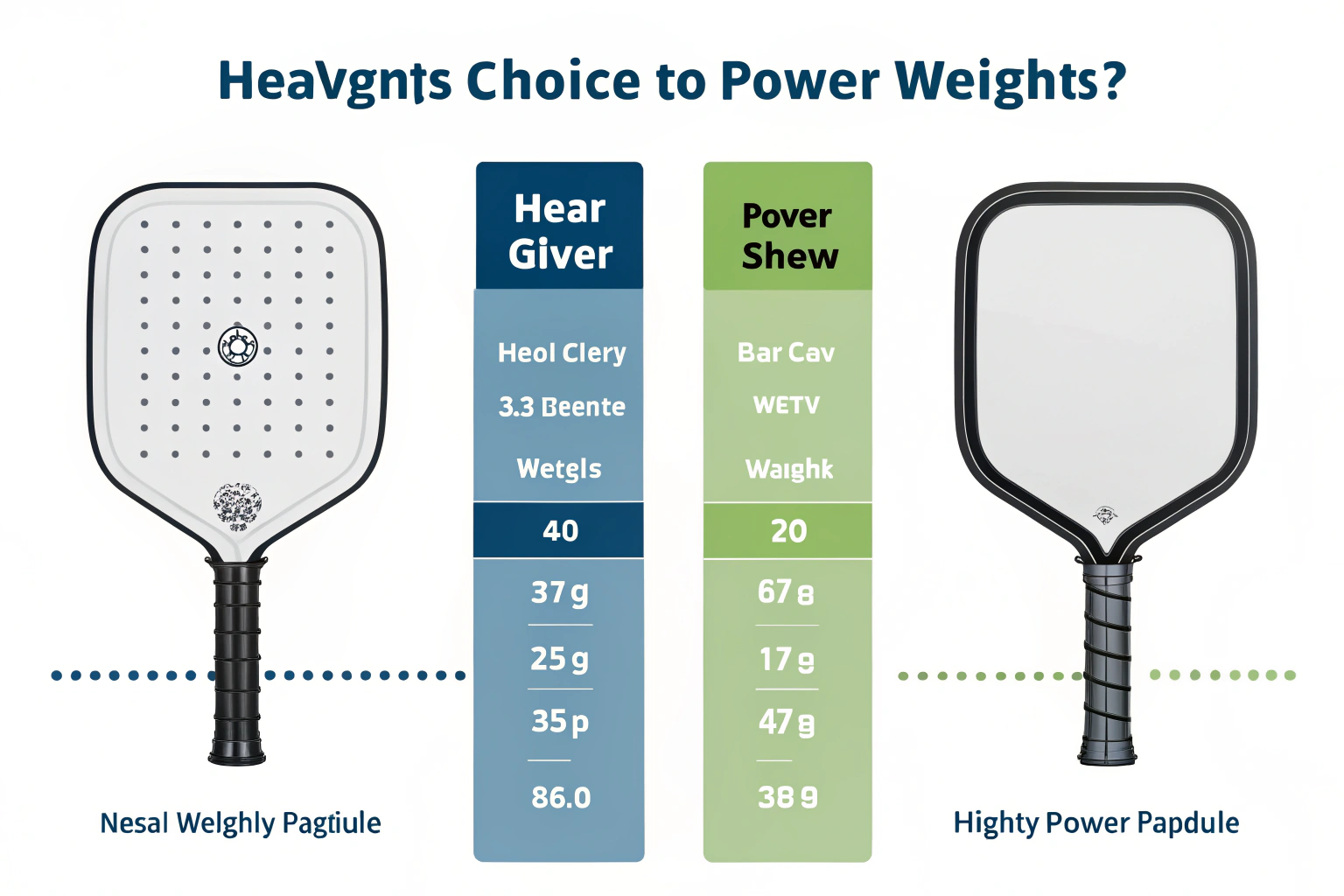
One of the most significant differences between heavy and light paddles is the amount of power they generate. Heavier paddles generally offer more power, while lighter paddles provide more control and maneuverability.
If you’re a player who relies on power shots, a heavier paddle might be a better choice.
Heavy Paddles (8.5–9 ounces)
- Increased Power: The extra mass behind the paddle helps generate more force when hitting the ball, making heavy paddles ideal for baseline players or those who rely on deep, aggressive shots.
- More Stability: Heavier paddles offer more stability, reducing vibration and offering a solid feel on impact.
- Less Speed: While they offer more power, heavy paddles can be harder to control, especially during fast exchanges at the net or quick wrist movements.
Light Paddles (6–7 ounces)
- Less Power: Lighter paddles generally produce less power but are much easier to maneuver, making them suitable for players who prefer control over raw power.
- Quick Reactions: Lighter paddles allow for quicker reactions and faster wrist movement, which is ideal for net play and fast exchanges.
If you focus more on generating consistent power and hitting deep shots, a heavier paddle might be a better choice. However, for players who focus on precision and control, a lighter paddle will be more beneficial.
How Does Paddle Weight Affect Control?
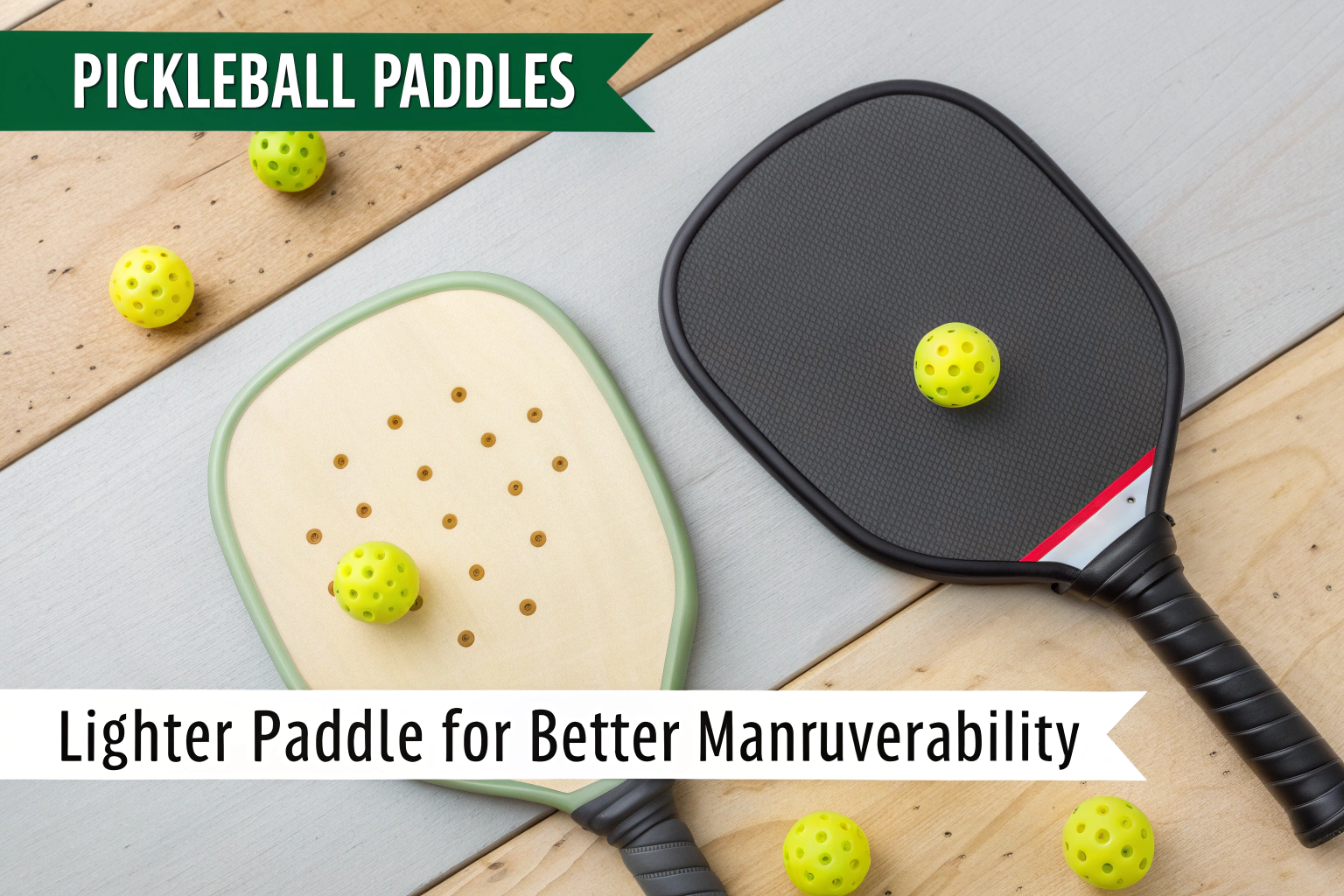
Control is a critical factor for many players, particularly when learning the game or executing precise shots. Lighter paddles are typically better for control, allowing players to react quickly and place shots more accurately.
If you prioritize control and accuracy, a lighter paddle will give you better maneuverability.
Light Paddles (6–7 ounces)
- Better Maneuverability: A lighter paddle is easier to move quickly, making it ideal for players who need precision during fast exchanges or when executing delicate shots at the net.
- Enhanced Feel: Lighter paddles give you a better "feel" for the ball, allowing for more control over placement and spin.
Heavy Paddles (8.5–9 ounces)
- Less Control: Heavier paddles can feel more cumbersome during quick exchanges, making it harder to control shots. They tend to be better suited for players who rely on power, rather than finesse.
- More Stability: While less maneuverable, heavy paddles provide stability, which can help in controlling the ball’s direction during powerful shots.
If your playstyle is more focused on fast reflexes, control, and net play, a lighter paddle will make it easier to react quickly and place shots accurately.
What About Paddle Maneuverability?
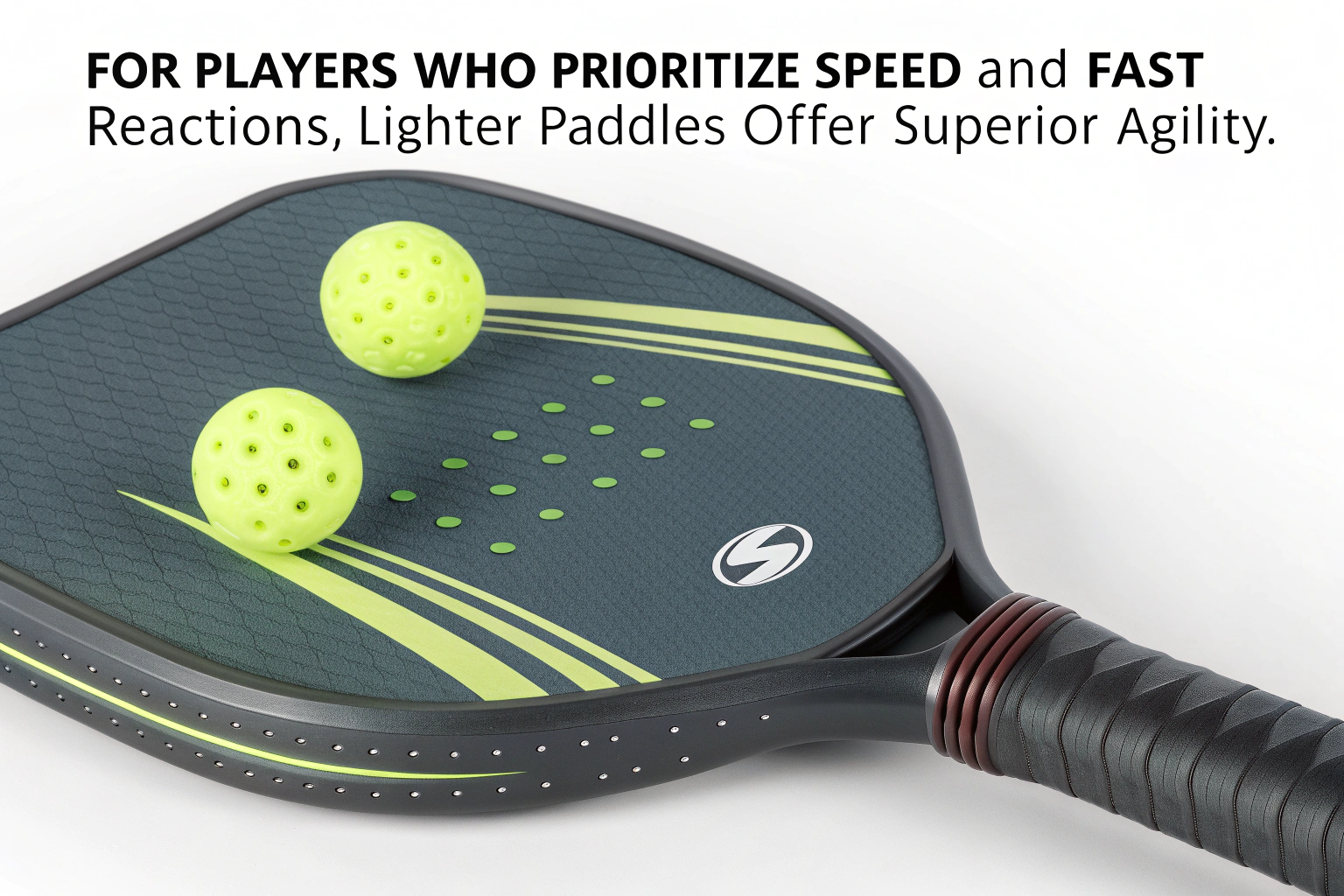
The weight of the paddle also affects how quickly and easily you can move it. Lighter paddles are generally more maneuverable, allowing you to react faster and make quick adjustments during rallies.
For players who prioritize speed and fast reactions, lighter paddles offer superior agility.
Light Paddles (6–7 ounces)
- Quick Movement: The reduced weight allows for quicker wrist flicks and faster paddle movement, which is crucial when playing at the net or when dealing with fast returns.
- Agility and Precision: Lighter paddles are better for executing soft shots like dinks and volleys.
Heavy Paddles (8.5–9 ounces)
- Slower Movements: Heavier paddles can be harder to move, especially during quick exchanges or fast-paced net play. They require more wrist strength to adjust quickly, which may limit the player’s agility.
- Stability with Power: While they lack maneuverability, heavy paddles offer more stability, which is important when hitting long, deep shots.
If agility and quick reactions are important to your playstyle, a lighter paddle will allow you to move faster and adjust more easily during rallies.
How Does Paddle Weight Affect Comfort and Fatigue?
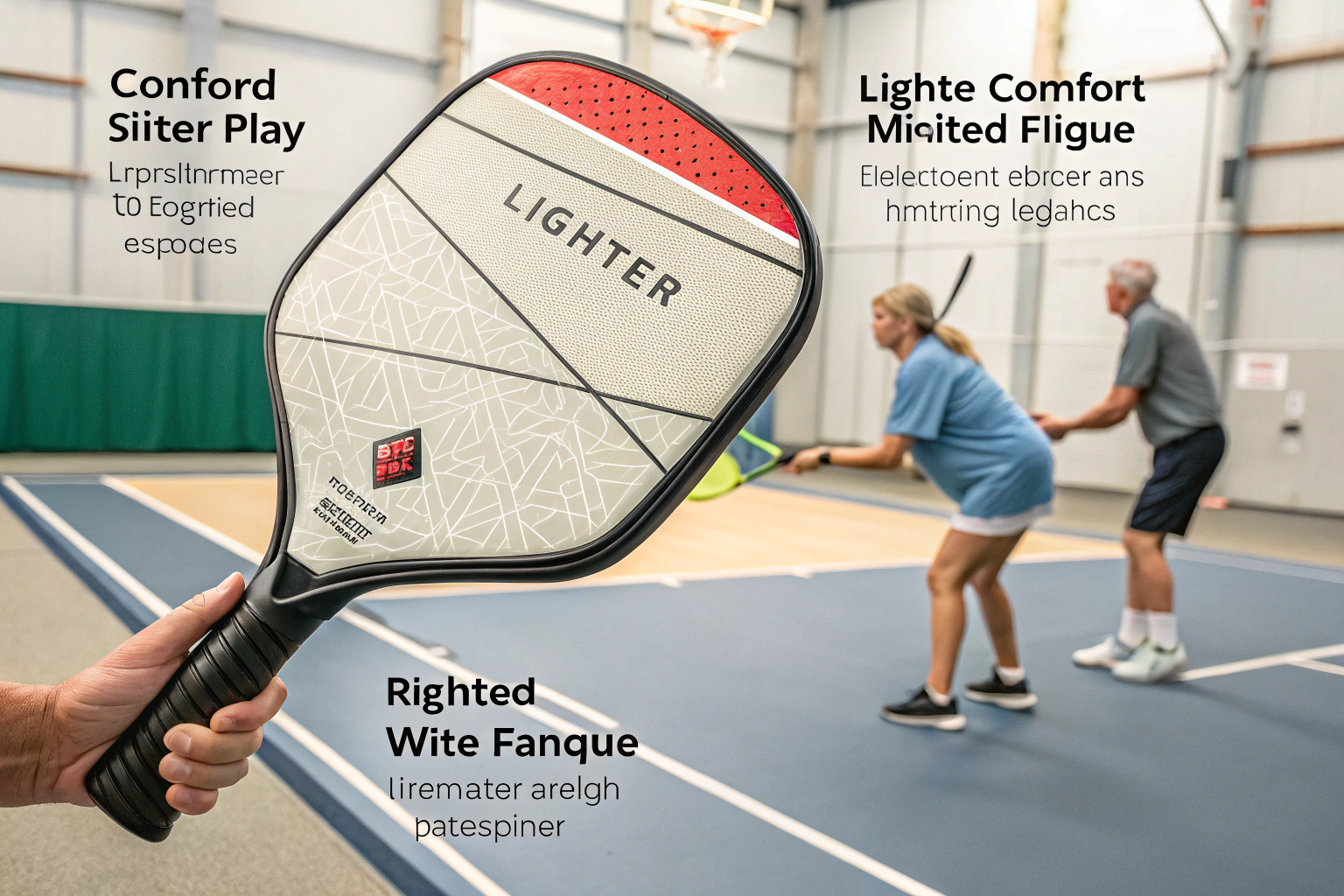
The weight of your paddle directly impacts how comfortable it is to play with and how much strain it puts on your body, especially during long matches. Lighter paddles are easier on the wrist and arm, reducing the risk of fatigue and strain over time.
For extended play, a lighter paddle can reduce discomfort and allow you to play for longer periods without tiring.
Light Paddles (6–7 ounces)
- Less Strain on Arms: The reduced weight means there’s less force being transferred to your wrist and forearm, which reduces the risk of fatigue or injury.
- Comfortable for Long Sessions: Players who engage in recreational play or long practice sessions will find lighter paddles more comfortable over time.
Heavy Paddles (8.5–9 ounces)
- Increased Fatigue: Heavier paddles can lead to more fatigue in the arms and wrists, especially during extended play or in matches that involve constant movement.
- Stability with Less Maneuverability: While offering more stability, the added weight can increase strain and reduce endurance during longer rallies.
If you want to minimize fatigue and play longer without straining your muscles, a lighter paddle is the way to go.
How Do I Choose the Right Paddle Weight for My Game?
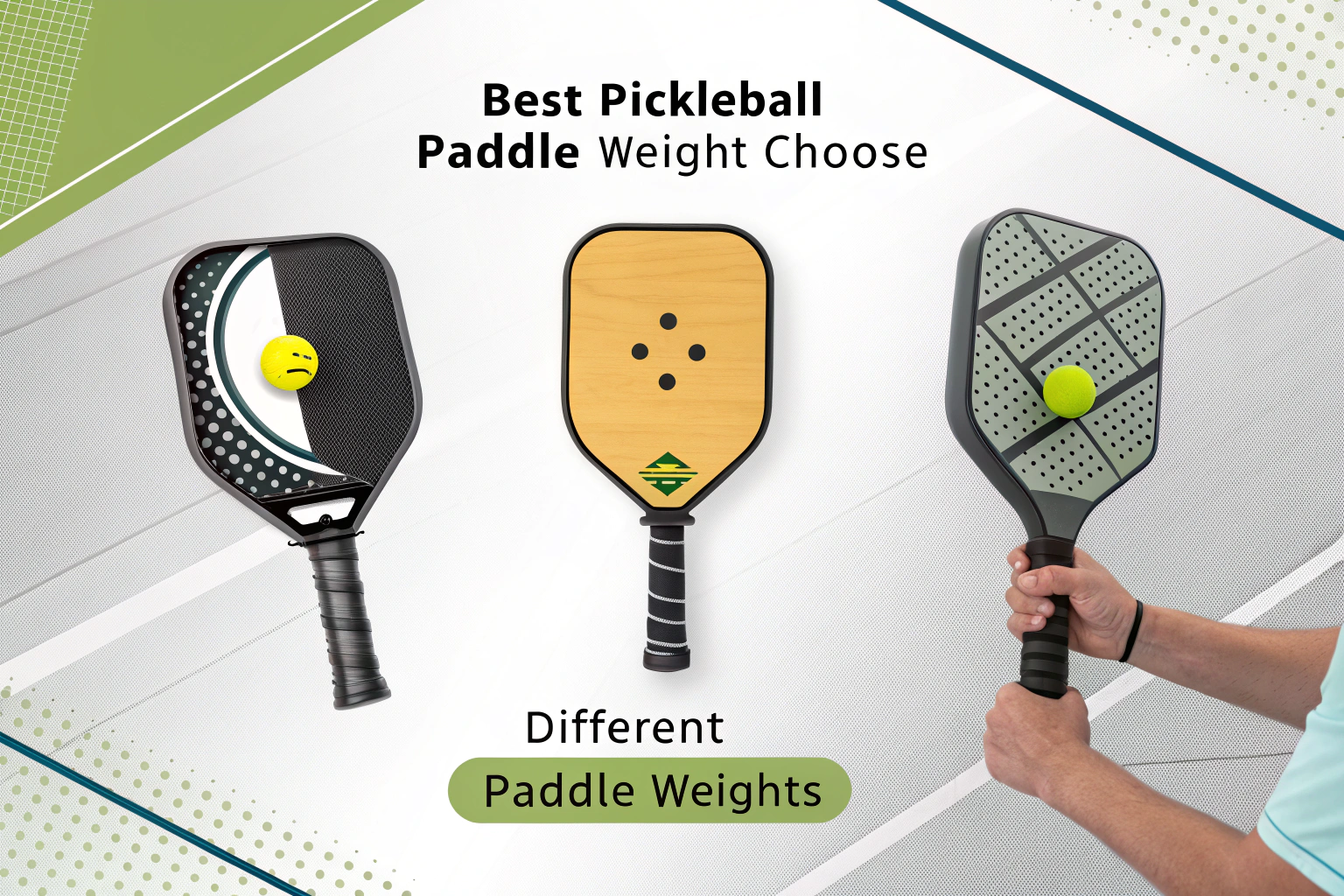
The right paddle weight depends on your playstyle, physical strength, and overall comfort. Beginners and players who prioritize control, agility, and comfort will likely benefit from lighter paddles, while more experienced players who rely on power may prefer a heavier paddle.
Here’s a quick guide to help you choose the best paddle weight based on your needs:
| Player Type | Ideal Paddle Weight | Why? |
|---|---|---|
| Beginners | Light (6–7 ounces) | Easier to control, maneuver, and play comfortably |
| Intermediate | Midweight (7.5–8.5 ounces) | Balanced power and control for diverse playstyles |
| Power Players | Heavy (8.5–9 ounces) | More power and stability for aggressive play |
Conclusion
Choosing between a heavier or lighter pickleball paddle depends on your playing style, skill level, and what you prioritize—power or control. Lighter paddles are great for beginners, those focusing on control and precision, or players looking for agility and reduced fatigue. Heavier paddles offer more power and stability for players who rely on aggressive baseline play or need a paddle that can generate more force.
For manufacturers, offering a variety of paddle weights ensures that players can find the ideal paddle to suit their needs, regardless of their playstyle.
📩 For custom paddle manufacturing, design consultations, or material sourcing, contact the Youth Padel team at hu@miao-ke.com or via WhatsApp at +86-13023656973. We offer full-service solutions to create paddles that meet player expectations and market standards.