One of the most important factors to consider when selecting a pickleball paddle is weight. The weight of a paddle can significantly affect how you play, influencing your power, control, and maneuverability on the court. While some players prefer a heavier paddle for power and stability, others opt for a lighter paddle for faster reactions and control. Understanding the pros and cons of each option can help you make the right choice for your playing style.

Whether you want a heavier or lighter pickleball paddle depends on your style of play, strength, and what you prioritize in your game. Lighter paddles offer better maneuverability and quick reactions, while heavier paddles provide more power and stability.
Let’s break down the differences between heavier and lighter paddles, and how they impact your game.
What is the weight range for pickleball paddles?
Pickleball paddles typically range from 6 to 8.5 ounces in weight. Paddles lighter than 7 ounces are considered lightweight, while those between 7 and 8 ounces are categorized as midweight. Paddles weighing over 8 ounces are considered heavy.
The ideal weight for your paddle depends on your playing style, strength, and comfort preferences.
Weight Categories:
- Lightweight paddles (6–7 oz): Provide quicker reaction times and better control, making them ideal for players who focus on net play and quick movements.
- Midweight paddles (7.5–8 oz): Offer a balance between power and control, making them a versatile choice for a wide range of players.
- Heavy paddles (8.5 oz and above): Provide more power and stability, especially for baseline players who focus on strong drives and deep returns.
| Paddle Weight | Power Level | Control Level | Maneuverability |
|---|---|---|---|
| 6–7 oz | Low to moderate | High | Very high |
| 7.5–8 oz | Balanced | Balanced | Moderate |
| 8.5 oz and above | High | Moderate to low | Low to moderate |
How does a lighter paddle affect performance?
Lighter paddles are ideal for players who prioritize control, quick reflexes, and maneuverability, especially during net play and quick volleys. Lighter paddles tend to be easier to handle and allow for faster reaction times, making them perfect for players who focus on touch shots, finesse, and net play.
A lighter paddle offers better speed and control but may sacrifice some power, particularly on deep drives and smashes.

Advantages of lighter paddles:
- Quicker reaction times: Lighter paddles are easier to swing, making them ideal for fast exchanges at the net or in quick volley situations.
- Increased maneuverability: Lighter paddles are more agile, allowing players to change directions quickly and handle tricky shots with ease.
- Better control: Because lighter paddles are less bulky, they allow for more precision and finesse, making them great for touch shots like dinks and soft volleys.
- Less fatigue: The lighter weight puts less strain on the arm and wrist, reducing fatigue during extended play.
| Advantage | Light Paddle (6–7 oz) |
|---|---|
| Speed | Faster reaction times |
| Control | More precise touch shots |
| Comfort | Less fatigue |
| Maneuverability | High |
Disadvantages of lighter paddles:
- Lower power: Lighter paddles generally do not generate as much power on deep shots or smashes, which may limit offensive play.
- Less stability: Because lighter paddles have less mass, they may feel less stable when returning powerful shots, especially when receiving from a strong baseline player.
How does a heavier paddle affect performance?
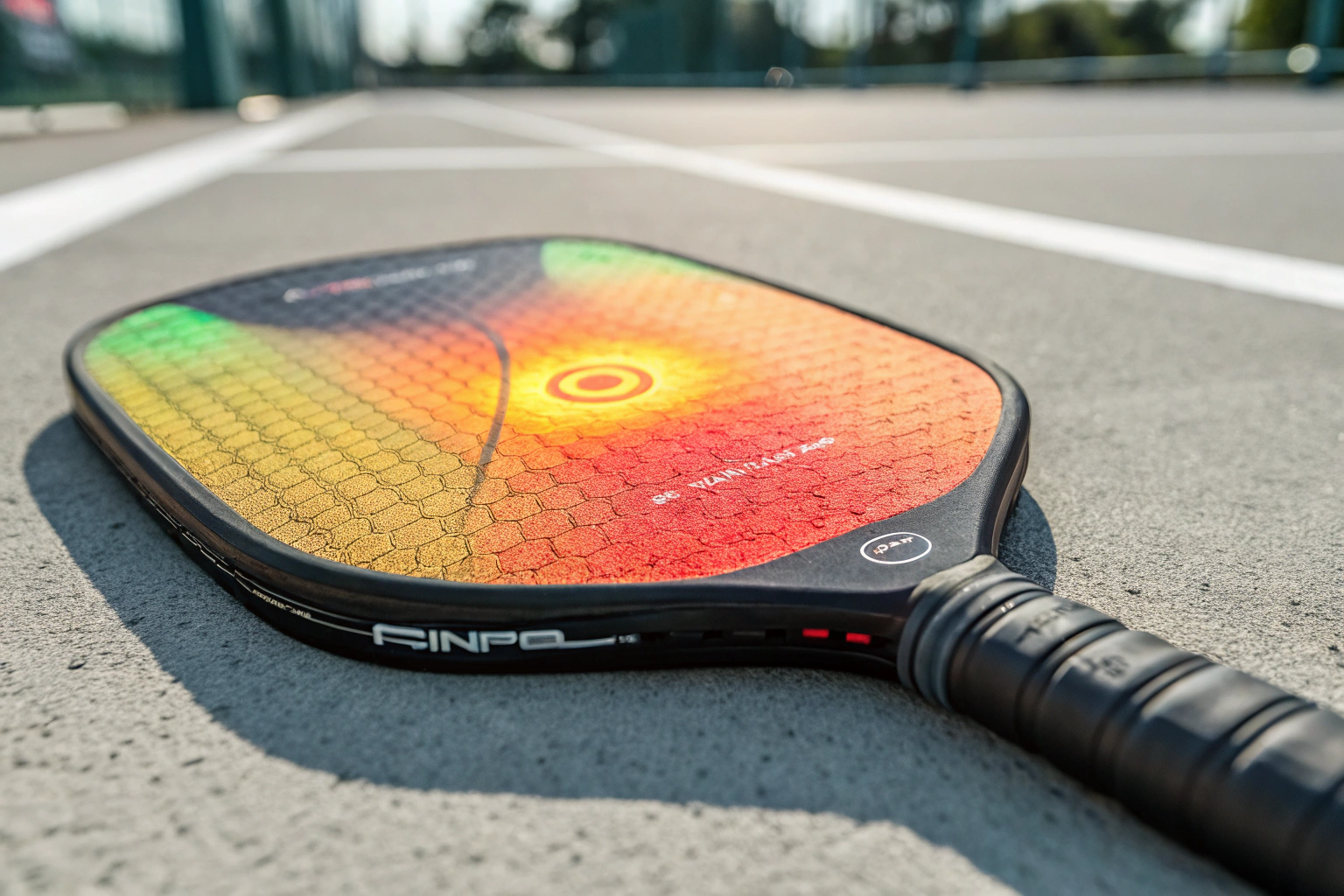
Heavier paddles are designed for players who focus on power, stability, and deep shots. With more weight, a heavier paddle helps generate more force on your shots, making it easier to hit deep drives, smashes, and powerful serves.
A heavier paddle provides greater power and stability but may reduce quickness and maneuverability.
Advantages of heavier paddles:
- More power: Heavier paddles allow players to generate more force on deep shots and smashes, especially from the baseline.
- Increased stability: A heavier paddle provides better control during powerful shots, offering more stability on off-center hits.
- Better for baseline play: Players who focus on aggressive, power-driven shots from the baseline benefit from the added stability and momentum of a heavier paddle.
- Comfort for strong players: A heavier paddle provides more solid feedback, making it easier to hit powerful shots without exerting too much effort.
| Advantage | Heavy Paddle (8 oz and above) |
|---|---|
| Power | Greater shot power |
| Stability | Less vibration, more control |
| Performance | Stronger shots from baseline |
| Comfort | More solid, consistent feel |
Disadvantages of heavier paddles:
- Slower reaction times: Heavier paddles can feel slower during fast exchanges, particularly during net play or when reacting to quick volleys.
- More fatigue: The added weight can strain the arm, wrist, and shoulder over time, especially during long matches.
- Reduced maneuverability: A heavier paddle can be harder to maneuver, making it less ideal for quick changes in direction or fast volleys at the net.
Which paddle is best for you: light or heavy?
Choosing between a lighter or heavier pickleball paddle comes down to your playing style and personal preferences. The decision should be based on whether you prioritize power or control, and how much strength and agility you want to bring to your game.
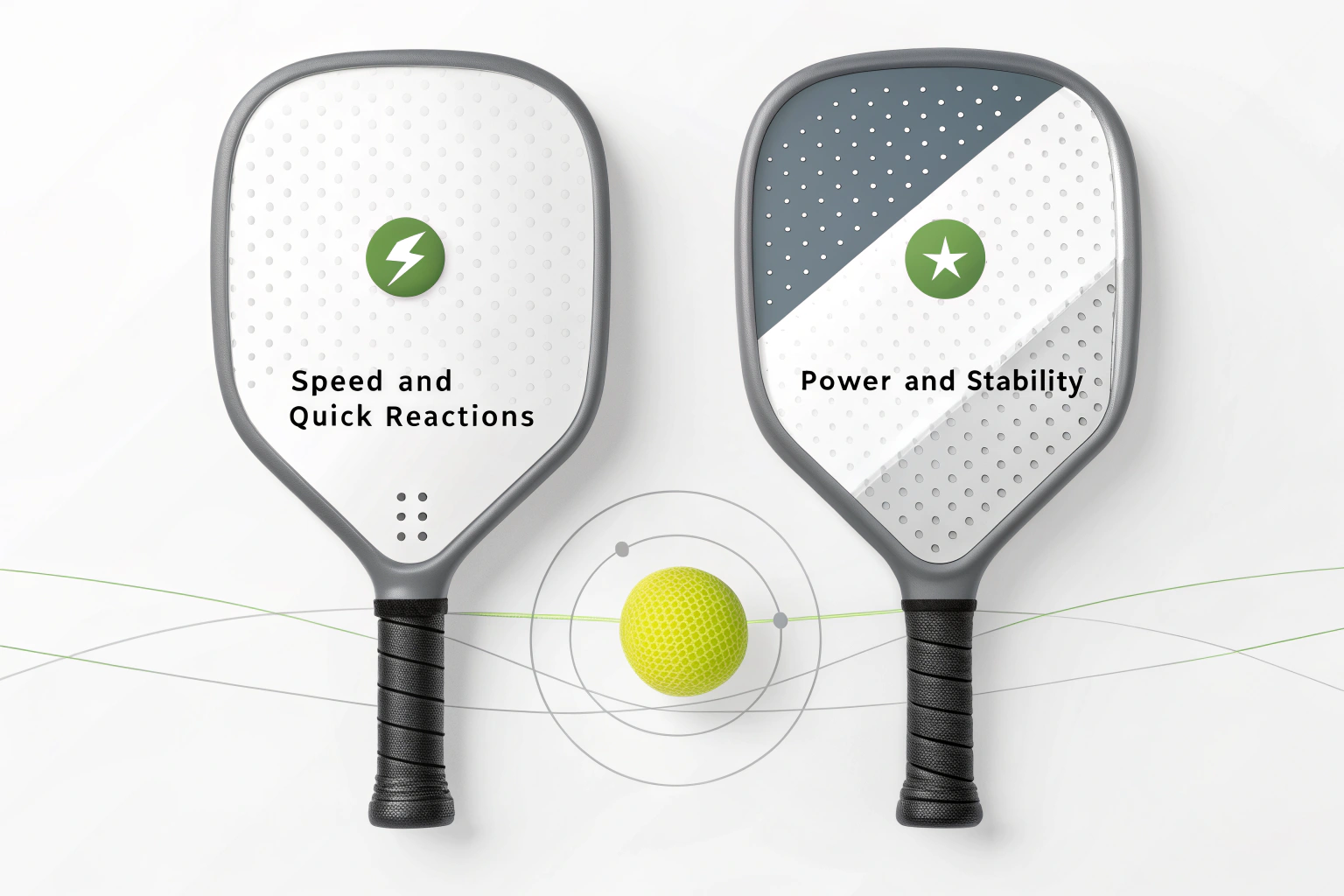
Lighter paddles are ideal for players who value speed, quick reactions, and finesse, while heavier paddles are better for players who need more power and stability in their shots.
Ideal player types:
- Lighter paddles (6–7 oz): Perfect for players who rely on quick reactions, net play, and control-oriented shots like dinks and volleys. They are great for finesse players or those who prefer to focus on accuracy and maneuverability.
- Heavier paddles (8 oz+): Ideal for players who want to generate more power, especially from the baseline. They are best for players with a strong swing who want to add more force to their shots without sacrificing too much control.
| Player Type | Best Paddle Weight | Reason |
|---|---|---|
| Finesse and net players | Lighter (6–7 oz) | Quick reactions, more control at the net |
| Power-focused players | Heavier (8 oz+) | Generates more force for baseline play |
| All-around players | Midweight (7.5–8 oz) | Balanced performance, ideal for versatile play |
Conclusion
Whether you choose a lighter or heavier pickleball paddle ultimately depends on your playstyle, strength, and personal preferences. Lighter paddles (6–7 oz) are ideal for players who prioritize speed, control, and finesse, especially during net play and quick exchanges. Heavier paddles (8 oz+) provide more power and stability, making them suitable for players who rely on powerful baseline shots and drives.
A midweight paddle (7.5–8 oz) strikes the perfect balance between power and control, making it an excellent choice for players who need versatility in their game.
Choosing the right paddle weight is key to enhancing your performance on the court. By understanding the benefits and trade-offs between lighter and heavier paddles, you can select the one that best complements your style of play and helps you play your best.