
Many distributors lose margin by backing the wrong padel trends. The real risk is not missing hype. It is stocking products that create complaints, returns, and slow-moving inventory.
In 2026, the smartest padel racket buying decisions will focus on comfort-focused carbon, clearer player segmentation, stronger durability, better finish quality, and more transparent product specs. Distributors that align inventory with these trends can reduce claims, improve sell-through, and build stronger customer trust.
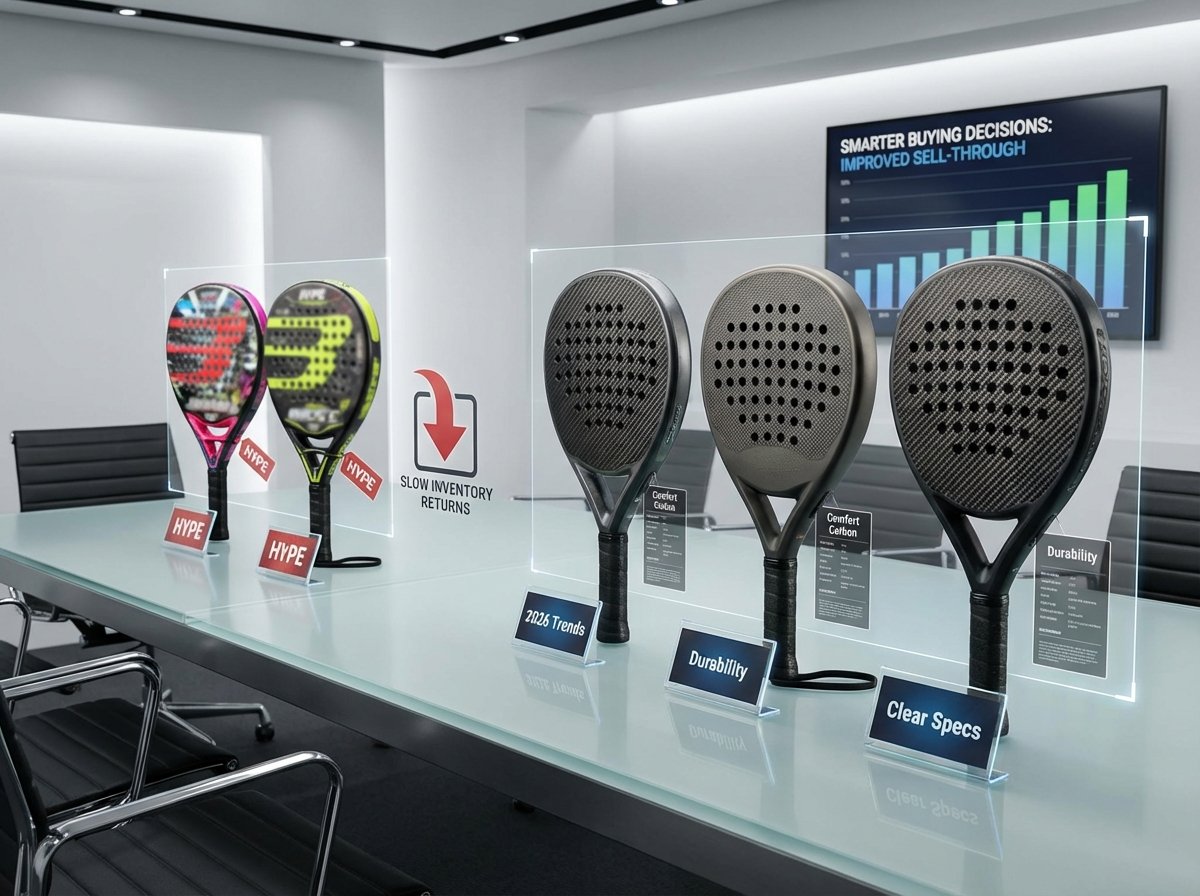
The market is moving beyond simple material claims. “Carbon” alone is no longer enough. Retailers, distributors, and brand buyers are paying closer attention to which rackets feel easier to use, which ones survive real play, and which ones create fewer after-sales problems. That shift is opening the door to a more practical kind of product planning.
Why Are 2026 Padel Racket Trends Becoming More Important for Distributors?
Many product categories can absorb a few weak SKUs. Padel rackets are different. One wrong range can lead to returns, low reviews, warranty pressure, and dead stock at the same time.
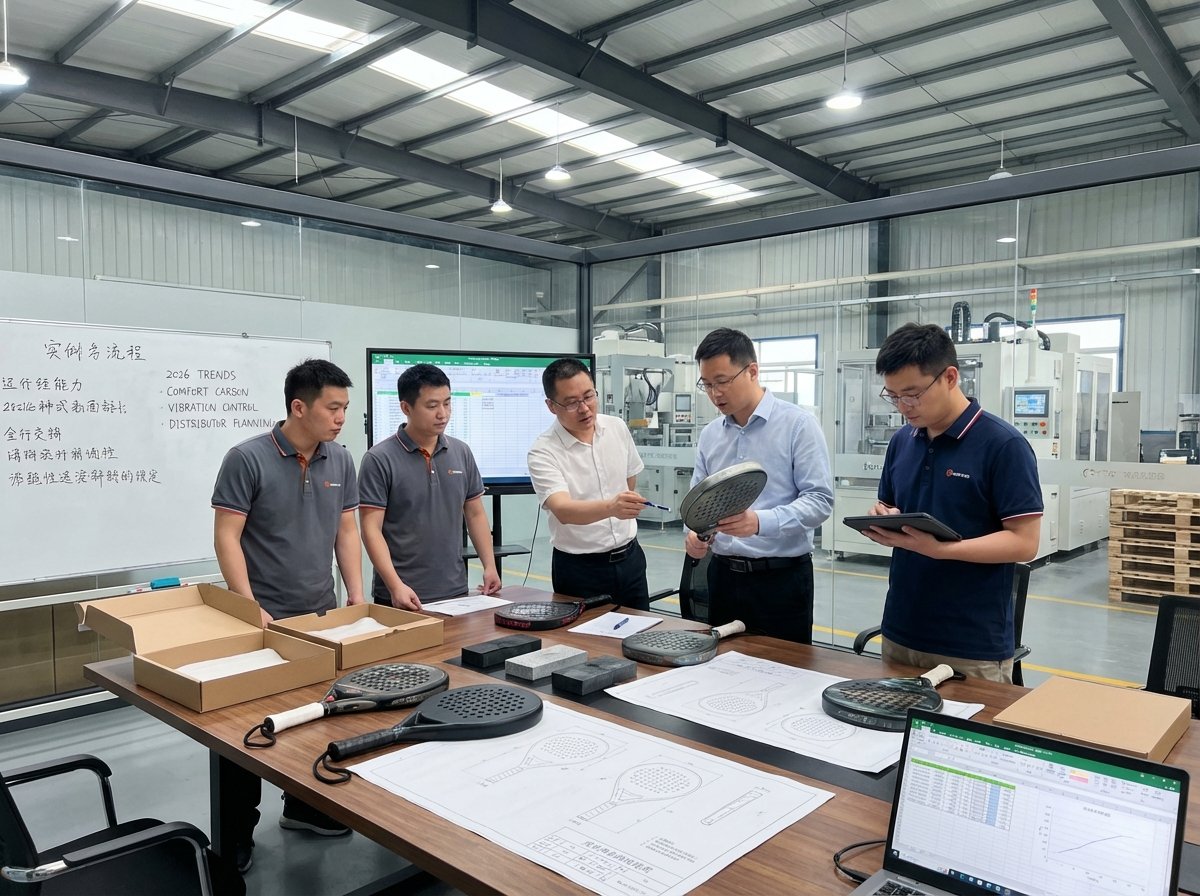
This is happening because the market is becoming more educated. End users are no longer reacting only to flashy cosmetics or simple claims like 12K carbon or power frame. They are starting to notice comfort, vibration, balance, sweet spot size, finish durability, and whether the racket actually matches their playing level. That makes inventory decisions more important than before.
For distributors, this changes the buying logic. The goal is no longer just filling a catalog with entry, mid, and premium price points. The stronger strategy is choosing rackets that answer the most repeated market complaints. Based on current complaint patterns, the biggest issues are clear: arm discomfort, overly demanding hard carbon models, head-heavy specs, early cracking, paint chipping, weak handle construction, and poor product communication.
That means 2026 inventory planning should move closer to real user pain points and further away from generic technical language.
Top Padel Racket Design and Material Trends Shaping Distributor Buying Decisions in 2026?
The biggest trend for 2026 is not one new material. It is a change in how material and design are translated into buyer-friendly product logic.
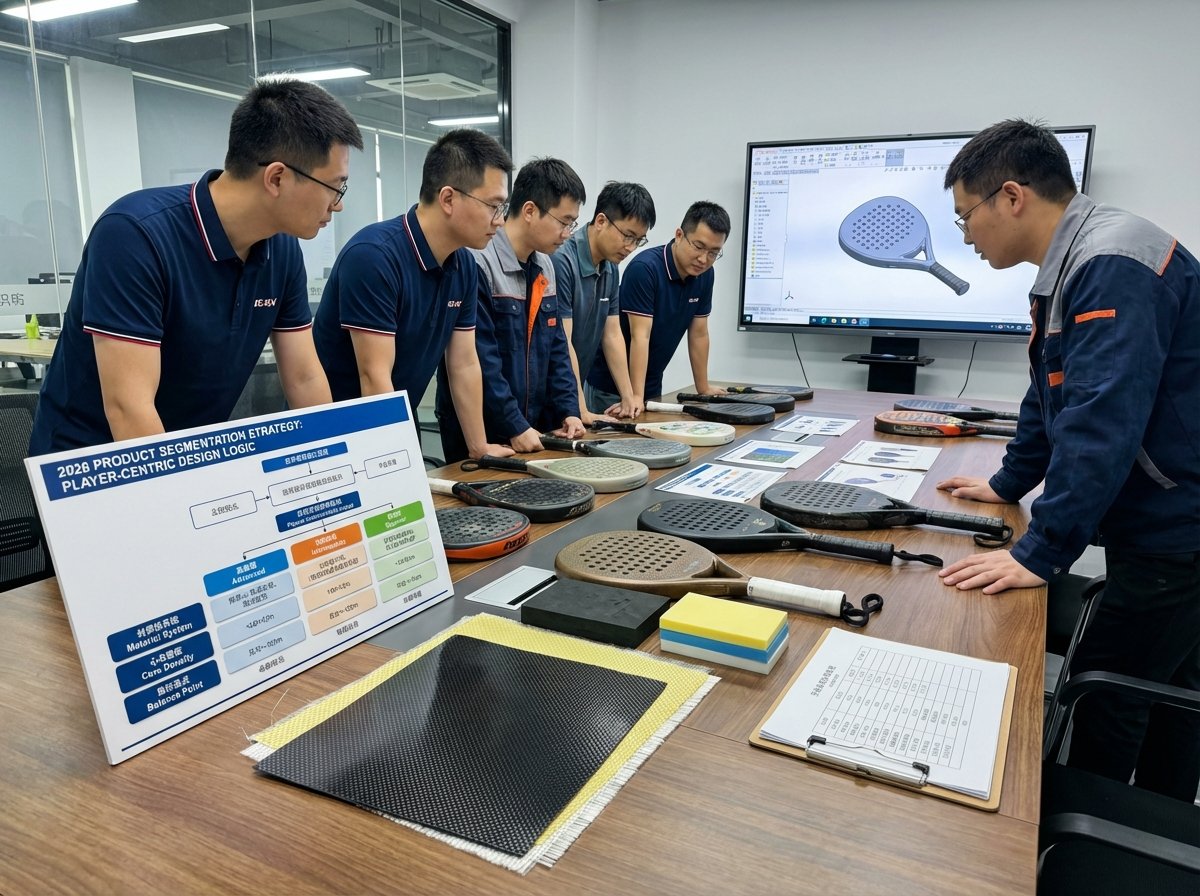
More distributors are expected to favor collections that explain products by feel and use case, not just by carbon code. A racket line that clearly separates Soft Carbon, Medium Carbon, and Hard Carbon gives the market a clearer path than one that only says 3K, 12K, or 18K. This matters because many complaints do not come from carbon itself. They come from carbon rackets being too stiff, too advanced, and too hard to use for the average player.
Another clear trend is hybrid thinking in material design. Pure hard carbon remains attractive for advanced power players, but softer constructions, lower stiffness face designs, and carbon-fiberglass mixed structures are becoming more important because they solve real problems in comfort and forgiveness. This is especially relevant for distributors serving broader retail channels, where many end users are not elite players.
Design direction is also shifting. The market is moving toward:
- larger sweet spots
- more forgiving face response
- lower vibration feedback
- better edge protection
- cleaner durability-focused finishing
These trends point in one direction: 2026 buying decisions will be shaped less by aggressive marketing claims and more by how well a racket performs across comfort, reliability, and ease of sale.
Which Padel Racket Features Will Matter Most to Retailers and Distributors Next Year?
Several features are becoming much more important because they connect directly to user satisfaction and after-sales pressure.
The first is comfort. Arm-friendly and elbow-friendly rackets are no longer a small niche. Market complaints show repeated issues with hard impact feel, harsh feedback, and vibration that irritates the wrist, elbow, or shoulder. This makes softer-feel carbon constructions, better EVA tuning, and vibration-control designs more commercially important.
The second is balance control. Many buyers still focus too much on total weight, but distributors are increasingly seeing that balance point creates a bigger effect on fatigue and handling. A racket with acceptable weight can still feel tiring if it is too head-heavy. That is why more useful product specs now include head-light, even-balance, and head-heavy classifications.
The third is sweet spot forgiveness. Many advanced-style rackets have a high sweet spot or a demanding response that makes them hard to use for ordinary players. Retailers tend to favor products that are easier to recommend with less risk. That makes forgiving sweet spots and broader user fit more valuable next year.
The fourth is finish quality and perceived quality. Even when performance is acceptable, early paint loss, surface flaking, or edge wear can damage retailer confidence and increase customer complaints. This makes coating durability, edge finishing, and surface protection far more important than before.
Why Will Comfort-Focused Carbon Rackets Grow Faster in 2026?
This is one of the clearest product directions for the coming season.
A large part of the market still wants carbon because carbon is linked with premium image, sharper feedback, and stronger brand value. At the same time, many players do not want the harshness that often comes with full hard-carbon designs. This gap is creating strong demand for a more comfortable type of carbon racket.
That is why comfort-focused carbon is likely to grow faster in 2026. These rackets answer several repeated complaints at once:
- reduced vibration
- less arm stress
- easier control
- bigger sweet spot
- more forgiving response on slower balls
For distributors, this category has a clear business advantage. It is easier to sell to a wider range of players. It also reduces the risk of mismatched purchases, especially among beginners and intermediate players who are often drawn to “carbon” but are not well suited to highly stiff and aggressive rackets.
A strong 2026 assortment should therefore not treat carbon as one group. It should separate comfort carbon from high-response performance carbon. This creates better product storytelling and better stock structure.
Why Are Durability and Cosmetic Finish Becoming Major Buying Factors?
In many markets, one of the strongest complaint patterns is not only about playing feel. It is about products breaking too early or looking poor too quickly.
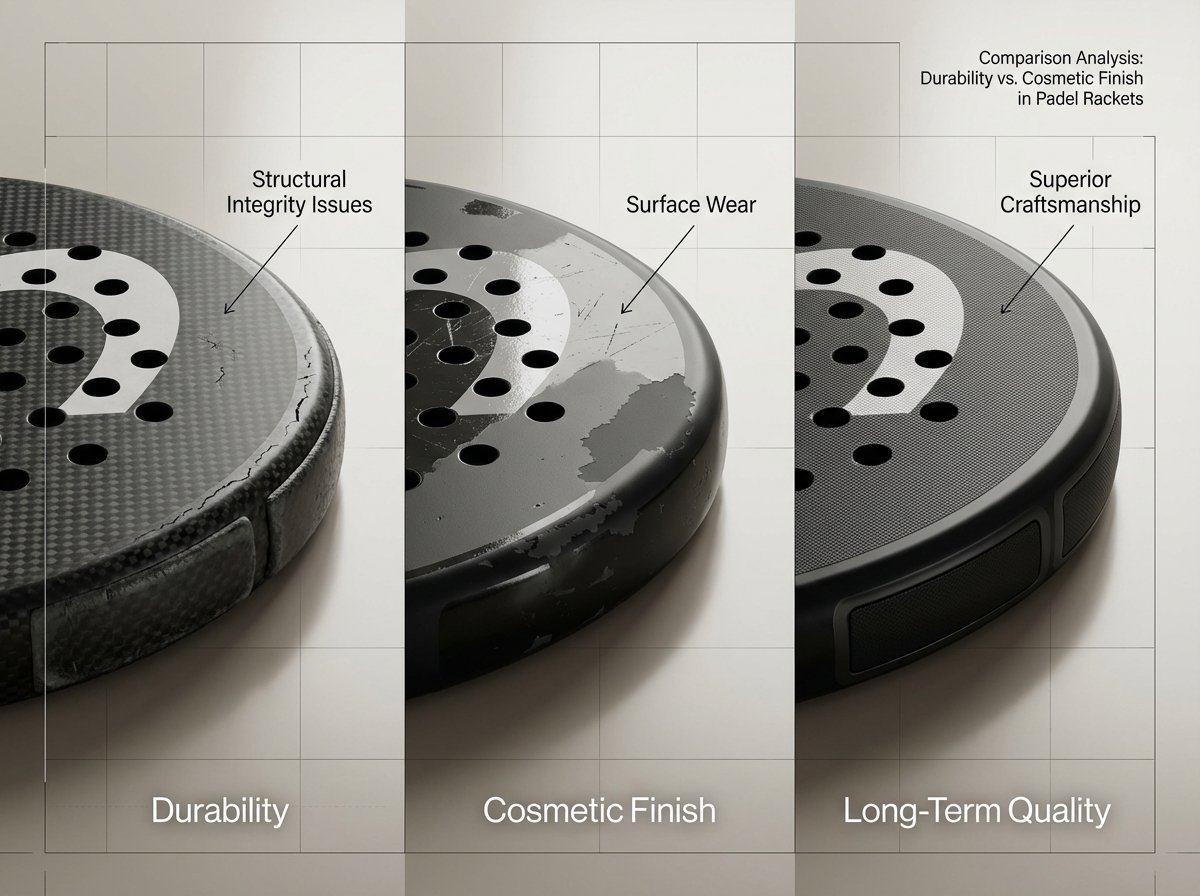
Cracks, edge damage, surface chipping, flaking graphics, loose edge protection, handle weakness, and visible finish defects all create strong negative reactions. In online channels especially, these issues often turn directly into one-star reviews, returns, and damaged brand trust. That is why 2026 buying decisions are likely to put much more weight on structural reliability and cosmetic durability.
Distributors should treat these as two separate product risks.
Structural durability includes:
- frame and face connection strength
- better layup direction
- stronger resin toughness
- reinforcement in the bridge, edge, and throat areas
- fatigue and impact resistance
Cosmetic durability includes:
- better coating adhesion
- more durable curing process
- transparent protective layers
- stronger edge finishing
- reduced contrast undercoat exposure on dark products
This distinction matters because the end customer reacts differently to each problem. A crack suggests danger and failure. Paint loss suggests cheap quality. Both damage sales, but both need different factory solutions. Distributors that understand this difference can choose product lines more intelligently.
How Should Product Specs Be Presented to Match 2026 Buying Logic?
One of the clearest shifts for 2026 is the move from factory language to market language.
Too many products are still presented with raw material claims only. Terms like 3K, 12K, or 18K may sound technical, but they do not always help the retailer explain the product quickly. What works better is a format that translates build into selling points.
The most useful specification structure for 2026 should include:
| Spec Area | Better 2026 Presentation |
|---|---|
| Feel | Soft / Medium / Crisp |
| Balance | Head-light / Even / Head-heavy |
| Power | Low / Medium / High |
| Control | Easy / Balanced / Demanding |
| Sweet Spot | Large / Medium / Compact |
| Comfort | High / Medium / Low |
| Player Type | Beginner / Intermediate / Advanced |
This approach makes inventory easier to plan and easier to sell. It also reduces confusion caused by technical overstatement. A product that is clearly positioned is less likely to disappoint the wrong user.
For distributors, clearer specs also improve assortment logic. Instead of stocking many rackets that all sound similar, it becomes easier to build a range with real separation.
How Distributors Can Align Inventory Planning with 2026 Padel Product Trends?
Inventory planning for 2026 should be built around fewer assumptions and more role-based structure.
A practical assortment can begin with three main groups. The first is comfort and control, aimed at wider usability and lower complaint risk. The second is balanced all-round product, which usually becomes the core volume seller. The third is advanced performance, aimed at players who want faster response and more aggressive output.
Within those groups, the key is avoiding overconcentration in hard, head-heavy, advanced-style carbon models. Those may look attractive in product catalogs, but they often create the biggest mismatch in real retail environments.
A stronger inventory plan should include:
- clear soft, medium, and hard feel segmentation
- visible balance segmentation, not only weight segmentation
- at least one arm-friendly carbon option
- at least one forgiving all-round model with strong sweet spot tolerance
- better durability-focused premium choices
- finish quality that matches price level
Inventory planning should also reflect channel reality. Products for clubs, pro shops, and specialist channels can be more technical. Products for broader retailer environments should be easier to understand and easier to recommend without expert fitting. That difference is important when choosing the final product mix.
What Should Distributors Look for in a Padel Racket Factory for 2026 Trends?
The right product trend means little without the right factory support behind it.
A strong factory partner for 2026 should not only produce rackets. It should also help solve the exact issues that are shaping demand: comfort tuning, durability improvement, better cosmetic control, clearer specification structure, and more precise player segmentation.
That is why direct factory capability matters. A factory with in-house design, R&D, and sales support can adjust layup, EVA density, vibration response, finish process, and reinforcement structure much more effectively than a supplier focused only on simple order execution. OEM and ODM experience also becomes more valuable here, because different distributors and brand owners may need different levels of speed, customization, and development depth.
PDK operates as a factory with in-house design, R&D, production, and sales departments, with OEM and ODM experience developed through cooperation with established brands. This creates stronger support for distributors that need more than a catalog. It supports faster product development, clearer assortment logic, better consistency, and more reliable long-term cooperation.
Conclusion
The biggest padel racket trends for 2026 are moving in a practical direction: comfort-focused carbon, clearer player matching, balance-led specification, better durability, and stronger cosmetic quality. Distributors that build inventory around these trends will be in a better position to reduce claims, improve sell-through, and protect margin in a more competitive market.
For distributors, importers, retailers, and brand buyers preparing for the next season, the most effective step is to work with a factory that understands both product development and market complaints. PDK supports that process through in-house design, R&D, production, and OEM/ODM development for carbon padel rackets. For the next collection plan, inquiry discussions can start from target market, channel type, and preferred product direction, then move into sampling, specification planning, and range building with a clearer strategy for 2026.