
Many padel brands push carbon as the premium answer to everything. Yet real market feedback shows a different problem: the wrong material mix often creates harsh feel, weak forgiveness, poor player matching, and avoidable returns. Material choice matters, but only when it matches the real user and the real market.
Carbon fiber and fiberglass affect feel, comfort, sweet spot size, response speed, durability perception, and final pricing. The best material choice is not the one that sounds most advanced. It is the one that fits the target player, product tier, and sales channel more accurately.
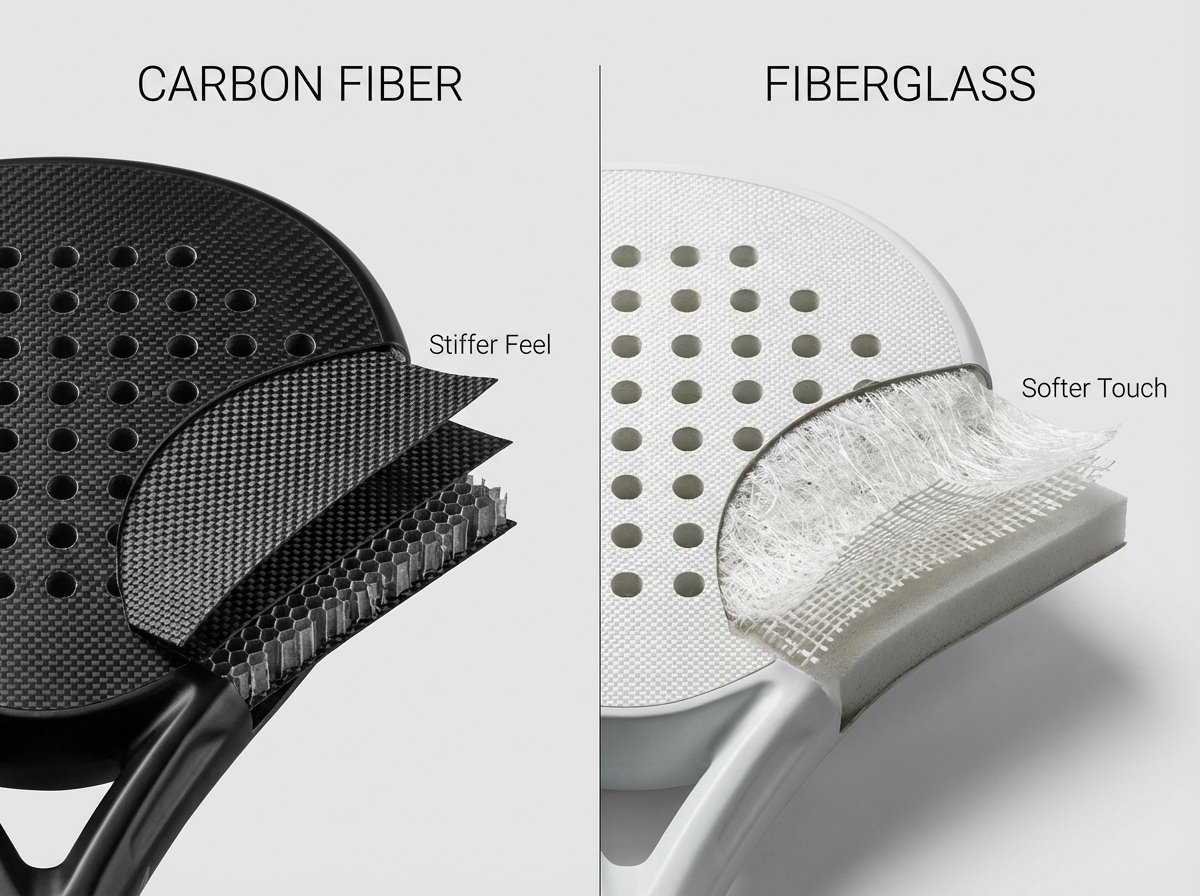
Across the padel market, many product problems are not caused by “bad carbon” or “cheap fiberglass” alone. They are caused by bad structure logic. A racket may look premium in the catalog, but still feel too hard, too head heavy, too advanced, or too fragile once it reaches the court. This is exactly why material selection should be explained in a more practical way.
Market insights repeatedly show the same pain points: elbow discomfort from over-stiff constructions, weak support on slow balls, small sweet spots that punish normal players, early cracking, paint chipping, and confusing positioning that tells buyers only “3K” or “12K” without explaining who the racket is really for. For brands, distributors, and buyers, this means one thing: material choice should be treated as a full product-planning decision, not just a spec-sheet word.
Why Do Padel Racket Materials Matter So Much?
A racket material does much more than change the label. It shapes feel, tolerance, comfort, confidence, and even after-sales risk.
Carbon fiber and fiberglass directly affect stiffness, rebound style, forgiveness, and player suitability. Those differences strongly influence how a racket should be positioned in the market.
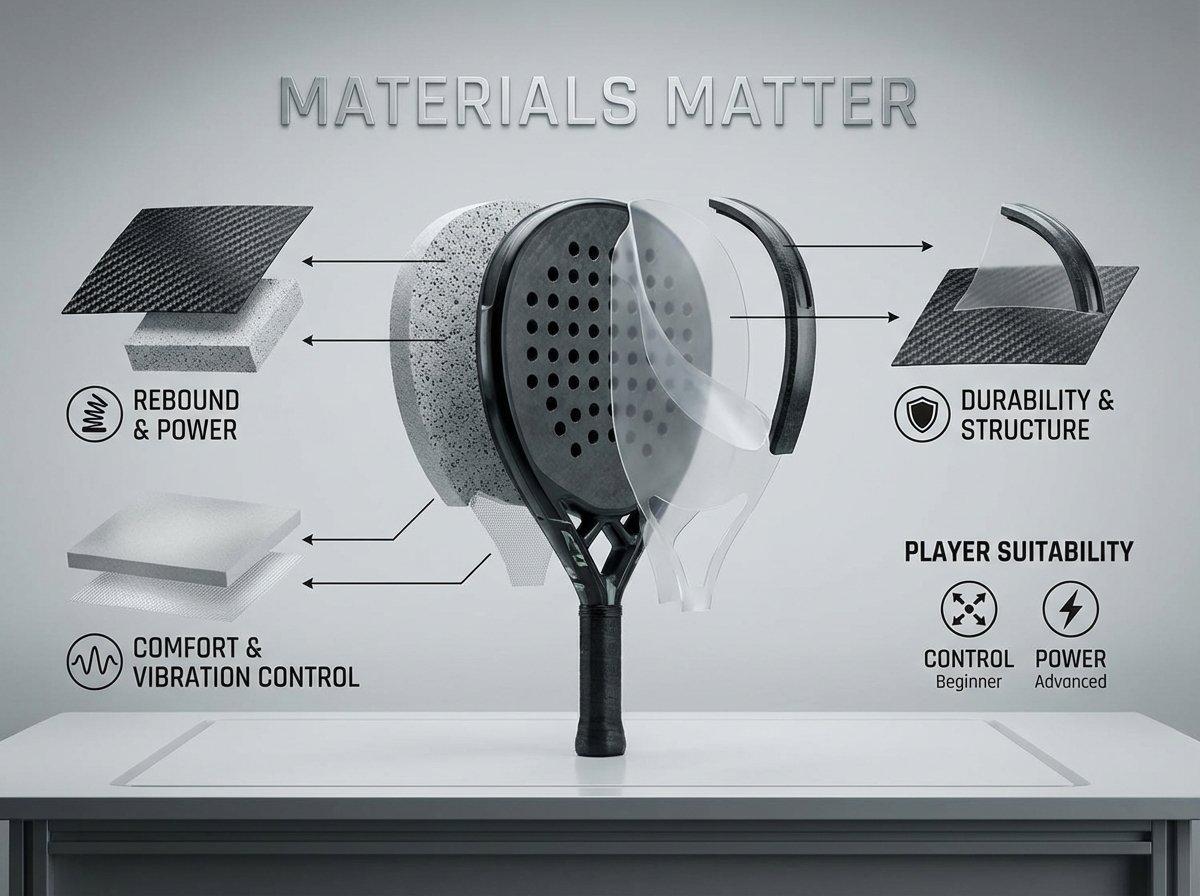
Many brands still describe rackets mainly by material name, but players do not buy only a material. They buy what that material creates on court. They notice whether the racket feels soft or harsh. They notice whether off-center shots still feel playable. They notice whether the racket helps on slower balls or becomes tiring after twenty minutes. This is why material logic is closely connected to product success.
A well-matched material setup can make a racket easier to sell and easier to use. A badly matched one can create the opposite result. Carbon is often pushed into product lines that should have been softer and more forgiving. Fiberglass is sometimes ignored because it sounds less advanced, even when it would clearly solve the target user’s real problem. Strong product development starts by understanding that material is not only technical. It is commercial, practical, and highly visible in reviews.
What Makes Carbon Fiber Different from Fiberglass?
Both materials can work well, but they create different racket personalities.
Carbon fiber usually gives a crisper, faster, and more direct response. Fiberglass usually gives a softer, easier, and more forgiving response. Neither material is automatically better in every racket.
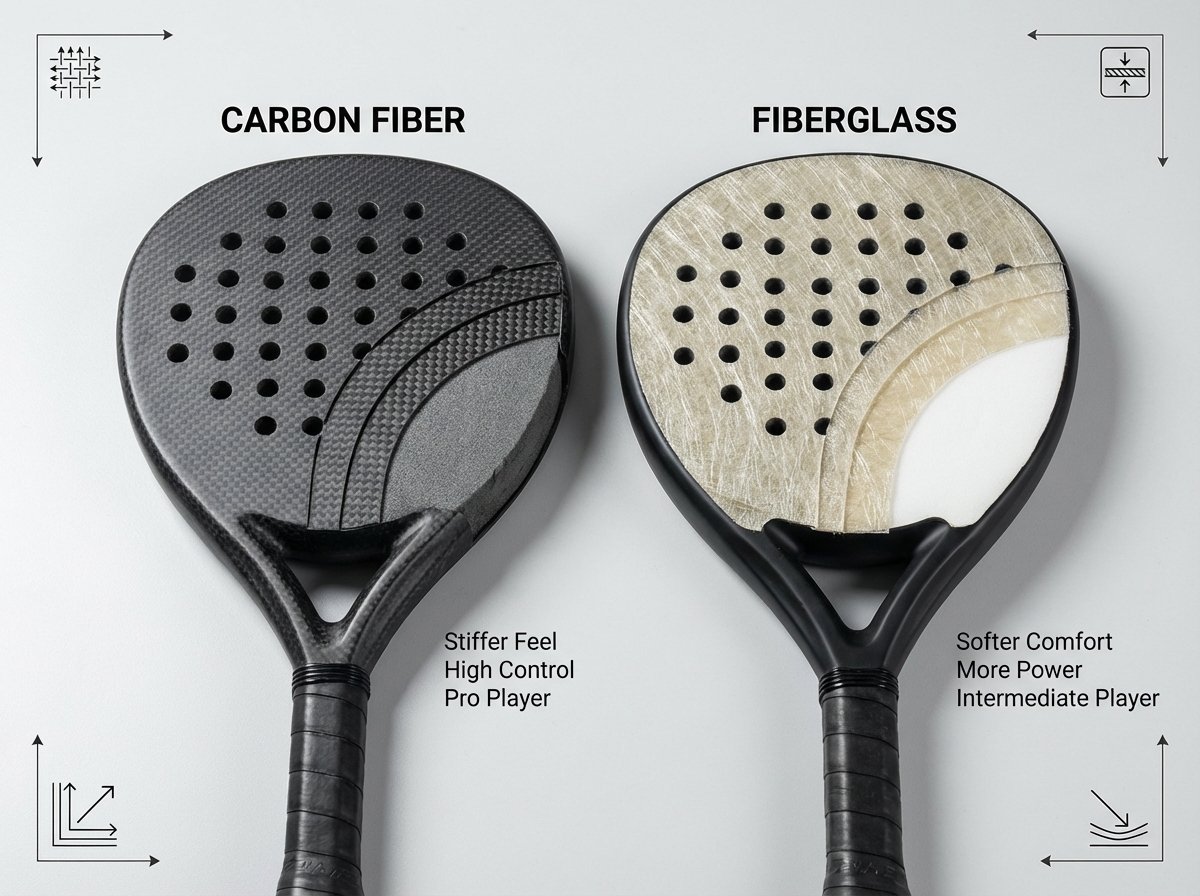
Carbon fiber is popular because it supports stronger response and a more technical performance image. It often suits premium positioning and advanced player marketing. When designed well, it can create excellent precision and cleaner energy transfer. But when pushed too far, especially with a hard core and high balance point, it can become harsh and difficult for normal players.
Fiberglass offers a different value. It usually flexes more and gives easier ball output. That helps with comfort, forgiveness, and confidence, especially for beginners and intermediate players. It also helps on slower balls and defensive shots, where many overly stiff carbon rackets struggle.
| Material | Typical feel | Main strength | Main risk if misused |
|---|---|---|---|
| Carbon fiber | Crisp, fast, direct | Strong response and premium positioning | Can become too stiff and demanding |
| Fiberglass | Softer, easier, more forgiving | Better comfort and wider player fit | Can feel less explosive for advanced attack players |
The stronger message for product planning is simple: the right material depends on player type and product role, not on which word sounds more expensive.
Carbon Fiber Grades in Padel Rackets: 3K, 12K and Performance Positioning?
Not all carbon faces feel the same. Carbon grade changes how the racket responds and how it should be sold.
3K carbon usually supports a more balanced and accessible response. 12K carbon usually creates a crisper and more reactive response. These differences matter because they affect both performance positioning and player suitability.
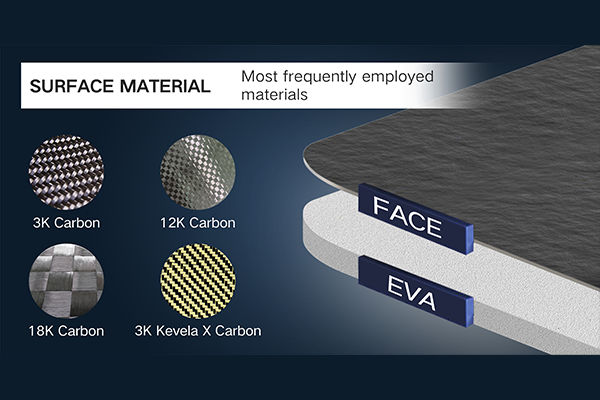
A 3K carbon face often fits all-round and control-based lines well. It gives carbon value without automatically pushing the racket into a very demanding direction. This makes it useful for mid-range products and wider retail channels where brands want better balance between premium feel and usability.
A 12K carbon face often feels quicker, firmer, and more advanced. It can support stronger premium positioning and sharper feedback, especially in power-focused models. Yet this is also where many brands make a mistake. A higher carbon grade is often treated like a universal upgrade, while the actual player may end up with a racket that feels too stiff, too tiring, or too unforgiving.
| Carbon grade | General feel | Best use direction | Main caution |
|---|---|---|---|
| 3K Carbon | Balanced, controlled, more accessible | Mid-range and broad all-round lines | Needs clear player positioning |
| 12K Carbon | Crisp, lively, more advanced | Premium and power-oriented lines | Can be too hard for broad-market use |
Market insights make this especially important. Many player complaints linked to elbow pain, weak comfort, and poor beginner fit come from rackets that are not defective in material quality, but simply too advanced in structure. That is why carbon grade should never be sold alone. It should be connected to feel, sweet spot size, arm comfort, and recommended player level.
Why Does Fiberglass Still Matter in Modern Padel Lines?
Fiberglass is often underestimated because it sounds less technical than carbon. In reality, it solves several real market problems very effectively.
Fiberglass still matters because it improves comfort, forgiveness, easy power, and beginner fit. In many entry and comfort lines, it is the smarter material choice.
fiberglass in modern padel racket development
One repeated complaint in the market is that many carbon rackets do not help enough on slower balls and defensive play. Another is that some rackets feel too hard or too narrow in sweet spot for normal club players. Fiberglass directly helps with both issues. It usually gives easier rebound and a softer feel, which creates a more welcoming product experience.
This is especially useful in entry-level lines, club collections, starter ranges, and comfort-oriented models. For brands building a product ladder, fiberglass is not a compromise. It is often the correct solution for a specific user group. It can also be combined with carbon in hybrid constructions when a brand wants a more premium look without losing too much comfort.
For OEM and ODM development, this makes fiberglass highly relevant. A factory with in-house design and R&D can help use it in the right way, instead of treating it as a low-level material by default.
Fiberglass vs Carbon Fiber in OEM Padel Racket Development and Pricing?
Material choice changes not only performance, but also how a product line is structured and priced.
Fiberglass usually fits entry-level and broader-volume products more naturally. Carbon fiber usually fits mid-range and premium positioning. Mixed constructions can help create clearer price ladders and clearer player segmentation.
fiberglass vs carbon fiber in oem padel racket development and pricing
For OEM projects, the key is not choosing one material for everything. The key is building a coherent line. Fiberglass can support a better starting point for newer players and wider retail audiences. Carbon fiber can support sharper performance positioning and stronger premium image. Hybrid options can bridge the space between the two.
A brand launching three product levels often benefits from a structure like this:
| Product tier | Common material direction | Why it works |
|---|---|---|
| Entry-level | Fiberglass or fiberglass-heavy hybrid | Better comfort, easier control, wider appeal |
| Mid-range | 3K carbon or balanced hybrid | Carbon image with better accessibility |
| Premium | 12K carbon with tuned structure | Stronger response and higher-end positioning |
Pricing also brings expectations. A premium carbon racket cannot simply look advanced. It must also justify the higher price with better consistency, better durability control, and a clearer on-court advantage. If it chips quickly, cracks early, or feels too harsh for the target user, disappointment becomes stronger and more visible in reviews.
How Do Materials Affect Comfort, Sweet Spot and Arm-Friendly Design?
Material choice directly changes how much stress returns to the arm and how forgiving the racket feels in real play.
Softer face behavior usually improves comfort and sweet spot usability. Stiffer face behavior can improve sharp response, but it must be controlled carefully to avoid harshness.
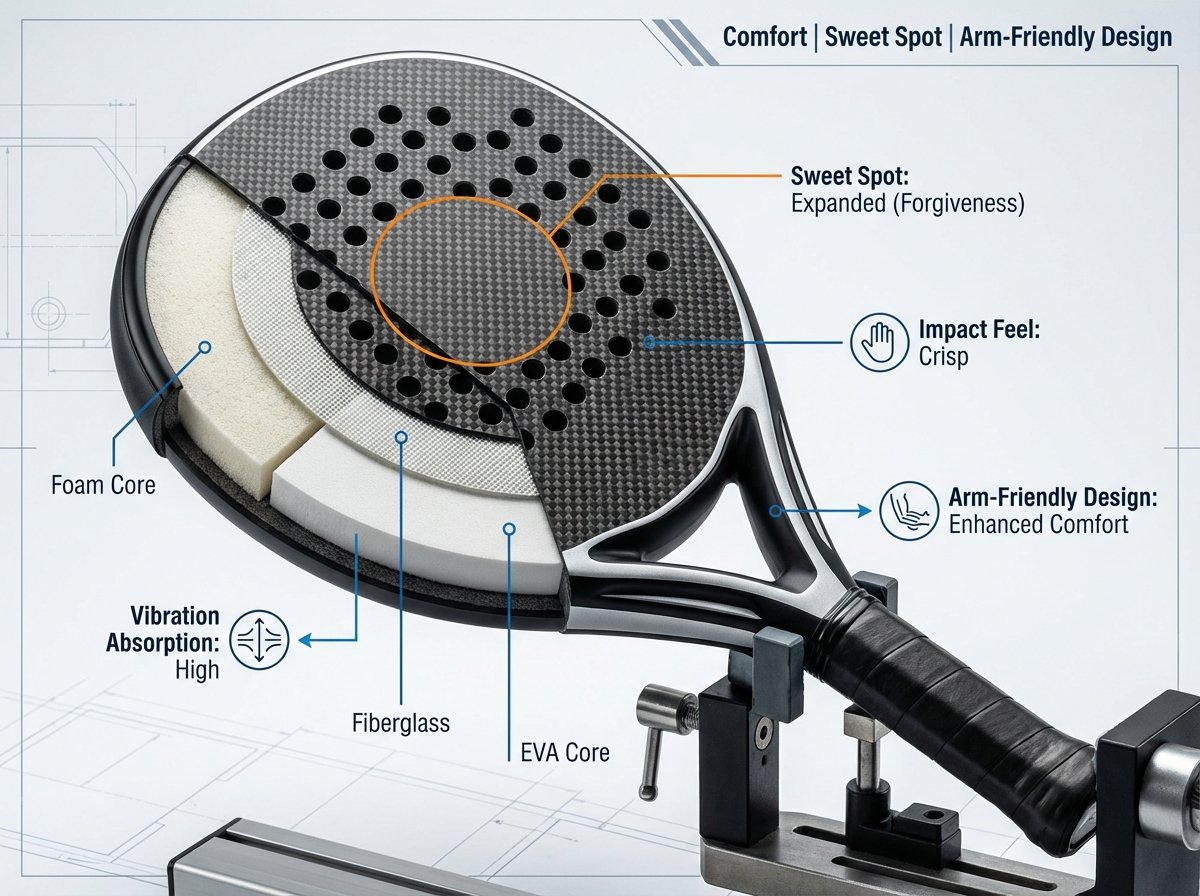
Market feedback repeatedly highlights pain around elbow irritation, wrist fatigue, and rackets that feel too advanced for normal use. These complaints often come from full structures that are too stiff overall. A hard carbon face combined with hard EVA and head-heavy balance can quickly create a product that looks strong on paper but works badly in practice.
This is why many brands now need clearer comfort layering. A softer or more forgiving face direction can support:
- better arm comfort
- easier control
- more helpful response on slower balls
- a larger usable sweet spot
- lower mismatch risk for beginner and intermediate users
An arm-friendly carbon direction is especially valuable. Many buyers still want the image and feel of carbon, but not the harshness of an advanced-only racket. A factory can support this by tuning layup, pairing carbon more carefully with softer cores, and using clearer product segmentation.
How to Choose the Right Material Mix for Entry-Level, Mid-Range and Premium Padel Lines?
The strongest collections are built by role, not by repeating the same material idea three times.
The right material mix should match player level, comfort need, price target, and product positioning. Each line should solve a different market problem.
Entry-Level Lines
These products should focus on comfort, easy use, and broad tolerance. Fiberglass or fiberglass-heavy hybrids usually work well here because they help new players get cleaner ball output and better forgiveness.
Mid-Range Lines
This range often works best with 3K carbon or a balanced hybrid construction. It gives more premium appeal while staying accessible enough for the wider market.
Premium Lines
Premium products can use 12K carbon and more performance-focused structures, but they still need discipline. Premium should mean stronger response and clearer differentiation, not automatic harshness.
| Product line | Recommended material mix | Main target |
|---|---|---|
| Entry-level | Fiberglass or fiberglass hybrid | Beginners, clubs, wider retail |
| Mid-range | 3K carbon or balanced hybrid | Intermediate and all-round players |
| Premium | 12K carbon with tuned core and balance | Advanced players and higher-end retail |
This is also where better product language matters. Material mix should be translated into:
- feel
- control level
- power level
- sweet spot size
- arm comfort
- recommended player
That is much more useful than only listing carbon grades.
What Material Mistakes Should Brands Avoid?
Most material mistakes are not about using the wrong raw material. They are about using the right material in the wrong product role.
The biggest mistakes are overusing stiff carbon, ignoring player level, and selling material names without explaining the resulting feel and fit.
Several patterns appear again and again in market feedback:
- all carbon models made too hard
- advanced carbon structures pushed into broad retail lines
- poor separation between comfort products and power products
- technical material labels used without player explanation
- material choice made without balance, core hardness, and sweet spot planning
For brands, distributors, and buyers, this is where direct factory support creates value. A real factory with in-house design, R&D, and production control can help translate raw materials into actual product roles. That includes not only face material choice, but also structure tuning, quality control, and product storytelling.
Conclusion
Carbon fiber and fiberglass both have important roles in padel racket development. Carbon usually supports sharper response and stronger premium positioning, while fiberglass often delivers better comfort, forgiveness, and wider player fit. The best product lines do not treat one material as universally superior. They build clear entry-level, mid-range, and premium layers using the right mix of face material, core hardness, balance, and player targeting. For brands, distributors, and buyers planning OEM or ODM projects, this material logic is essential to reduce mismatch, improve sell-through, and strengthen long-term product value. Padelico supports this process as a factory with in-house design, R&D, production, and experience working with OEM/ODM projects for well-known brands. Contact padelico to discuss the right material strategy, product ladder, and development direction for the next padel racket line.