When it comes to badminton rackets, stringing plays a vital role in performance. Two crucial factors that influence how your racket performs are string tension and string gauge. Understanding these elements can help you fine-tune your racket to match your playing style and maximize your performance on the court.
String tension and gauge directly affect your control, power, and comfort, so choosing the right setup for your game is essential.
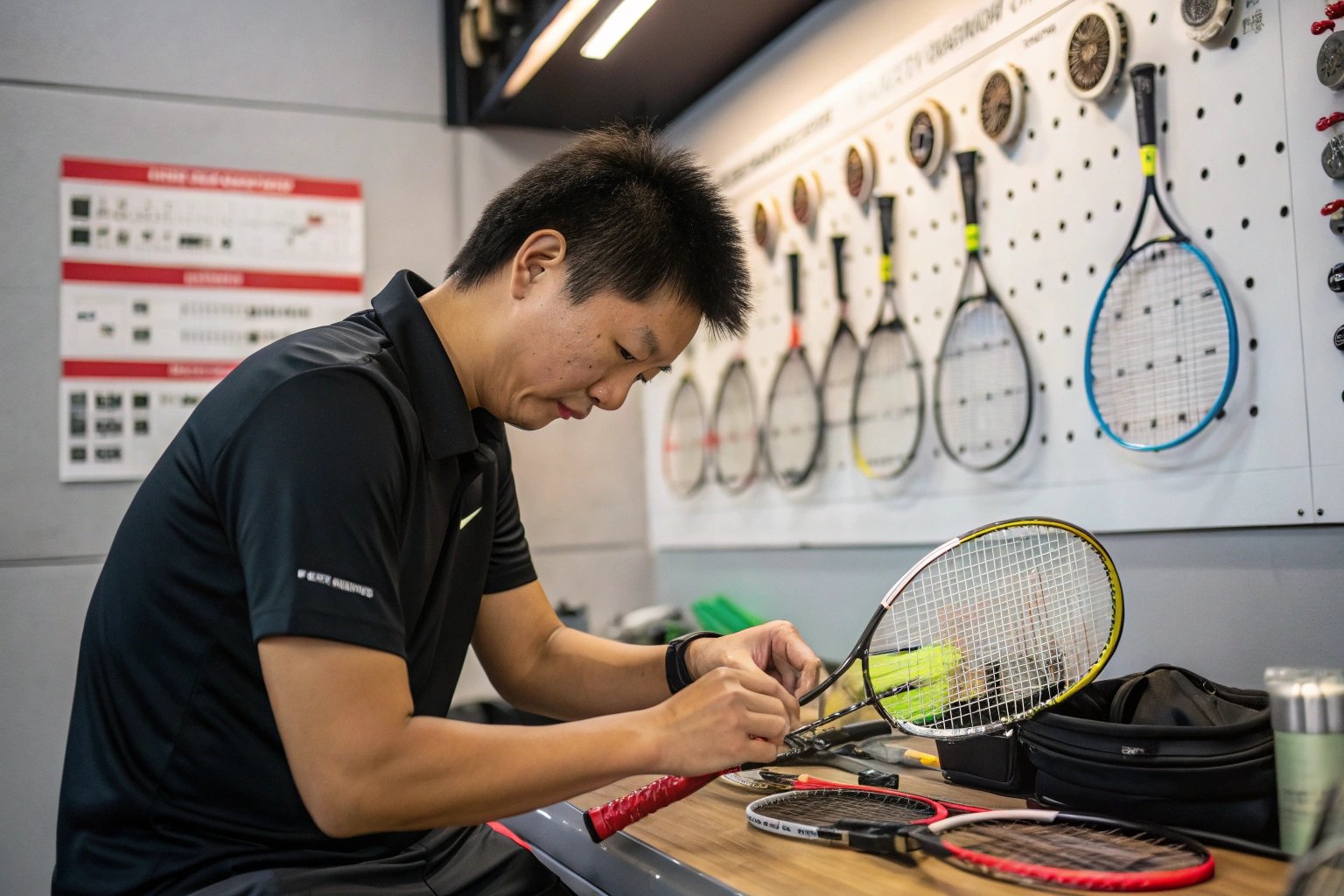
Stringing your racket properly ensures that your shots are more accurate, your control is enhanced, and your racket stays durable for longer. In this guide, we will explore what string tension and gauge are, how they impact your game, and how to choose the right setup based on your style of play.
What is string tension in badminton?
String tension refers to how tightly or loosely the strings are woven across the racket frame. The higher the tension, the tighter the strings, while lower tension means the strings are looser. Tension is typically measured in pounds (lbs) or kilograms (kg) and can range anywhere from 18 lbs to 30 lbs, depending on your playing style and preference.
String tension significantly affects your control, power, and the feel of your shots.
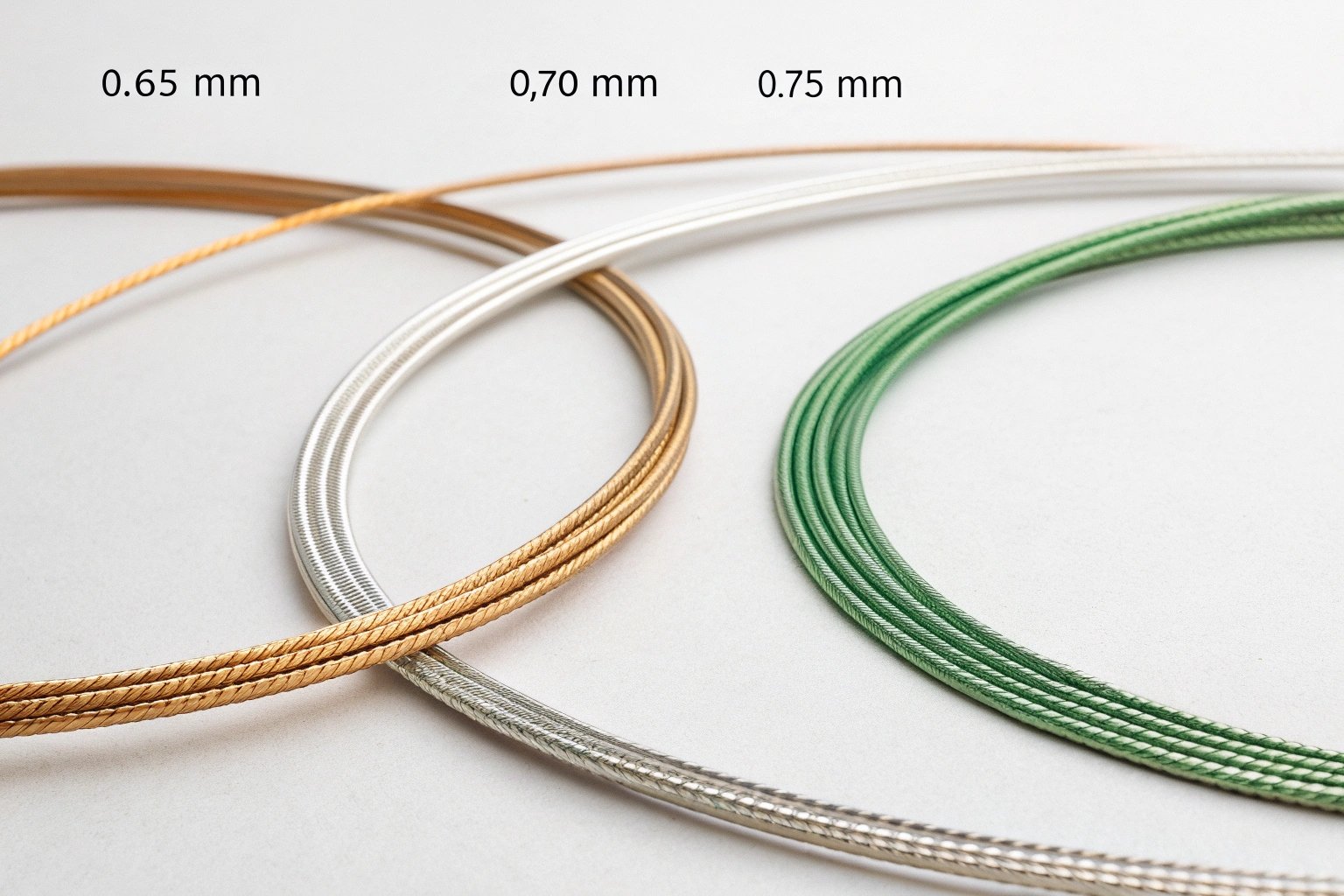
Higher tension results in a firmer string bed that provides better control over your shots. This means the shuttle will stay on the strings for a shorter time, giving you more precision, especially during delicate shots like drops or net play. However, higher tension also requires more effort to generate power, so it's generally preferred by advanced players with good technique.
On the other hand, lower string tension allows the strings to stretch more, creating a larger “sweet spot” for more power but less control. This is ideal for players who rely on generating more power without needing as much precision, making it popular with beginners and players who focus on smashes.
How does string tension affect power and control?
String tension has a direct impact on both power and control. As a general rule, the higher the string tension, the better the control, and the lower the string tension, the more power you’ll generate. But how exactly does this play out on the court?
Higher tension gives you more control, while lower tension increases the power of your shots.
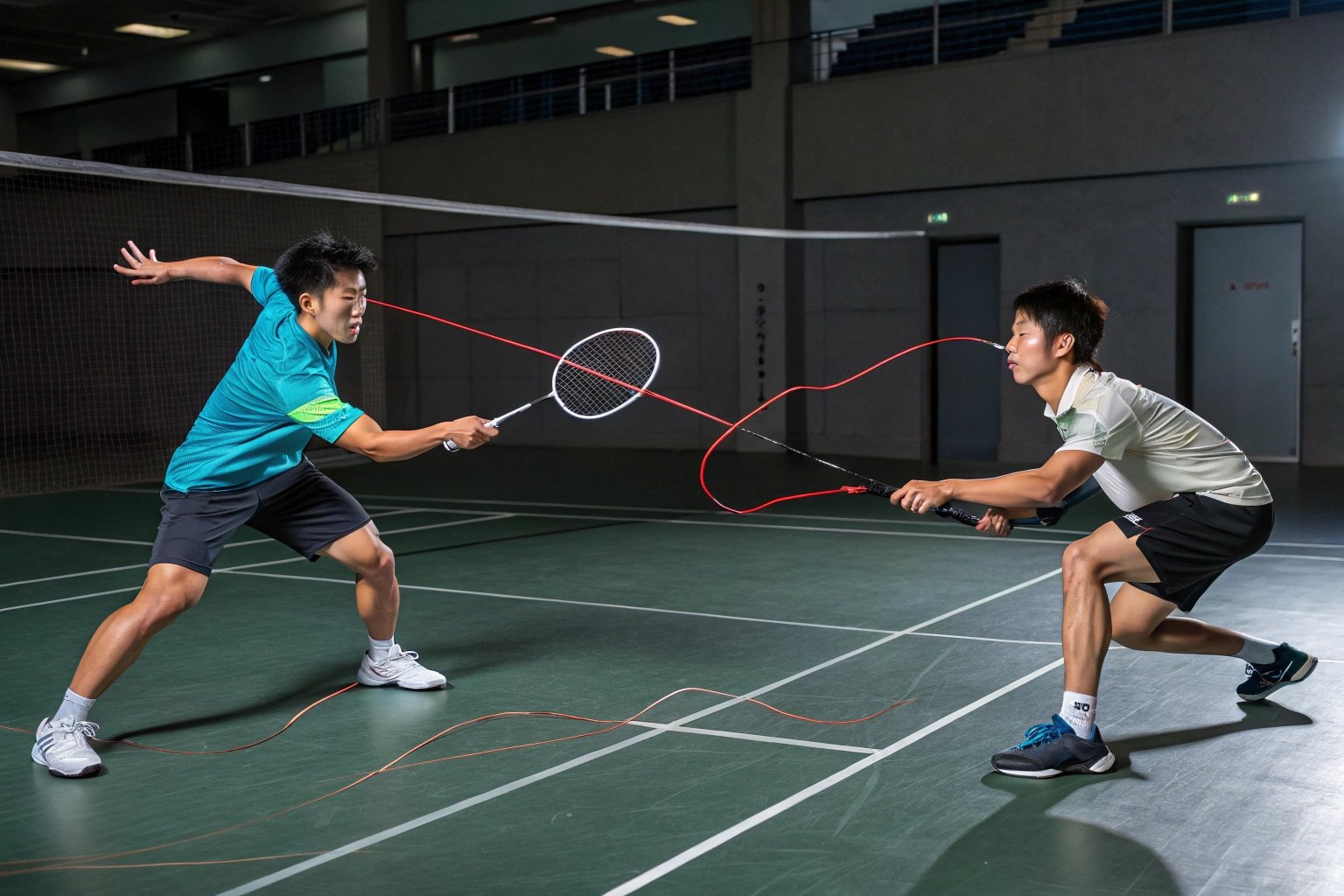
When you use higher string tension, the strings are less elastic, so the shuttle stays on the strings for a shorter period. This gives you better control over where the shuttle goes, especially during quick exchanges or precise placements. However, because there is less “trampoline effect,” you need to put in more effort to generate power.
Lower tension, on the other hand, allows the strings to stretch more when hitting the shuttle, giving you extra power. This is particularly useful for players who want more explosive smashes or clear shots. However, with lower tension, it’s harder to place the shuttle accurately because the larger sweet spot and elastic strings give less control.
What is string gauge in badminton?
String gauge refers to the thickness of the strings used in your racket. The thinner the string, the higher the gauge number. In badminton, string gauges typically range from 0.65 mm to 0.80 mm.
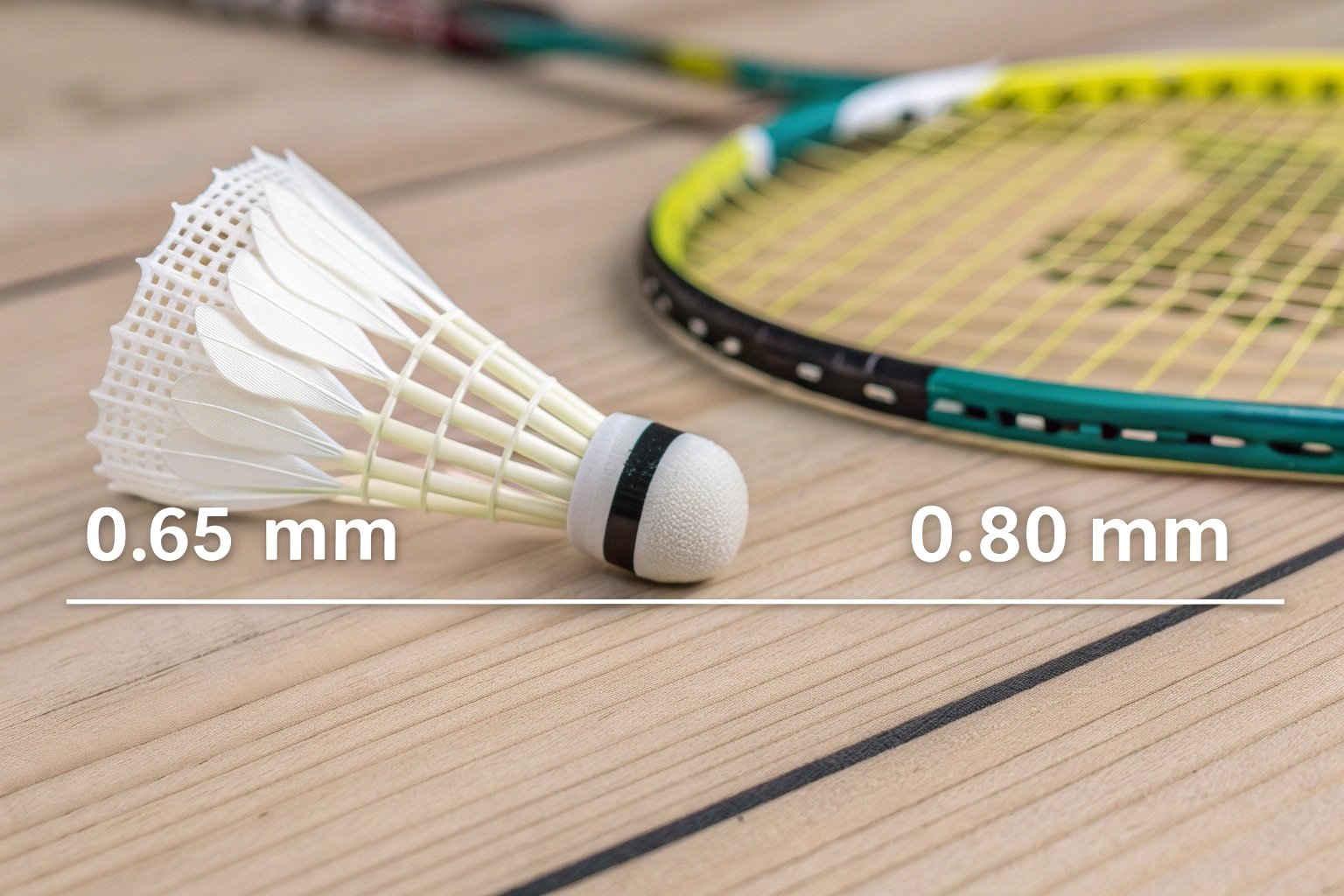
The thickness of the string affects its durability, feel, and playability.
- Thicker strings (lower gauge, such as 0.65 mm): Thicker strings tend to be more durable and last longer, especially under higher string tension. However, they offer less feel and control compared to thinner strings, and they may sacrifice some power.
- Thinner strings (higher gauge, such as 0.75 mm or 0.80 mm): Thinner strings offer better feel, control, and repulsion, giving you more precision and quicker shots. However, they are less durable, especially under higher tension, and may break more easily.
Advanced players often choose thinner strings because they offer more control and precision, while recreational players or those who play more casually may opt for thicker strings for added durability and power.
How do tension and gauge work together?
String tension and string gauge work in tandem to affect your overall racket performance. A higher string tension on a thinner gauge string will provide great control and precision but may not last as long. On the other hand, a lower string tension with a thicker gauge string will give you more power and durability but may lack the responsiveness needed for fast, precise shots.
Finding the right balance between string tension and gauge is key to optimizing your racket's performance.
For example, a player who wants control and precision might choose a high string tension (28-30 lbs) with a thinner string (0.65 mm) for a responsive feel. However, a player who wants more power might choose lower string tension (22-24 lbs) with a thicker string (0.70 mm) for a stronger, more durable racket setup. The combination you choose depends on what you need more: power, control, or a balance of both.
How do you choose the right string tension and gauge?
Choosing the right string tension and gauge depends on your playing style, experience level, and what you want to achieve in your game.
Beginner players may benefit from lower tension and thicker strings, while advanced players may opt for higher tension and thinner strings for more control.
- For power players: If you’re focused on generating power, go for a lower string tension (18-24 lbs) and a thicker string (0.70 mm or higher). This setup allows for a larger sweet spot and more explosive shots.
- For control-focused players: If precision and control are more important, use a higher string tension (26-30 lbs) with a thinner string (0.65 mm or lower). This setup will offer greater responsiveness and accuracy in your shots.
- For all-around players: Choose medium tension (24-26 lbs) with a medium gauge string (0.70 mm). This gives a good balance between power, control, and durability.
Conclusion
Understanding badminton racket string tension and gauge is essential for choosing the right setup for your game. Whether you’re looking for more power, greater control, or a balance of both, the string tension and gauge combination you choose will have a significant impact on your performance. Make sure to consider your playing style, skill level, and preferences to find the perfect stringing setup that will help you excel on the court.