Private labeling looks simple from the outside, but material choices, molds, surface technology, MOQ, and testing can make one product much easier to launch than another.
Pickleball paddles are generally easier to private label at the entry level because standard structures and graphics can be changed quickly. Padel rackets usually require more decisions around shape, EVA, balance, carbon layup, and performance positioning.
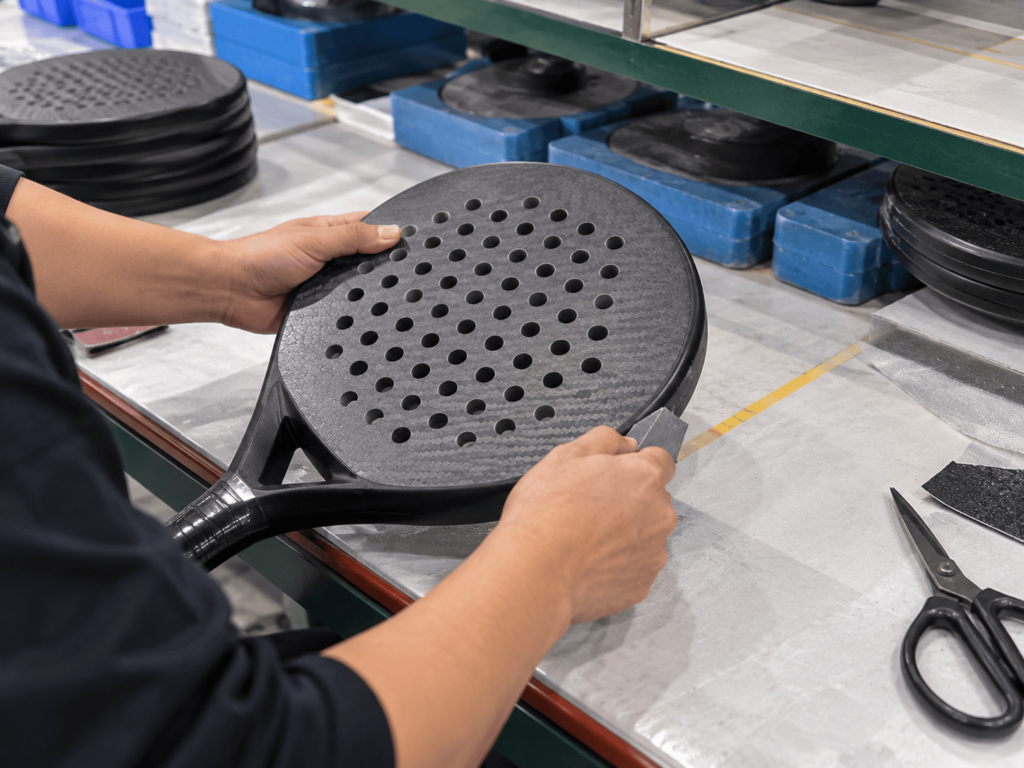
For brand owners, distributors, clubs, and purchasing teams, the easier product is not always the better commercial choice. A fast private-label project may help test a market, while deeper customization can create stronger long-term differentiation. Padel rackets and pickleball paddles both offer private-label opportunities, but the product development process, technical complexity, and branding possibilities are different. A factory with in-house design, R&D, production, and sales teams can help determine which path better matches the target market, launch speed, and product strategy.
Why Are Pickleball Paddles Usually Easier to Private Label?
A new brand may want to launch quickly without spending months on product engineering. In that situation, product complexity becomes an important factor.
Pickleball paddles are often easier to private label because many factories already have mature standard constructions that can be customized mainly through graphics, surface treatment, packaging, and limited structural changes.
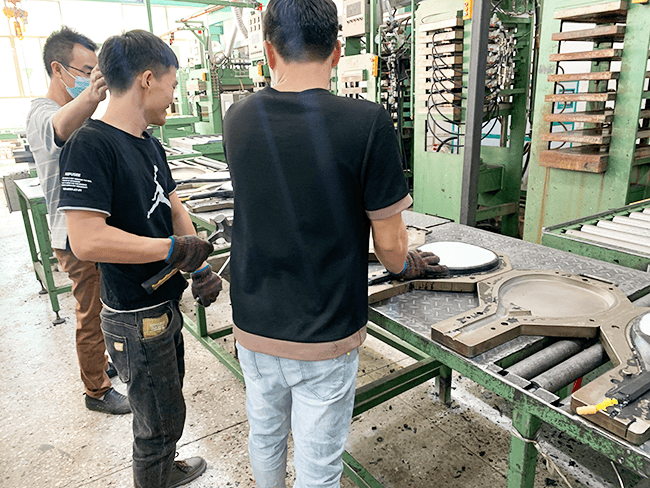
A basic private-label pickleball project may include:
- Logo customization
- Graphic design
- Edge guard color
- Grip color
- Packaging
- Surface texture
- Paddle thickness
- Core selection
For many entry-level projects, there is no need to redesign the entire product structure.
That makes development faster.
| Development Factor | Pickleball Paddle |
|---|---|
| Standard Shapes | Widely available |
| Graphic Customization | Easy |
| Core Options | Relatively straightforward |
| Surface Customization | Flexible |
| Mold Development | Often unnecessary for basic projects |
| Sample Speed | Usually faster |
This makes pickleball attractive for brands testing a new market.
However, simple private labeling also has a disadvantage.
When many brands use similar standard structures, product differentiation becomes more difficult. The final product may rely heavily on graphics, packaging, price, and marketing.
For companies planning long-term premium positioning, deeper engineering may still be required.
Why Are Padel Rackets More Complex to Private Label?
Padel rackets provide more product-development possibilities, but those possibilities also create more decisions.
A custom padel racket needs the correct combination of shape, EVA core, carbon structure, balance, weight, sweet spot, frame construction, and surface finish.
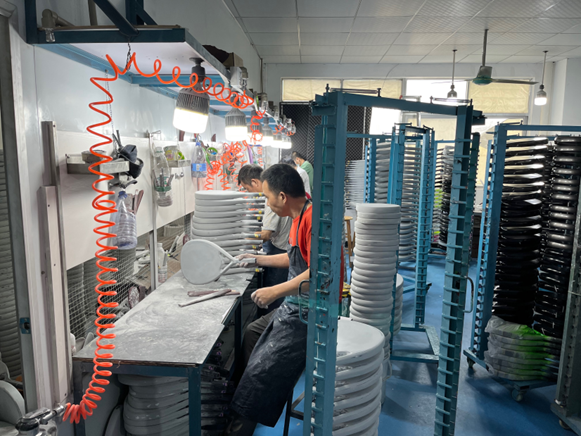
Common customization areas include:
| Padel Racket Element | Possible Options |
|---|---|
| Shape | Round, teardrop, diamond |
| Carbon | 3K, 12K, 18K, 24K, hybrid structures |
| Core | Soft, medium, hard EVA |
| Balance | Low, medium, high |
| Surface | Matte, glossy, sandy, 3D |
| Weight | Customized range |
| Sweet Spot | Different performance directions |
| Graphics | Full brand customization |
These variables interact with each other.
A diamond racket with high balance and hard EVA may suit advanced attacking players.
A round racket with soft EVA and lower balance may be more suitable for beginners and club players.
This means padel private labeling requires more product positioning before production begins.
For a factory, the challenge is not simply applying a logo. The structure needs to match the target player.
A manufacturer with in-house R&D can help reduce this complexity by starting with existing proven structures and adjusting them according to market requirements.
Which Product Requires Less Investment to Start?
Initial investment matters when testing a new product category. Mold costs, sample revisions, artwork, packaging, and production quantities can all affect the launch budget.
Pickleball paddles generally offer an easier low-complexity entry when an existing factory model is used, while padel rackets may require more development if deeper customization is requested.
The actual cost depends heavily on customization level.
| Project Type | Development Complexity |
|---|---|
| Existing Pickleball Paddle + New Graphics | Low |
| Modified Pickleball Surface/Core | Medium |
| Existing Padel Racket + New Graphics | Low-Medium |
| Customized Padel Materials and Balance | Medium-High |
| New Padel Mold and Structure | High |
A basic padel private-label project can still be relatively straightforward when an existing factory mold and proven structure are used.
The project becomes more complex when the brand requests:
- New mold development
- Specific balance
- New carbon layup
- Special EVA
- New hole pattern
- Customized frame geometry
This is not necessarily a disadvantage.
More development creates more opportunities for unique products.
The correct approach depends on whether the goal is fast market testing or stronger technical differentiation.
Which Product Is Easier to Differentiate in the Market?
Easy private labeling can create fast launches, but it can also create crowded markets where many products look technically similar.
Padel rackets generally provide more structural customization opportunities, making it easier to build clear performance categories beyond graphics alone.
A padel brand can create several meaningful product series:
Control Series
Round shape, lower balance, softer EVA.
All-Round Series
Teardrop shape, medium balance, medium EVA.
Power Series
Diamond shape, higher balance, firmer EVA.
Premium Series
Advanced carbon, special textures, customized layup.
This creates real differences between models.
Pickleball paddles can also be differentiated through core thickness, face material, thermoformed construction, surface technology, and shape. However, entry-level private-label projects often remain closer to existing factory platforms.
For brands that want long-term product identity, structural customization is important.
A product that looks different but plays the same as many competitors may eventually face price pressure.
Factories with internal design and R&D capabilities can help develop technical differences that support stronger positioning.
How Do Sample Development Times Compare?
Sample speed is often critical when a brand has a planned launch date.
Pickleball paddle samples can generally move faster when standard molds and structures are used. Padel samples may require more testing because small changes to EVA, balance, or carbon structure can significantly change playing feel.
A simple pickleball project may follow:
- Choose existing structure
- Confirm graphics
- Produce sample
- Approve appearance and feel
- Start production
A padel project may require:
- Define target player
- Select shape
- Select carbon
- Select EVA
- Define weight and balance
- Produce sample
- Test performance
- Adjust structure
- Approve production
This can take longer, but the extra work helps create a more clearly positioned product.
A factory with in-house design, engineering, production, and sales teams can shorten communication during this process.
Instead of sending every technical question through external suppliers, sample feedback can move directly to the responsible team.
That becomes especially valuable when launch timing is important.
Which Product Has More Technical Risk During Mass Production?
A successful sample does not guarantee successful mass production. Technical complexity can create more opportunities for variation.
Padel rackets generally require tighter control over weight, balance, EVA, carbon layup, and molding consistency.
Important padel production checks include:
| Quality Item | Why It Matters |
|---|---|
| Weight | Affects handling |
| Balance | Affects control and power |
| EVA | Affects feel |
| Carbon Layup | Affects stiffness |
| Surface | Affects appearance and product positioning |
| Frame | Affects durability |
Pickleball paddles also require strong control, especially for core bonding, face consistency, edge finishing, surface roughness, and thickness.
However, padel's combination of foam core, molded carbon structure, balance, and full racket geometry can make performance consistency more sensitive to production variation.
For purchasing teams, this makes factory capability especially important.
A supplier should be able to reproduce the approved sample rather than only produce one attractive prototype.
Which Is Better for a Fast Market Test?
When the goal is entering a market quickly and testing demand, simpler customization can reduce risk.
Pickleball paddles are often the easier choice for a fast private-label test because existing models can usually be branded and packaged quickly.
A fast market test may focus on:
- Brand response
- Price acceptance
- Distributor interest
- Graphic preference
- Customer feedback
In this situation, deep structural development may not be necessary.
Padel rackets can also be launched quickly when using an existing mold and tested structure.
For example, a new padel brand can select a proven teardrop model, medium EVA, standard carbon structure, and custom graphics.
That approach reduces development time while leaving room for deeper customization later.
A practical strategy for many new brands is:
Stage 1: Start with proven factory structures.
Stage 2: Collect market feedback.
Stage 3: Develop more customized products.
This reduces initial development risk while creating a path toward stronger differentiation.
Which Product Is Better for Building a Premium Private-Label Brand?
A fast launch and a premium brand are not always the same goal.
Padel rackets can offer strong opportunities for premium positioning because shape, carbon, EVA, balance, surface technology, and performance can all be customized.
A premium padel collection can communicate clear technical differences:
| Product Series | Possible Position |
|---|---|
| Comfort | Soft EVA, larger sweet spot |
| Control | Lower balance, round shape |
| All-Round | Medium balance, teardrop |
| Power | Higher balance, diamond |
| Professional | Advanced carbon and custom structure |
This gives sales teams and distributors more product stories to communicate.
It also reduces dependence on graphics alone.
Private-label pickleball brands can also build premium collections, especially through advanced constructions and surface technologies. The difference is that padel rackets naturally provide a broad combination of structural variables that can support detailed product positioning.
For a long-term brand, that flexibility can become valuable.
How Should Brands Choose Between Padel and Pickleball Private Labeling?
The best choice depends on launch speed, market knowledge, technical ambition, budget, and long-term brand strategy.
Pickleball is generally easier for simple private labeling, while padel offers deeper opportunities for customized performance and differentiated product collections.
A practical comparison:
| Business Goal | Better Direction |
|---|---|
| Fastest Simple Launch | Pickleball |
| Low-Complexity Market Test | Pickleball |
| Deep Performance Customization | Padel |
| Multiple Playing-Style Categories | Padel |
| Strong Technical Product Story | Padel |
| Basic Logo Private Label | Both |
| Long-Term Custom Development | Both, with strong factory support |
The manufacturing partner remains important in either category.
A factory should provide clear communication, realistic lead times, sample support, quality control, and after-sales responsibility.
Padelico operates as a custom carbon fiber racket factory with in-house design, R&D, manufacturing, and sales capabilities. OEM and ODM experience with established brands supports projects ranging from simple private-label graphics to deeper structural customization.
For purchasing teams, direct factory cooperation can also reduce communication delays when materials, samples, packaging, production schedules, or quality issues need fast decisions.
Conclusion
Pickleball paddles are usually easier for basic private labeling, while padel rackets provide greater opportunities for technical customization and premium differentiation. The right choice depends on launch goals and long-term brand strategy. Send an inquiry and leave contact details to discuss private-label racket development.