Choosing the wrong padel racket can reduce control, create discomfort, and limit performance. The best racket should match playing style, skill level, and physical preferences.
The best padel racket depends on balance, shape, EVA hardness, carbon structure, weight, and sweet spot. Defensive players usually need control and comfort, while attacking players often prefer firmer, more powerful rackets.
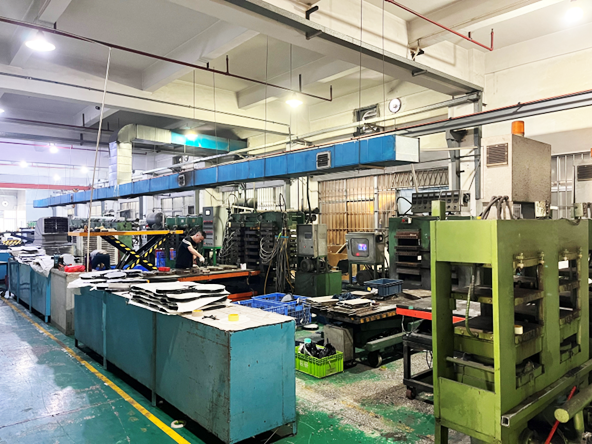
Padel rackets should not be selected only by appearance or carbon labels. A 12K carbon racket may feel completely different depending on EVA hardness, balance, and frame shape. For brands, distributors, clubs, and purchasing teams, understanding playing style helps create clearer product categories and reduces customer confusion. A professional factory with in-house design, R&D, production, and sales teams can develop rackets around real player needs instead of relying only on standard specifications.
Why Should Playing Style Be the First Factor When Choosing a Padel Racket?
Many racket buyers start with carbon type or price. That approach can lead to poor product matching because playing style determines how the racket needs to behave during a match.
Playing style influences the ideal balance, shape, core hardness, sweet spot, and overall handling of a padel racket.
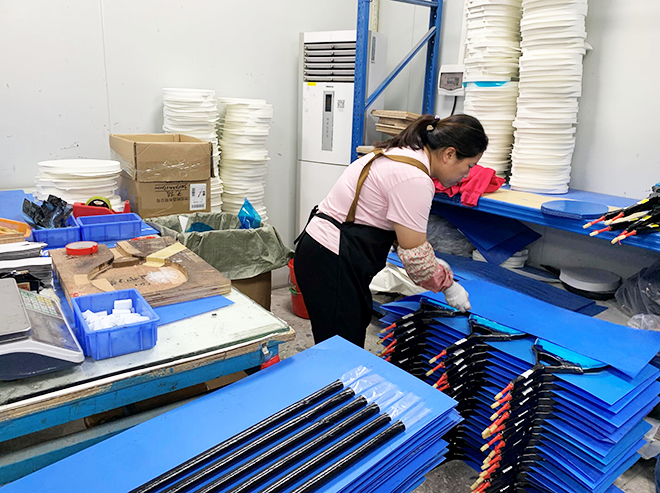
Different players need different performance characteristics.
| Playing Style | Main Need | Typical Racket Direction |
|---|---|---|
| Defensive | Control and maneuverability | Round, lower balance |
| All-Round | Balanced performance | Teardrop, medium balance |
| Attacking | Power and leverage | Diamond, higher balance |
| Comfort-Focused | Soft impact and forgiveness | Softer EVA, larger sweet spot |
| Advanced Precision | Direct response | Firmer EVA, compact sweet spot |
A defensive player often needs quick racket movement during blocks, returns, and fast exchanges. A heavy head can make those movements slower.
An attacking player usually accepts more demanding handling in exchange for stronger overhead performance.
This is why a professional racket collection should have clear differences between models.
A factory with internal R&D can develop each model around a specific player profile. Shape, EVA, carbon layup, balance, and weight can be adjusted together.
For brands, this creates a stronger product strategy because sales teams can explain who each racket is designed for instead of relying on vague descriptions such as "professional" or "premium."
Which Padel Racket Is Best for Defensive Players?
Defensive players depend on control, reaction speed, and consistent placement. A racket that feels too head-heavy or too hard can make defensive movement more difficult.
Round rackets with lower balance and a larger sweet spot are often suitable for defensive players because they support maneuverability and forgiveness.
Defensive players usually benefit from:
Lower Balance
More weight near the handle makes the racket easier to reposition.
Larger Sweet Spot
A larger central hitting zone helps maintain control during difficult returns.
Softer or Medium EVA
A more forgiving core can provide comfort and easier ball output.
Moderate Weight
Excessive weight can slow down reactions during fast exchanges.
A typical defensive-oriented structure may include:
| Component | Suggested Direction |
|---|---|
| Shape | Round |
| Balance | Low |
| EVA | Soft to medium |
| Sweet Spot | Large |
| Carbon | Balanced structure |
| Surface | Matte or light texture |
This does not mean defensive rackets need basic materials.
Premium carbon fiber can still be used, but the structure should support control rather than excessive stiffness.
For custom racket development, a factory can adjust frame reinforcement, carbon placement, and core density to achieve this result.
A strong defensive racket should feel stable without becoming difficult to move.
Which Padel Racket Is Best for All-Round Players?
All-round players need flexibility because they switch between defense, net play, and attacking shots.
Teardrop rackets with medium balance are often suitable because they create a compromise between control and power.
This category is important for many brands because it covers a large group of intermediate players.
A balanced racket should provide:
- Enough maneuverability for defense
- Stable response during volleys
- Useful power during overhead shots
- Comfortable handling during longer matches
A common all-round setup may look like this:
| Component | Suggested Direction |
|---|---|
| Shape | Teardrop |
| Balance | Medium |
| EVA | Medium |
| Sweet Spot | Medium-large |
| Carbon | 3K, 12K, or similar depending on target |
| Surface | Matte, glossy, or textured |
The exact carbon type should not become the main decision.
A 12K surface combined with medium EVA can create a balanced racket, while the same 12K carbon with hard EVA and high balance can feel much more demanding.
This is why product development should treat the racket as a complete system.
For distributors and brand owners, all-round rackets are often useful as the core model in a collection because they appeal to a wide customer range.
Which Padel Racket Is Best for Attacking Players?
Attacking players usually look for stronger power during smashes, volleys, and overhead shots. A racket with more weight toward the head can help create stronger leverage.
Diamond-shaped rackets with medium-high or high balance and firmer structures are often developed for offensive players.
The typical characteristics include:
Higher Balance
More mass toward the upper part of the racket can increase attacking leverage.
Firmer EVA
Harder foam can provide faster response during powerful shots.
Stiffer Carbon Structure
A firmer face can create a more direct feeling for advanced players.
Smaller or Higher Sweet Spot
Performance-focused rackets often require better technique.
| Component | Attacking Direction |
|---|---|
| Shape | Diamond |
| Balance | Medium-high to high |
| EVA | Medium-hard to hard |
| Sweet Spot | Medium or compact |
| Carbon | Firm performance structure |
| Surface | 3D or textured option |
The trade-off is important.
A very aggressive racket may offer strong power but reduced forgiveness. That makes it unsuitable for many beginners.
For brands, clear positioning is necessary. A professional racket should not be marketed simply as "the best" because the target player matters.
A factory with OEM and ODM experience can help create attacking models that remain stable and durable without adding unnecessary weight.
How Does EVA Hardness Change the Right Racket Choice?
Two rackets with the same shape and carbon material can feel very different because of the EVA core.
EVA hardness influences comfort, rebound, response speed, and the amount of effort needed during play.
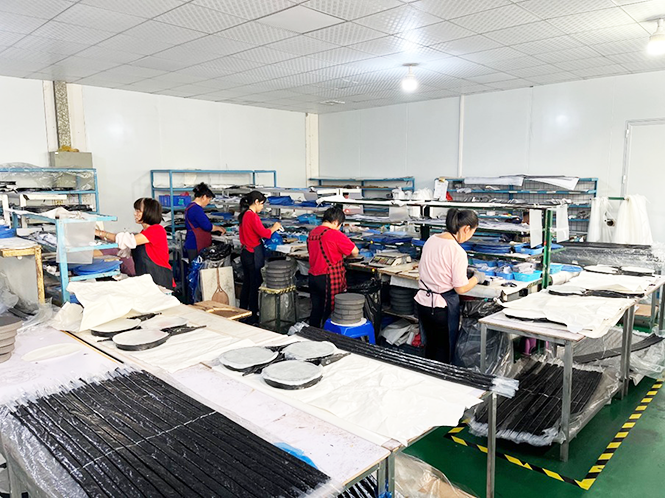
A simple comparison:
| EVA Type | Main Feeling | Suitable Playing Style |
|---|---|---|
| Soft | Comfortable and forgiving | Defensive, beginner, recreational |
| Medium | Balanced | All-round |
| Hard | Direct and responsive | Advanced attacking |
Soft EVA compresses more easily and can help players generate ball output with less effort.
Medium EVA creates a compromise between comfort and precision.
Hard EVA provides a faster, firmer response but usually requires better technique.
The core should always be matched with carbon structure.
A hard EVA combined with stiff carbon can create a highly demanding racket. A medium EVA can make the same face easier to use.
For product planning, this gives brands several possibilities. A single racket shape can be developed into different versions by changing the core and layup.
A professional factory can test these combinations during sample development before mass production.
How Does Racket Balance Affect Playing Style?
Total racket weight receives a lot of attention, but balance can influence handling even more.
Two rackets with almost the same weight can feel completely different when one carries more mass near the handle and the other carries more mass near the head.
Balance generally follows three directions:
Low Balance
Supports quick movement and control.
Medium Balance
Provides versatile handling.
High Balance
Supports stronger attacking leverage.
| Balance | Best Match |
|---|---|
| Low | Defensive and comfort-focused |
| Medium | All-round |
| High | Attacking |
For manufacturing, balance needs to be controlled during production.
Small changes in carbon layers, resin, frame protection, paint, and grip materials can shift weight distribution.
This is why quality control should include both finished weight and balance.
For buyers, requesting a target balance range helps reduce inconsistency between samples and mass production.
How Should Carbon Fiber Be Selected for Different Playing Styles?
Carbon labels such as 3K, 12K, 18K, and 24K are widely used in racket marketing, but the highest number is not automatically the best option.
Carbon choice should support the desired feel, player level, and complete racket structure.
A practical product-development direction can look like this:
| Product Goal | Carbon Direction | Other Important Factors |
|---|---|---|
| Comfort | Flexible carbon layup | Soft EVA, low balance |
| Control | Balanced carbon structure | Larger sweet spot |
| All-Round | Medium response | Medium EVA and balance |
| Power | Stiffer carbon structure | Higher balance |
| Professional | Customized layup | Precise weight and balance |
The exact K number alone does not define stiffness.
Fiber grade, fabric weight, layer orientation, resin content, and pressing conditions all matter.
For brands and purchasing teams, physical sample evaluation is therefore more useful than comparing carbon labels on a quotation.
A real manufacturing factory can adjust carbon orientation and reinforcement placement instead of only changing the visible face fabric.
How Can Brands Build a Clear Racket Collection Around Playing Styles?
A confusing product range makes purchasing harder. When every racket claims to provide power, control, and professional performance, customers cannot understand the difference.
A strong product collection should give each racket a clear player profile and performance purpose.
A simple three-model structure can be effective:
| Series | Target Player | Product Direction |
|---|---|---|
| Control Series | Defensive / Beginner | Round, low balance, soft-medium EVA |
| All-Round Series | Intermediate | Teardrop, medium balance, medium EVA |
| Power Series | Advanced / Attacking | Diamond, higher balance, firmer EVA |
More advanced collections can add:
- Comfort series
- Junior series
- Club series
- Professional series
- Limited premium series
The key is making each category meaningful.
Different graphics alone do not create a real product line. Shape, balance, EVA, carbon layup, surface, and sweet spot should support the positioning.
A factory with in-house design and R&D can develop these differences from the beginning.
OEM and ODM experience with established brands also helps because mature product lines usually require clearer specifications and stronger model differentiation.
What Should Buyers Check Before Approving a Racket for a Specific Playing Style?
A product description may sound correct, but the sample still needs to confirm the intended performance.
Sample approval should include both measurable specifications and actual playing feedback.
Important checks include:
- Finished weight
- Balance point
- EVA feeling
- Sweet spot position
- Surface response
- Frame stability
- Maneuverability
- Power output
- Comfort during longer play
- Batch consistency
A control racket that feels excessively head-heavy has missed its development target.
A professional attacking racket that feels unstable during hard impacts also needs further adjustment.
The sample stage should therefore be used for real product development rather than only visual approval.
Direct cooperation with a factory makes this process more efficient because feedback can reach designers and engineers quickly.
Padelico operates as a custom carbon fiber racket factory with in-house design, R&D, production, and sales capabilities. OEM and ODM experience with established brands supports development from target-player definition to prototype adjustment, quality control, and mass production.
Conclusion
The best padel racket depends on playing style, not one material or specification. Shape, balance, EVA, carbon structure, weight, and sweet spot need to work together. Send an inquiry and leave contact details to develop customized padel rackets for specific player groups and market positions.