Many custom padel projects fail before production starts. The wrong mold, wrong material mix, weak durability control, or unclear packaging plan can create returns, delays, and poor brand positioning. A better process starts by building the racket and the brand system together.
Customizing a padel racket means choosing the right mold, structure, materials, surface finish, logo process, and packaging setup to match target players, price level, and brand direction. The best OEM and private label projects are planned as a full product system, not as separate design decisions.
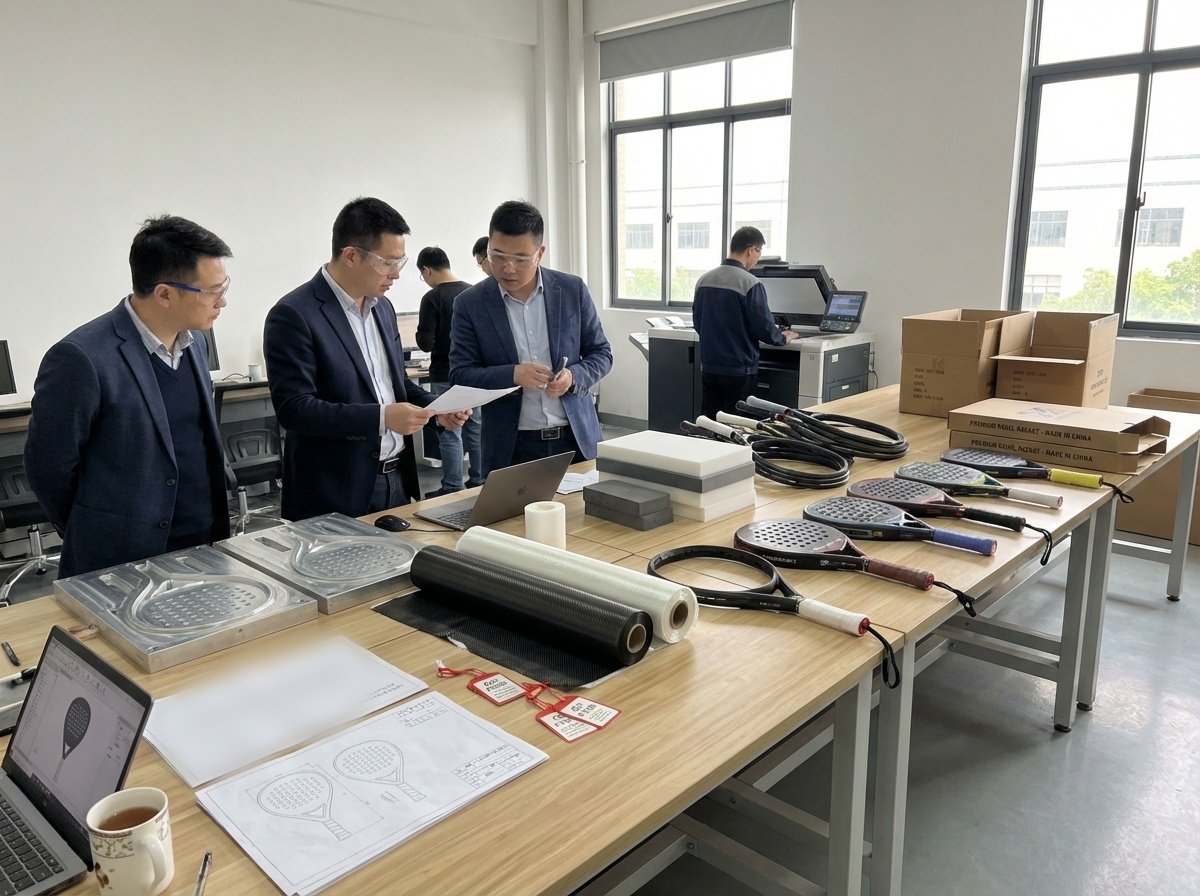
Many buyers begin with a simple idea: add a logo to an existing racket and launch a product line quickly. That can work in some cases, but the market is now more demanding. Players care about comfort, sweet spot, balance, durability, finish quality, and whether the racket actually fits their level. Market feedback also shows repeated pain points: rackets that are too hard, too head heavy, too advanced for normal users, prone to cracking, or easy to chip at the edges. This is why racket customization should never stop at cosmetics. A successful project must connect mold choice, structure, feel, durability, and final packaging from the beginning.
Why Does Full Padel Racket Customization Matter More Than Simple Logo Printing?
A branded racket is easy to create. A well-positioned racket line is much harder. The difference usually appears later in sales results, repeat orders, and after-sales pressure.
Full customization matters because mold, materials, balance, feel, durability, and packaging all shape how the final product is perceived. Logo printing alone cannot fix poor player matching or weak structure.
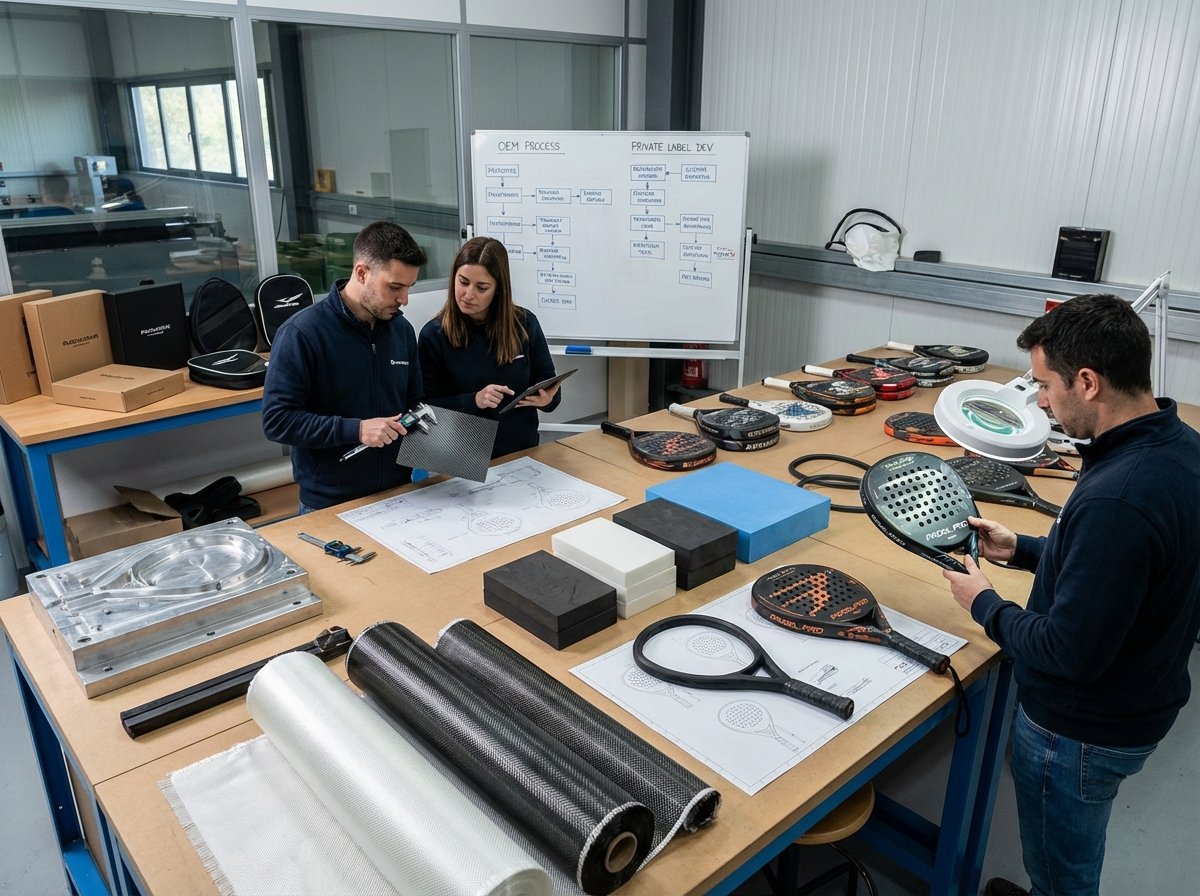
Many low-level private label projects focus too much on visual identity and not enough on product logic. The result is often predictable. The racket may look premium, but it feels too stiff, performs poorly on slower balls, creates arm discomfort, or shows early cosmetic wear. In some cases, the finish looks attractive in photos but chips too easily in real use. In other cases, a power-focused mold is paired with a structure that makes the racket too demanding for the wider market.
A better development path starts by asking practical questions. Who will use the racket? Is it for clubs, retailers, competitive players, or a new brand building its first collection? Should the product feel soft and forgiving, balanced and versatile, or crisp and advanced? What level of durability is expected for the target price? Once those answers are clear, the factory can align design, R&D, production, and packaging into one system. That is where a real factory creates value, especially when in-house teams can guide OEM and ODM projects beyond simple logo placement.
How to Choose the Right Padel Racket Mold for OEM & Private Label Projects?
The mold is not just a shape. It affects sweet spot location, control style, power output, maneuverability, and the type of player the racket will attract.
The right mold should be selected by player profile, product role, and brand positioning. A mold that works for advanced power players may be the wrong choice for a broader retail or club market.
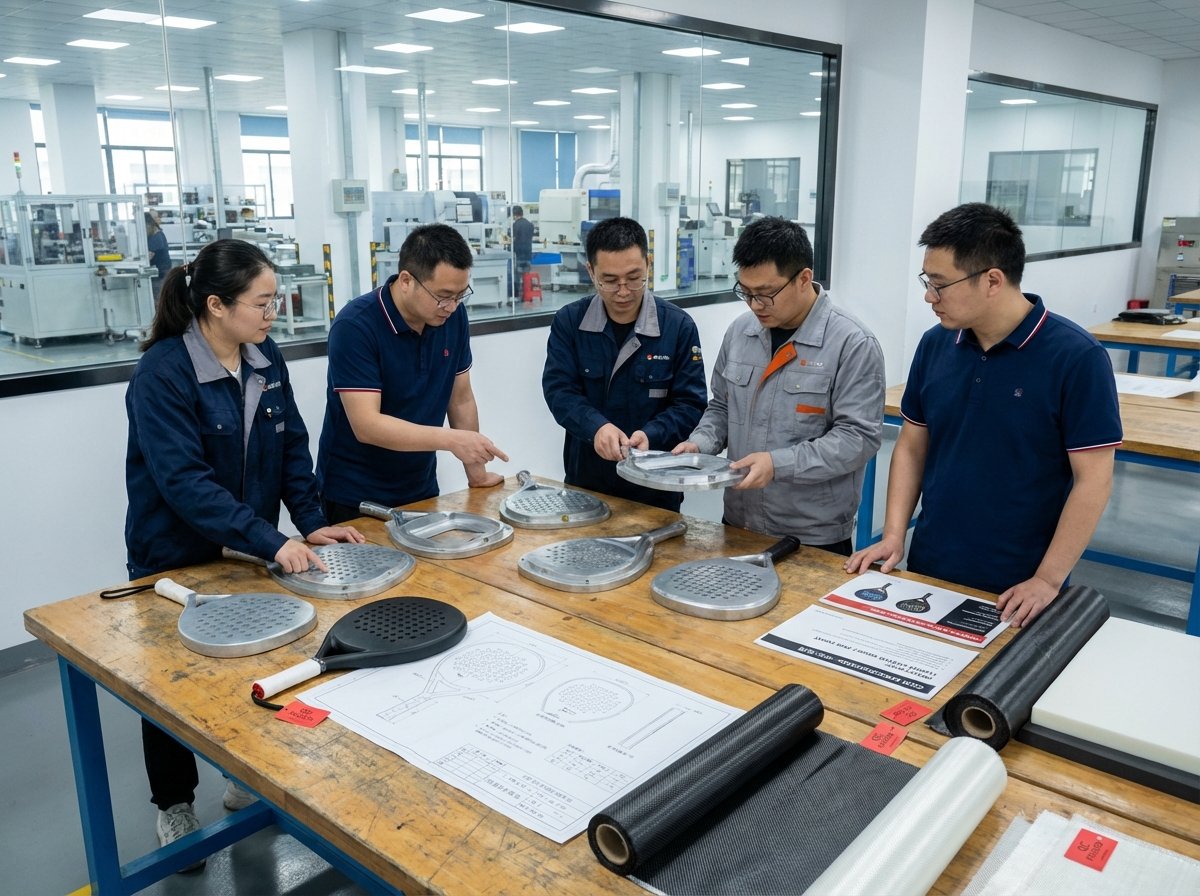
In padel, mold choice often begins with the classic shape families: round, teardrop, and diamond. A round mold usually supports control, forgiveness, and easier handling. A teardrop mold often balances power and control. A diamond mold usually targets stronger attacking play with a higher sweet spot and more demanding response. Even so, shape alone does not tell the whole story. Thickness, drilling layout, frame geometry, bridge design, and internal layup also change the final feel.
This matters because one of the clearest market signals is wrong player matching. Many rackets are too advanced for the people who actually buy them. A mold with a higher sweet spot and more aggressive balance may look attractive in a performance catalog, but it can lead to discomfort, weak timing, and control issues for many users. That is why the best OEM and private label projects do not choose molds only by appearance.
| Mold type | Typical playing feel | Best use direction | Main risk |
|---|---|---|---|
| Round | Forgiving, stable, easier control | Entry, all-round, club use | May feel less explosive for advanced attackers |
| Teardrop | Balanced power and control | Broad market, versatile lines | Needs careful balance tuning |
| Diamond | Stronger attacking feel, higher sweet spot | Advanced power range | Can feel too demanding or head heavy |
A factory with in-house design and R&D can help match the mold to the actual market instead of following trend pressure alone. This is especially useful for brands that want fewer wrong purchases and a clearer product ladder.
How Should Mold Choice Connect with Weight, Balance, and Sweet Spot Position?
A good mold can still fail if the balance and weight setup are wrong. Many players complain about heaviness, but the real issue is often swing feel, not just grams.
Weight, balance, and sweet spot position should be planned together with the mold. This creates a racket that feels correct in the hand, not just correct on paper.
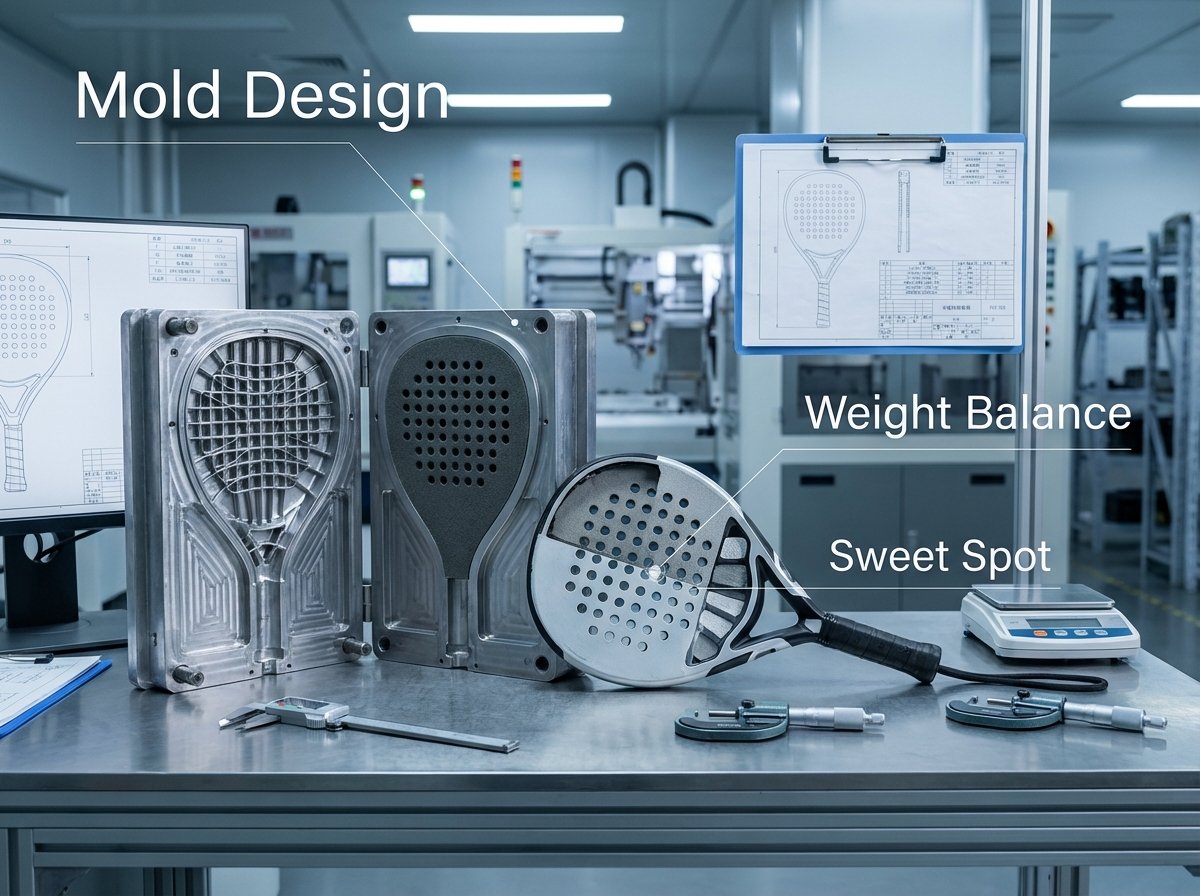
Market complaints repeatedly show that head-heavy rackets can create wrist, elbow, and shoulder discomfort, especially for beginners and intermediate players. That means two rackets with similar total weight can feel very different depending on balance point. A round mold with the wrong balance can still feel tiring. A teardrop mold can become much more versatile when the balance is controlled correctly. A diamond mold may work well for premium power lines, but it should not be treated as a universal solution.
For this reason, a factory should define more than simple weight. Clear customization should include:
- weight range
- balance range
- sweet spot level
- touch feeling
- recommended player level
This kind of specification is far more useful than listing carbon only. It also creates stronger product communication for distributors, retailers, and brand owners.
Custom Padel Racket Materials and Surface Finishes: Carbon, EVA, Frame Structure and Performance Options?
Material choice shapes much more than price. It influences comfort, response speed, tolerance, durability, and user confidence.
The best custom racket materials are chosen by target feel and player level. Carbon, EVA, fiberglass, frame structure, and surface finish should work together as one performance system.
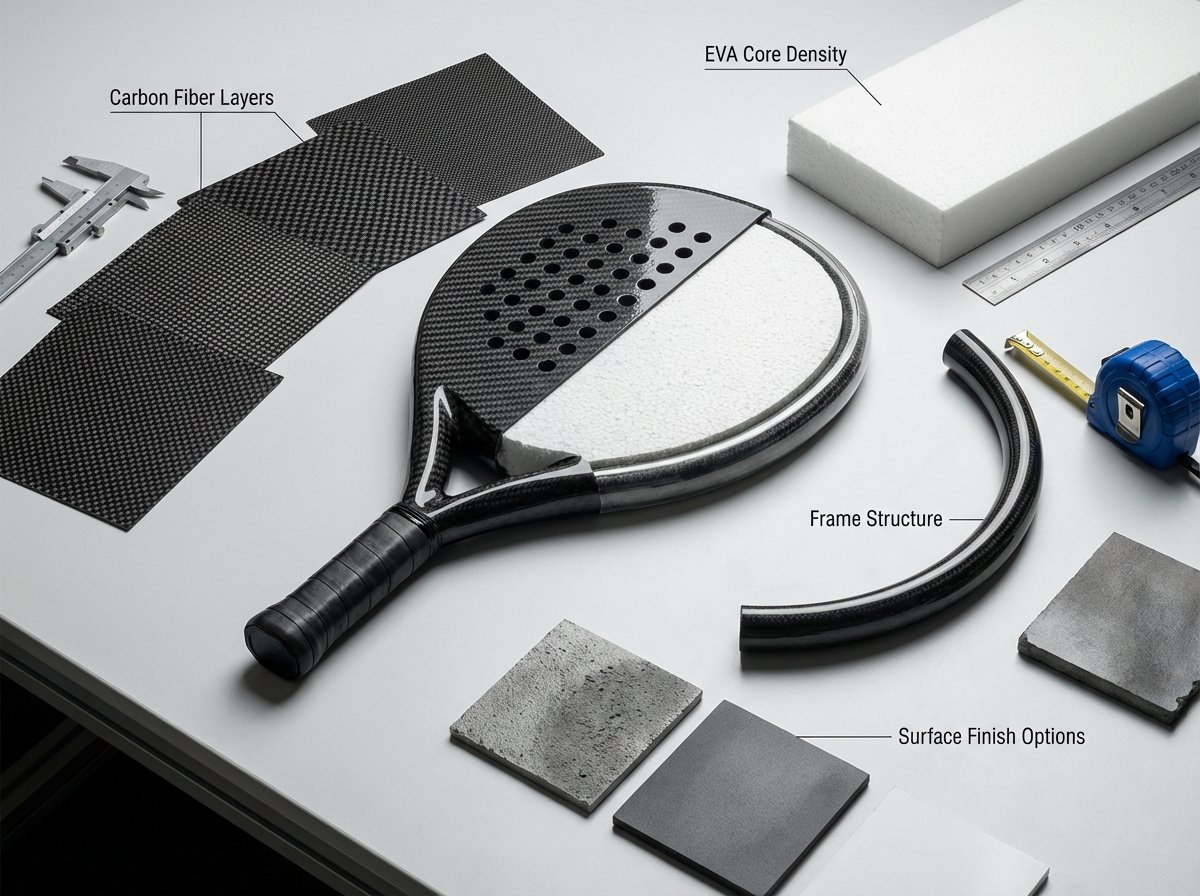
Many buyers ask first about 3K, 12K, or 18K carbon. Those material names matter, but they are not enough by themselves. A 3K carbon face often gives a more balanced and accessible feel. A 12K or 18K face can feel crisper and faster, but also less forgiving if the core and balance are too aggressive. Fiberglass or carbon-fiberglass hybrids still play an important role, especially in comfort lines and beginner-friendly products.
The core is equally important. Soft EVA can support comfort, bigger sweet spots, and easier control. Medium EVA works well for balanced all-round products. Hard EVA suits advanced power lines, but it should not be pushed into every carbon model. Market feedback shows that many so-called carbon problems are actually structure-matching problems. A racket becomes uncomfortable not because carbon is bad, but because the full system is too stiff or too demanding.
| Component | Main options | What it changes |
|---|---|---|
| Face | Fiberglass, 3K, 12K, 18K carbon | Feel, stiffness, response speed |
| Core | Soft, medium, hard EVA | Comfort, rebound, vibration |
| Frame | Carbon frame structure, reinforcement zones | Stability, durability, power transfer |
| Surface finish | Matte, glossy, sandblasted, 3D texture | Visual identity, spin feel, brand style |
A real factory can help brands choose the right combination instead of simply selecting the highest-sounding material. That is how a product line becomes easier to sell and less risky after launch.
How Can Material Choices Reduce Common Market Complaints?
Customization is not only about creating a new product. It is also about avoiding common failures already visible across the market.
Better material matching can reduce harsh feel, poor forgiveness, wrong player targeting, and even some durability complaints linked to weak structural planning.
Several recurring pain points from market feedback are directly connected to poor structure decisions. One is excessive stiffness. Many carbon rackets are still built too hard for the players who actually buy them. Another is poor beginner fit. Some products use molds and structures that are too advanced, too small in sweet spot, or too fast in response. There are also durability concerns, including edge wear, paint chipping, and structural cracking.
A better customization strategy usually includes:
- clear soft, medium, and hard product layering
- more comfort-focused carbon options
- balanced instead of overly head-heavy versions
- edge reinforcement and stronger frame-to-face transitions
- separate control of structural durability and cosmetic durability
This is especially important in OEM and ODM projects because the same brand may need different products for different markets. A club-focused line should not be built like a tournament power line. A comfort series should not feel like a harsh advanced racket just because carbon sounds premium.
What Surface Finishes Work Best for Brand Image and Product Function?
Surface finish affects both visual impression and market positioning. It also influences how premium the racket feels before it is even used.
The right finish should balance appearance, touch, durability, and branding style. Matte, glossy, textured, and special surface effects all create different product stories.
Glossy finishes often look bright and premium in photos, which helps online presentation. Matte finishes usually create a more modern and technical appearance. Textured or rough finishes can add a performance impression and may support spin-related marketing stories, depending on the design. Sandblasted or 3D surface effects also help build a more distinctive identity.
Still, finish quality should not be judged only by appearance. One common complaint in the market is early paint chipping or flaking. This shows why cosmetic durability should be treated separately from structural durability. A racket may play well but still create a poor quality image if the paint system is weak. Better paint adhesion, controlled curing, edge protection, and wear-resistant top layers all matter.
Private Label Padel Racket Packaging, Logo Printing and Brand Customization Guide?
The product does not end at the racket. Packaging and branding influence first impression, retail value, and perceived professionalism.
Private label customization should include logo process, color system, packaging structure, labels, and accessory quality. These details strongly affect how the brand is received.
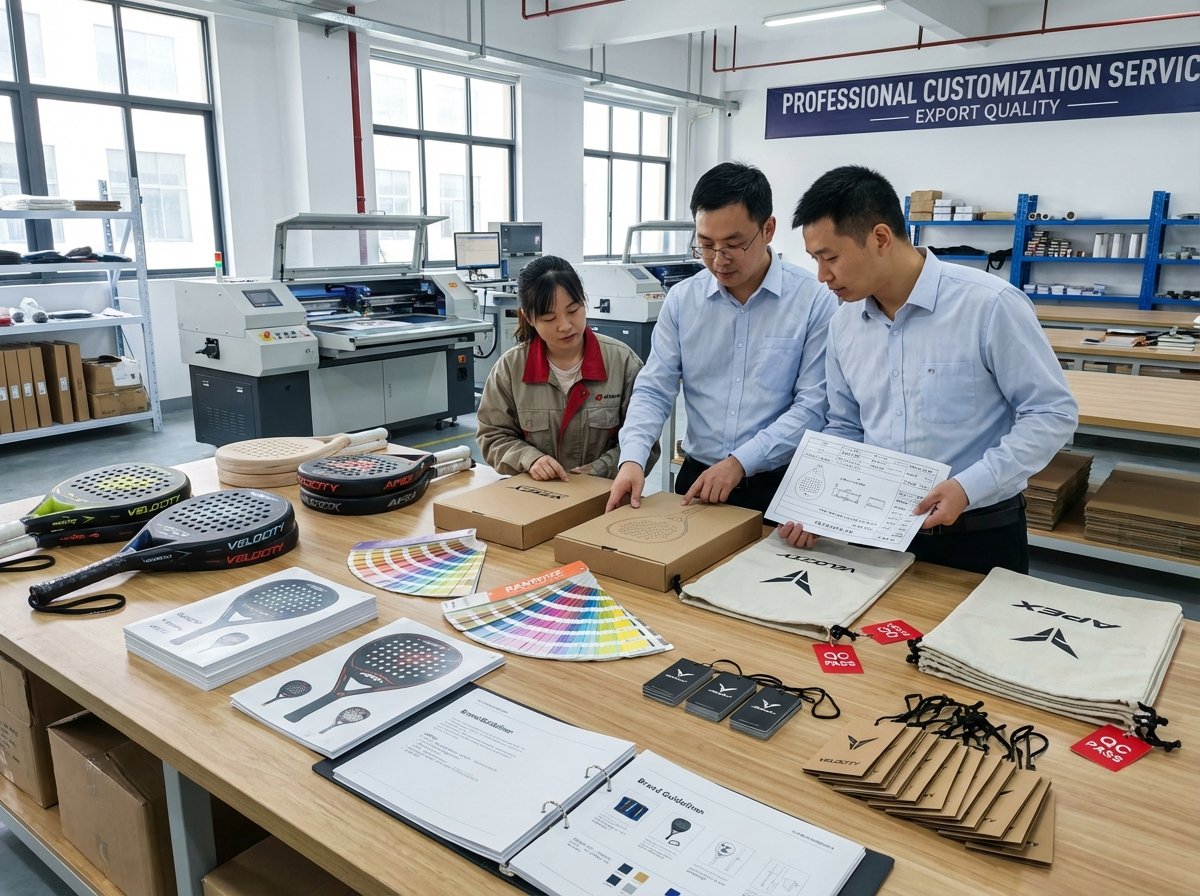
A strong private label project usually covers more than one logo position. It may include logo printing on the face, frame, throat, grip tape, butt cap, and packaging. It may also include custom color matching, hangtags, warranty cards, manuals, carton markings, and branded racket bags. For some buyers, custom overgrips, edge protectors, and accessories also matter.
Packaging should match the market level. A premium racket with a weak bag or low-grade zip can damage the whole impression. This is important because accessory complaints often lower the perceived quality of the main product as well. Better private label packaging may include:
- color box or protective carton
- custom racket cover or bag
- instruction card or care guide
- barcode and model labels
- protective film and transport support
- branded cartons for bulk shipping
A factory with in-house sales, design, and production support can help build these parts into one consistent system. That gives buyers a cleaner launch path and a more professional end result.
What Should Be Confirmed Before Starting OEM or Private Label Production?
Good customization depends on clear decisions before production begins. Many delays and mistakes happen because the project is not defined in enough detail.
Before production, the mold, materials, balance, surface finish, logo method, packaging, and quality expectations should all be confirmed clearly.
A useful pre-production checklist includes the following:
| Item | Why it matters |
|---|---|
| Mold and shape | Defines player direction and base feel |
| Weight and balance range | Prevents mismatch between samples and bulk order |
| Face and core materials | Aligns feel, comfort, and price |
| Surface finish | Controls appearance and brand style |
| Logo positions and print method | Avoids confusion in production |
| Packaging structure | Protects product and supports retail image |
| QC standard | Reduces risk of cracking, paint issues, and inconsistency |
This stage is where a factory partnership becomes especially valuable. With in-house design, R&D, and production teams, decisions can be aligned earlier, samples can be adjusted faster, and the final product has a better chance of matching the original market goal.
Conclusion
Customizing a padel racket successfully means building the full product from mold to packaging with clear market logic. The right mold, material mix, surface finish, logo plan, and packaging system can improve product positioning, durability, and brand value at the same time. For brands, distributors, and buyers planning OEM or private label projects, a factory partner with in-house design, R&D, sales support, and production control can make that process faster, clearer, and more reliable. Padelico supports this development path as a factory with OEM/ODM experience and the ability to turn product ideas into market-ready padel racket lines. Contact padelico to discuss mold selection, material options, branding details, and packaging solutions for the next project.