Many padel brands talk about carbon, 3K, or 12K. Yet market complaints still focus on elbow pain, harsh feel, cracking, paint loss, and wrong player matching. The real issue is not material naming alone. The real issue is how core materials, face structures, balance, and durability are designed together.
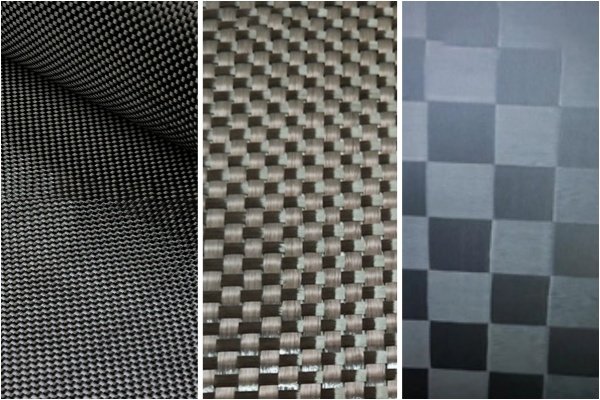
Core materials and face structures decide comfort, sweet spot size, rebound, stiffness, durability, and product positioning. EVA, foam, fiberglass, and different carbon constructions should be selected as one product system, not as isolated selling points.
Market feedback shows a clear pattern. Many complaints are not simply about “carbon.” They are about rackets being too hard, too head heavy, too demanding, too fragile, or too unclear in positioning. This is why brands, distributors, and buyers need a clearer way to understand racket structure. A factory with in-house design, R&D, and production control can turn technical choices into better product lines, fewer complaints, and more reliable OEM/ODM development.
Why Do Core Materials Matter So Much in Padel Rackets?
A racket can look premium on the shelf and still create problems on court. When the core is too hard, too unstable, or poorly matched to the face, players often feel vibration, discomfort, and weak forgiveness.
Core materials control rebound, comfort, vibration, and playing tolerance. In many cases, player complaints about arm pain or weak feel start with the wrong core setup.
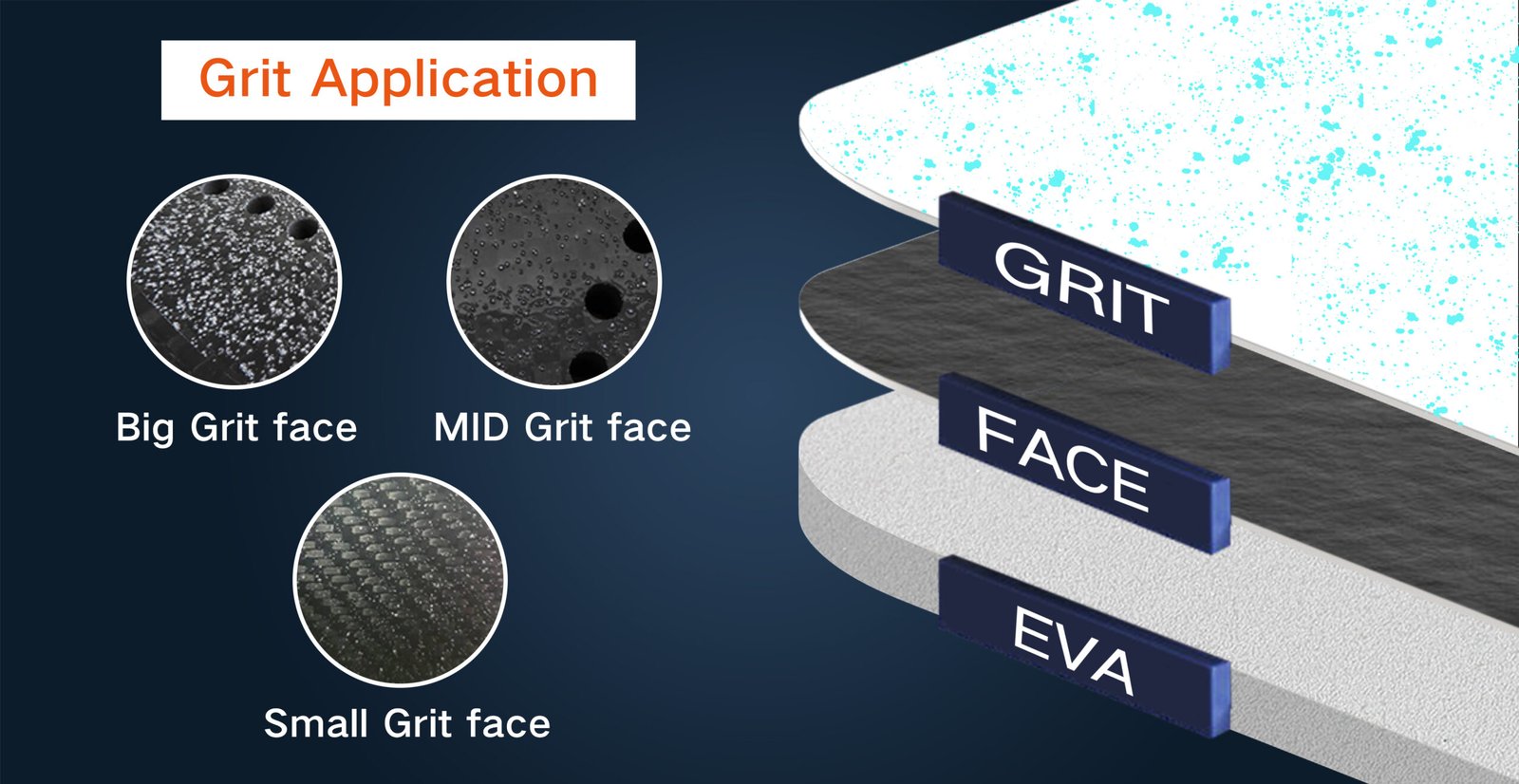
The market repeatedly shows that wrong core choices create avoidable problems. Complaints about elbow pain, wrist discomfort, and harsh impact feel are often linked to rackets that are too stiff for the target player. This does not always mean the product is defective. In many cases, it means the product was built or positioned for a more advanced user than the buyer it finally reached.
A well-designed core helps solve this. A softer core can reduce vibration return and improve comfort during long matches. A medium core can give the most balanced response for club players. A harder core may suit advanced attacking models, but it should not be pushed into every carbon product line just because “harder” sounds more professional.
That is why factory development matters. A real manufacturer can control density, compression recovery, bonding behavior, and batch consistency, then match those details to the correct player segment. This is much more useful than only printing “soft EVA” or “hard EVA” on a product sheet.
EVA, Foam, and Recovery Behavior: What Is the Real Difference?
Many product pages mention EVA or foam, but few explain what these choices actually mean. That creates confusion for brands and disappointment for end users.
The real difference is not just the material name. It is how density, recovery speed, and resilience affect comfort, power output, and long-term feel.
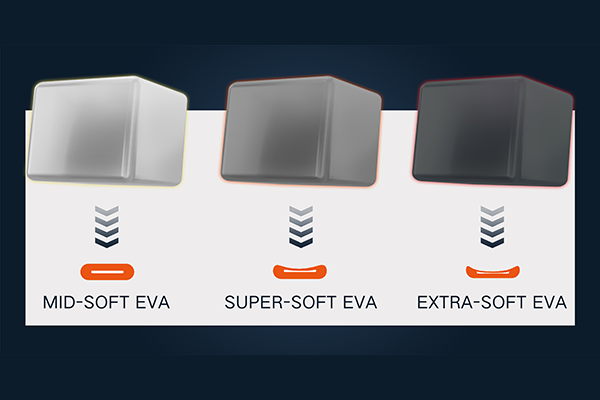
EVA remains the most common core family in padel rackets, but it should never be treated as one simple option. Soft EVA usually helps create a bigger comfort zone, more pocketing, and a friendlier response for beginners and intermediate players. Medium EVA often works best for broad market models because it balances comfort and control. Hard EVA usually gives a crisp and direct response, but it also increases the risk of a harsh feel when combined with a rigid face and high balance point.
Foam can also play a role, especially in comfort-focused or value-focused products. Still, low-grade foam creates serious risk. In market complaints, poor internal materials are often described as “cheap foam,” unstable feel, or early breakdown. That is not just a feel issue. It damages brand trust.
| Core option | General feel | Best match | Common risk |
|---|---|---|---|
| Soft EVA | Comfortable, forgiving | Entry to mid-level players | Can feel too muted for aggressive hitters |
| Medium EVA | Balanced, versatile | Broad retail range | Needs strong positioning to stay clear |
| Hard EVA | Crisp, fast, direct | Advanced power models | Can increase vibration complaints |
| Low-grade foam | Light, inconsistent | Budget products only | Weak durability and poor quality image |
For brands planning new models, the better question is not “Should this use EVA or foam?” The better question is “What player problem should this core solve?” That approach leads to stronger products and clearer positioning.
Why Do Some Carbon Rackets Feel Too Hard or Unfriendly?
Many complaints in the market do not come from carbon itself. They come from carbon rackets being built too hard, too head heavy, or too advanced for the intended user.
A stiff face, hard core, and high balance point can create a harsh racket. That combination may suit strong players, but it often creates pain, fatigue, and poor control for others.
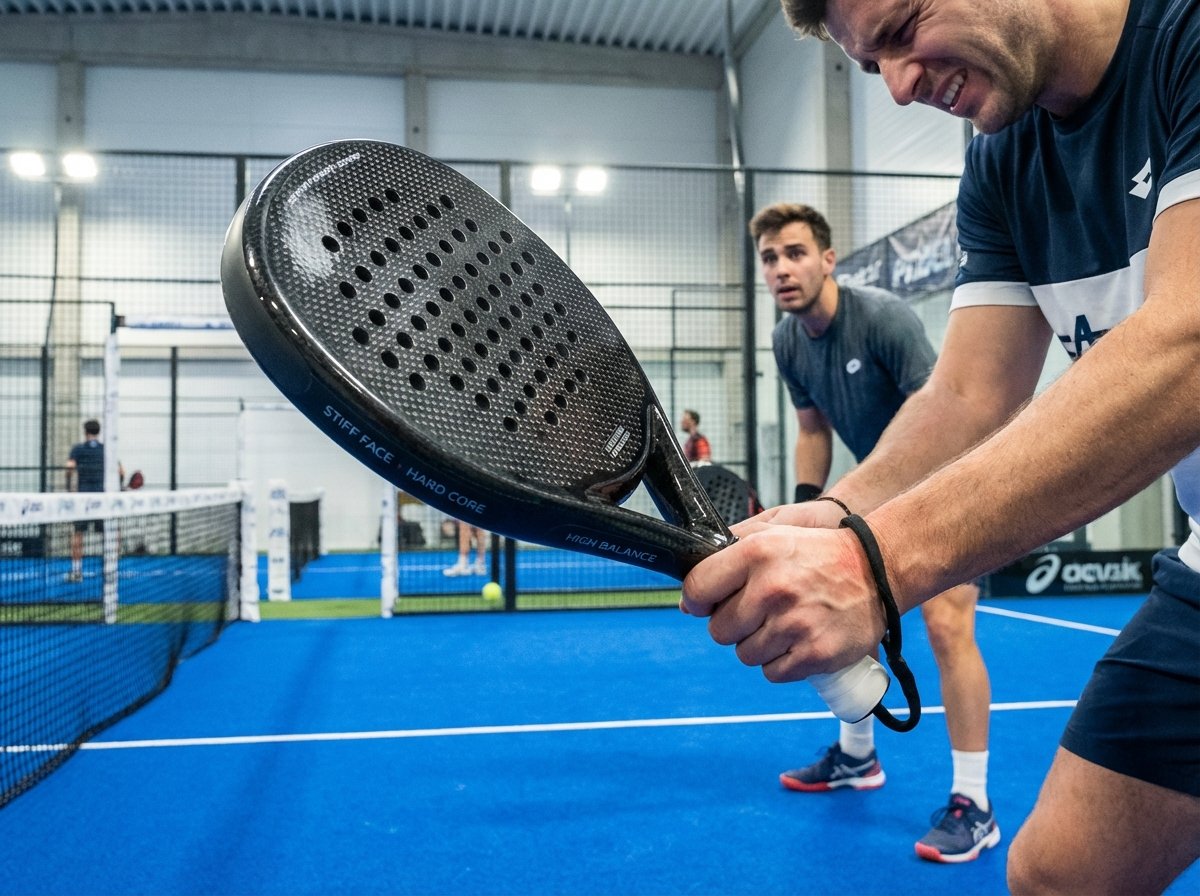
This issue appears again and again in player feedback. Users describe elbow irritation, wrist pain, shoulder discomfort, weak help on slow balls, and sweet spots that feel too small. Very often, the root cause is not poor carbon quality. The root cause is poor structure matching. A racket that is too stiff for the user’s technique level quickly becomes a problem product.
That is why one of the clearest development directions is to create real hardness layering inside the carbon range:
- Soft Carbon for comfort, arm protection, and larger sweet spots
- Medium Carbon for balanced all-round use
- Hard Carbon for advanced power players
This matters because many brands still treat all carbon rackets as advanced products. That is a mistake. There is strong demand for arm-friendly carbon rackets with softer feel, reduced vibration, easier control, and better long-match comfort.
A factory with OEM/ODM experience can support this by controlling layup stiffness, EVA density, and handle damping, instead of only changing the outer material label. That makes the product line easier to understand and easier to sell.
Padel Racket Face Structures Explained: 3K, 12K, 18K Carbon and Fiberglass Options?
Many buyers ask for 12K or 18K because those names sound more premium. But market complaints show that face structure should be chosen by feel, tolerance, and user level, not by trend alone.
3K, 12K, 18K, and fiberglass affect stiffness, response speed, comfort, sweet spot behavior, and durability perception. They should be selected according to the final product role.
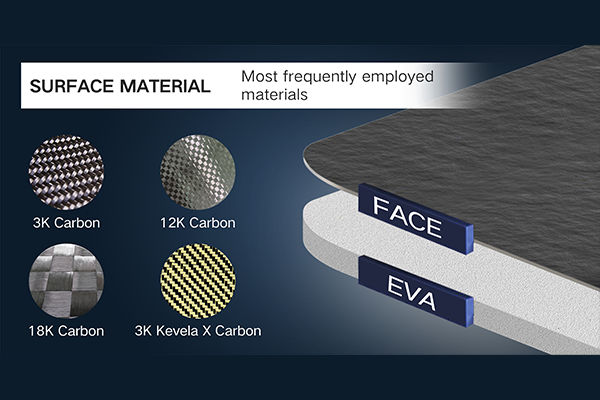
A 3K carbon face often gives a more balanced and approachable response. It fits all-round and control-based products well. A 12K face can produce a livelier and crisper feel, often preferred in faster advanced models. An 18K face usually pushes the feel even further toward direct response and attacking feedback. That can be attractive in premium power lines, but it also raises the risk of a harsh user experience if the core and balance are not adjusted carefully.
Fiberglass still deserves serious attention. In the market, one repeated complaint is that some carbon rackets do not help enough on slower balls and defensive shots. Fiberglass or carbon-fiberglass hybrid structures can improve ease of use, comfort, and forgiveness. This makes them highly useful in comfort lines, entry-level models, and broader-volume collections.
| Face material | Typical feel | Best use | Main caution |
|---|---|---|---|
| Fiberglass | Softer, easier output | Comfort and beginner lines | May look less “technical” in catalog language |
| 3K Carbon | Balanced and controlled | All-round and control models | Needs clear player-oriented explanation |
| 12K Carbon | Crisp and reactive | Advanced balanced-power models | Can become too stiff if badly matched |
| 18K Carbon | Direct and aggressive | Premium power line | Higher risk of harsh feel and wrong purchases |
The strongest product sheets do not stop at material names. They also explain feel, control level, sweet spot size, arm comfort, and recommended player profile.
How Do Balance, Weight, and Sweet Spot Change the Product Story?
Many brands still focus too much on total weight. Yet market feedback shows that balance and sweet spot position often affect comfort and usability even more.
Weight alone does not explain fatigue. Balance point, swing feel, and sweet spot location strongly shape whether a racket feels easy, tiring, forgiving, or demanding.
This point is especially important because many player complaints mention wrist pain, shoulder fatigue, or difficulty controlling the racket, even when the weight itself does not sound extreme. A head-heavy racket can create more load than a slightly heavier racket with a lower balance. In the same way, a high sweet spot may suit strong attacking players but feel uncomfortable for the wider market.
This is why product development should include clear balance layering:
- Head-light for comfort and maneuverability
- Even balance for broad all-round use
- Head-heavy for advanced power models
A better spec sheet should also explain more than grams. Useful information includes:
- Weight range
- Balance range
- Touch feeling
- Sweet spot level
- Recommended player level
That kind of structure is far more useful than only writing “12K carbon + black EVA.” It helps customers choose correctly. It also reduces avoidable returns caused by wrong player matching.
Why Are Cracking, Paint Chipping, and Edge Damage Different Problems?
Many factories and brands mix these issues together. The market does not. Players react very differently to a structural crack and a cosmetic paint chip.
Cracking is a structural reliability issue. Paint loss is a cosmetic durability issue. Edge fraying or loose protectors are finishing and protection issues. Each one needs a separate solution.
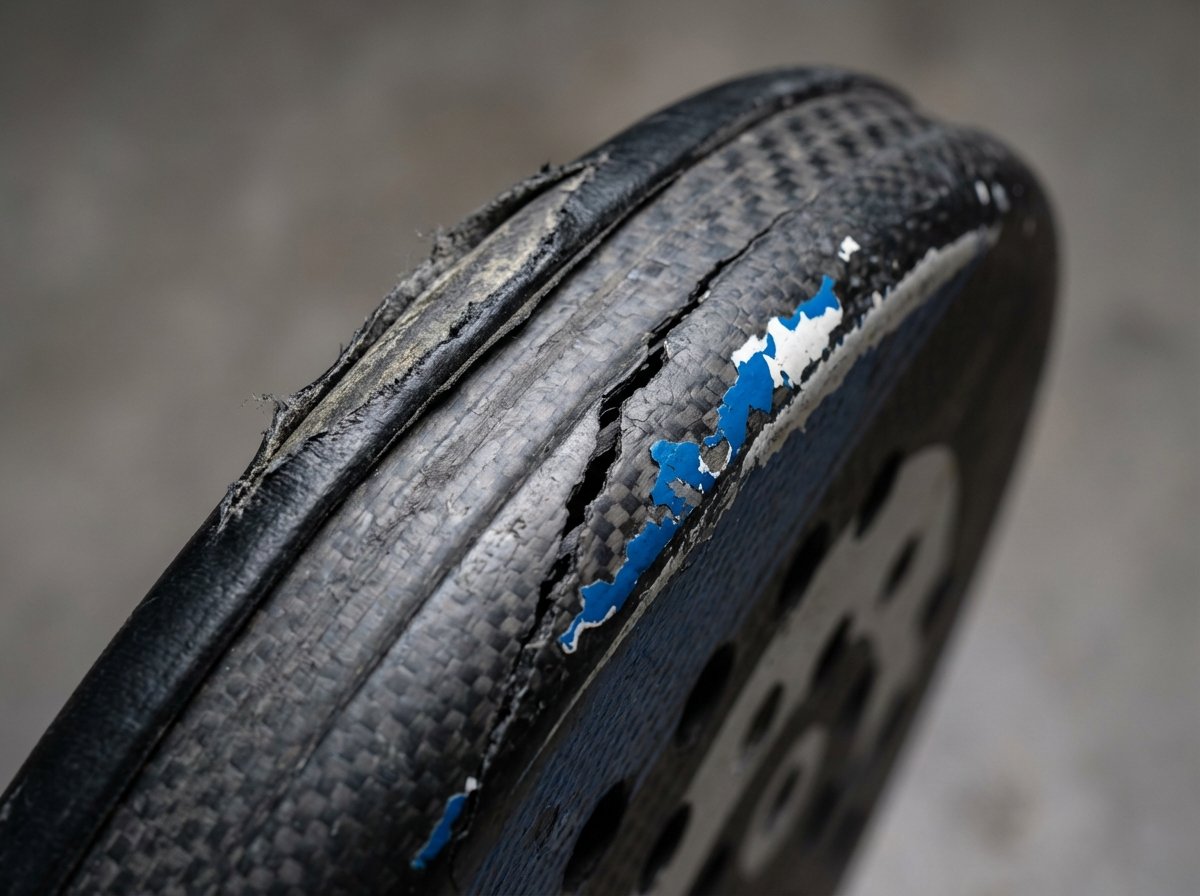
This separation matters because market complaints are very consistent. Some users say the racket broke on first use or after a few matches. Others report that the paint chipped quickly, the edge guard came loose, or the frame started to fray. These are not the same failure mode. They should not be treated as one quality topic.
Structural cracking needs solutions such as:
- stronger edge and throat reinforcement
- better layup direction
- tougher resin systems
- fatigue and impact testing
- crack detection standards
Cosmetic and surface issues need solutions such as:
- better paint adhesion
- improved curing process
- transparent wear-resistant top layers
- stronger edge finishing
- protector design for high-contact zones
A factory with its own R&D and production control can improve both lines at the same time, but the testing logic must stay separate. That is how real quality improvement happens.
How Should Brands Position Rackets by Feel Instead of Only by Material?
Many end users do not fully understand 3K, 12K, or 18K. What they understand is whether a racket feels soft, crisp, forgiving, powerful, or tiring.
The best product positioning translates materials into player language. That makes the line easier to sell and easier to understand.
This is one of the clearest lessons from market feedback. Too many rackets are sold by technical labels alone. Then players discover too late that the racket is too stiff, too head heavy, too small in sweet spot, or too demanding for their level. That leads to disappointment, complaints, and unnecessary after-sales pressure.
A stronger structure is to position each model by feel and player suitability:
| Product line | Feel language | Player direction | Main value |
|---|---|---|---|
| Comfort Carbon | Soft, arm-friendly, forgiving | Beginner to intermediate | Reduced vibration and bigger sweet spot |
| Balanced Carbon | Medium, stable, versatile | Broad market | Easy positioning and fewer wrong purchases |
| Power Carbon | Crisp, fast, explosive | Advanced players | Premium attacking performance |
This also helps sales materials, catalogs, product pages, and customer communication. Instead of only writing carbon grades, brands can present:
- Feel: soft / medium / crisp
- Control level
- Power level
- Sweet spot size
- Arm comfort
- Recommended player
That kind of language creates clarity. It also gives more room for real factory value: in-house design, R&D support, stable production, and OEM/ODM development experience with well-known brands.
Conclusion
Core materials and face structures shape much more than feel alone. They influence comfort, product positioning, durability, sweet spot behavior, and customer satisfaction. Clear hardness layering, better balance-point planning, separate solutions for cracking and paint loss, and more useful player-oriented product language can all improve the final product line. For brands, distributors, and buyers looking for a more reliable factory partner, these details matter at every stage of development. Padelico supports this process with in-house design, R&D, production, and OEM/ODM experience, helping turn material choices into better rackets and clearer market opportunities. Contact padelico to discuss the right specifications, player positioning, and development direction for the next project.