Pickleball and padel racquets are not the same. They differ in size, thickness, materials, construction, weight, and on-court purpose. Padel rackets are heavier, thicker, and built with carbon + EVA cores, while pickleball paddles are lighter, thinner, and made with polymer honeycomb interiors.
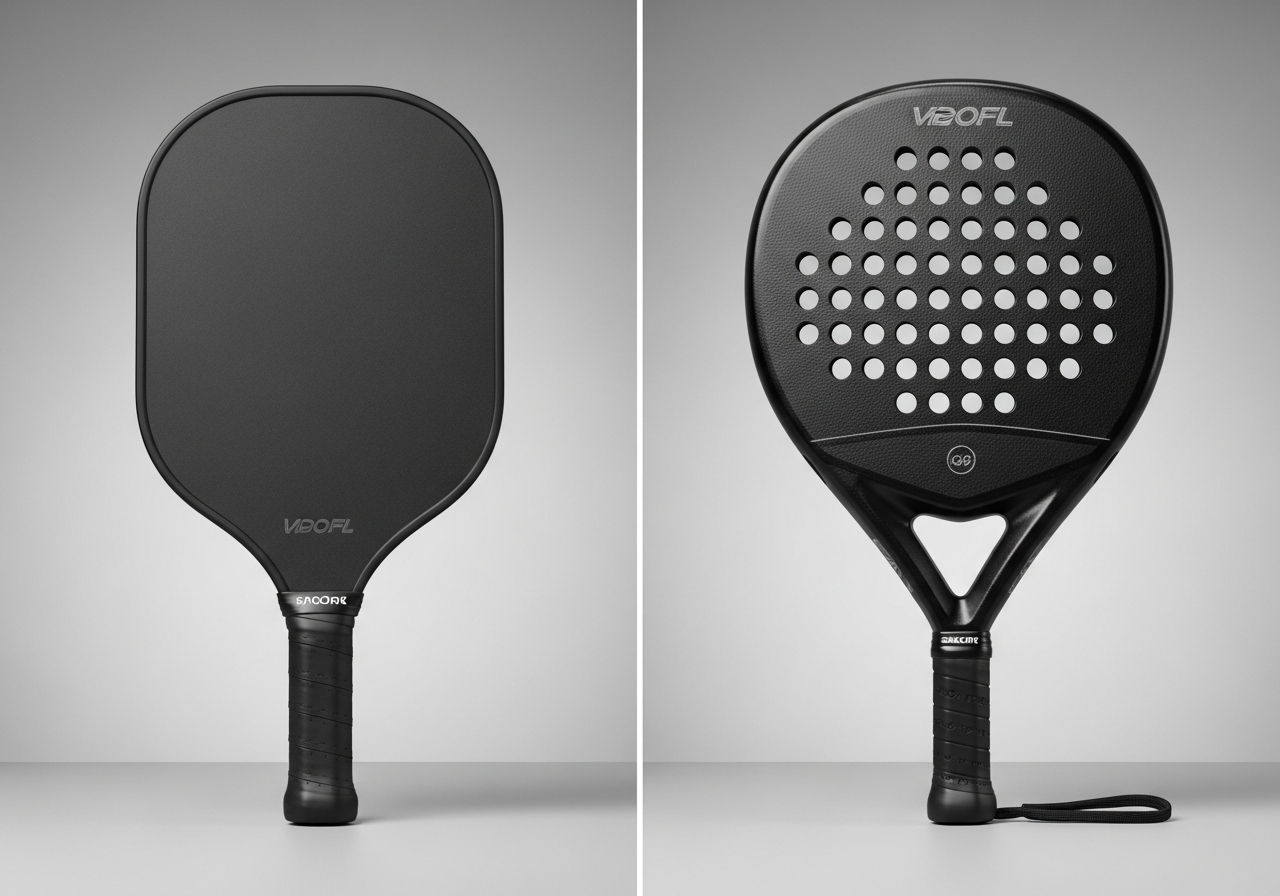
This explanation supports brand owners, distributors, retailers, clubs, and manufacturing partners who need to clarify product differences when expanding into multiple racket-sport categories.
How Do Pickleball and Padel Racquets Differ in Structure?
The fundamental construction is completely different.
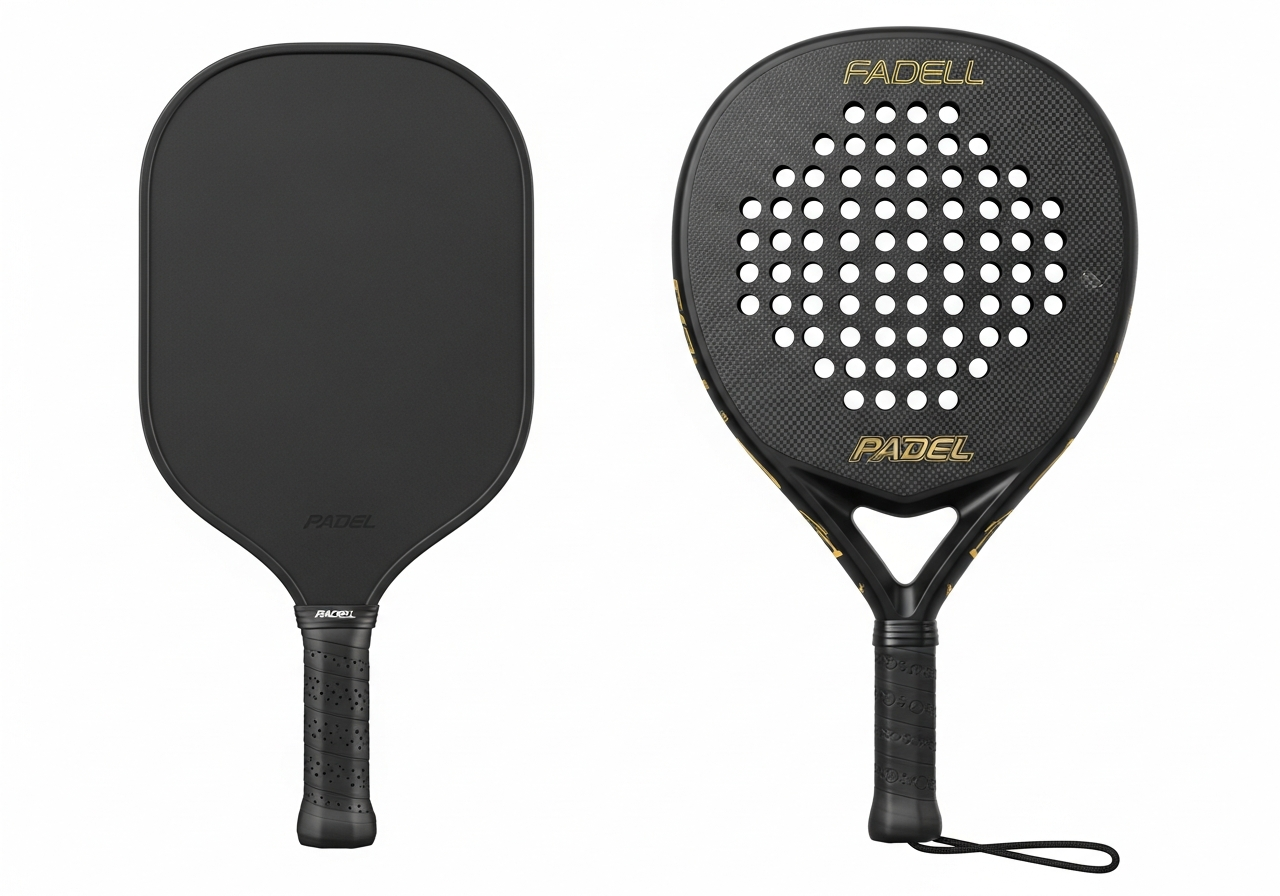
Padel Racket
- EVA foam core
- Carbon or fiberglass face
- Molded one-piece structure
- Perforated hitting surface
- 38 mm maximum thickness
- Designed for high-impact wall play
Pickleball Paddle
- Polymer honeycomb or foam core
- Composite, graphite, or fiberglass face
- Flat, non-perforated surface
- Around 13–16 mm thick
- Lightweight for wrist-based gameplay
Factories use different molding technologies: padel uses CNC-machined molds and EVA curing, while pickleball paddles use heat-pressed laminates and honeycomb bonding.
Do They Differ in Shape and Size?
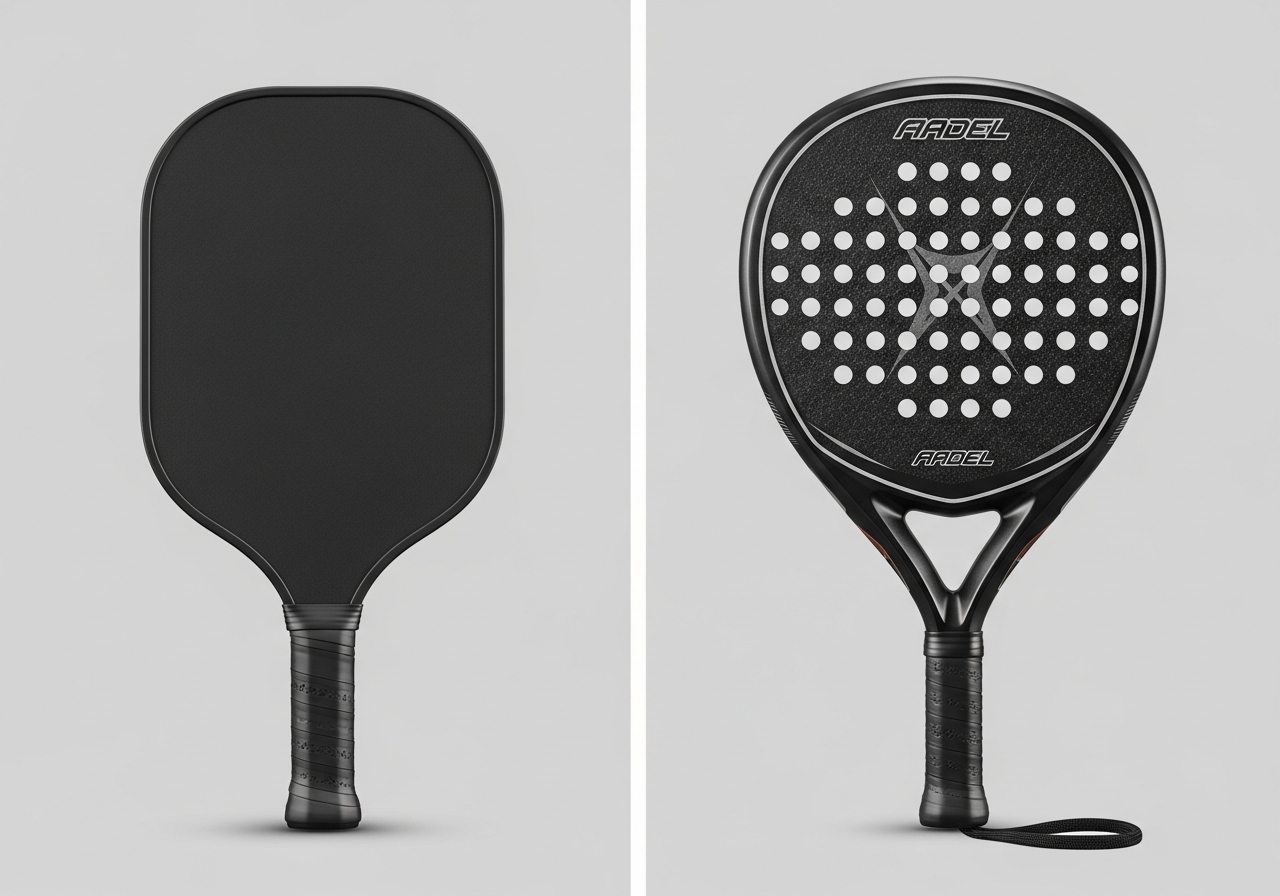
Yes—both sports require unique geometric profiles.
Padel:
- Round, teardrop, or diamond shapes
- Short handle
- Smaller face but thicker body
Pickleball:
- Rectangular, elongated, or standard paddle shape
- Longer handle
- Larger face area but thin profile
Manufacturing specifications in each category follow different international federation requirements.
How Does Weight Compare?
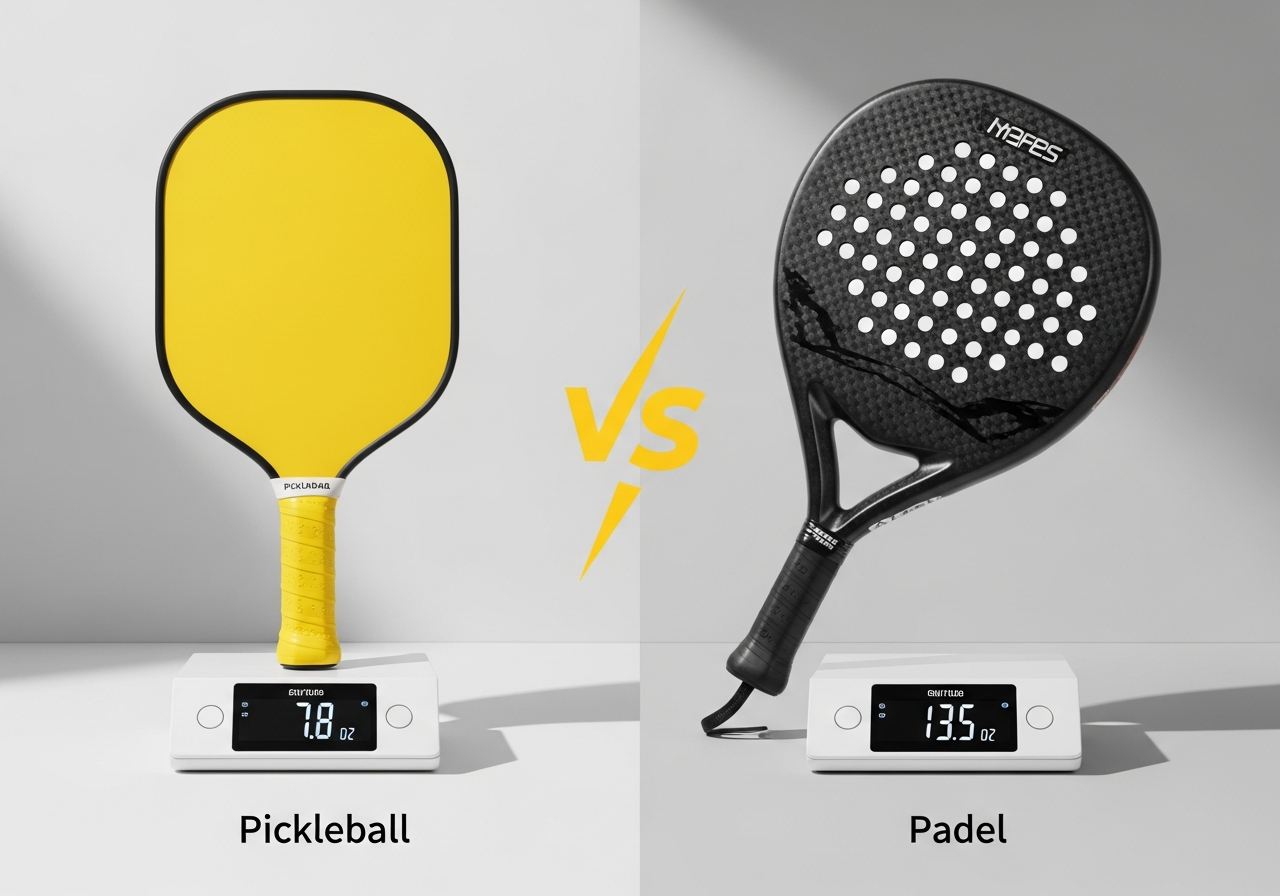
Padel rackets are considerably heavier.
Padel Racket:
- 340–375g
- Heavier due to EVA core and carbon frame
- Designed for solid power and wall rebounds
Pickleball Paddle:
- 215–250g
- Built for quick wrist actions and fast hand battles
Factories manage weight through carbon density, grip layering, core type, and trimming precision.
Why Is the Impact Feel So Different?
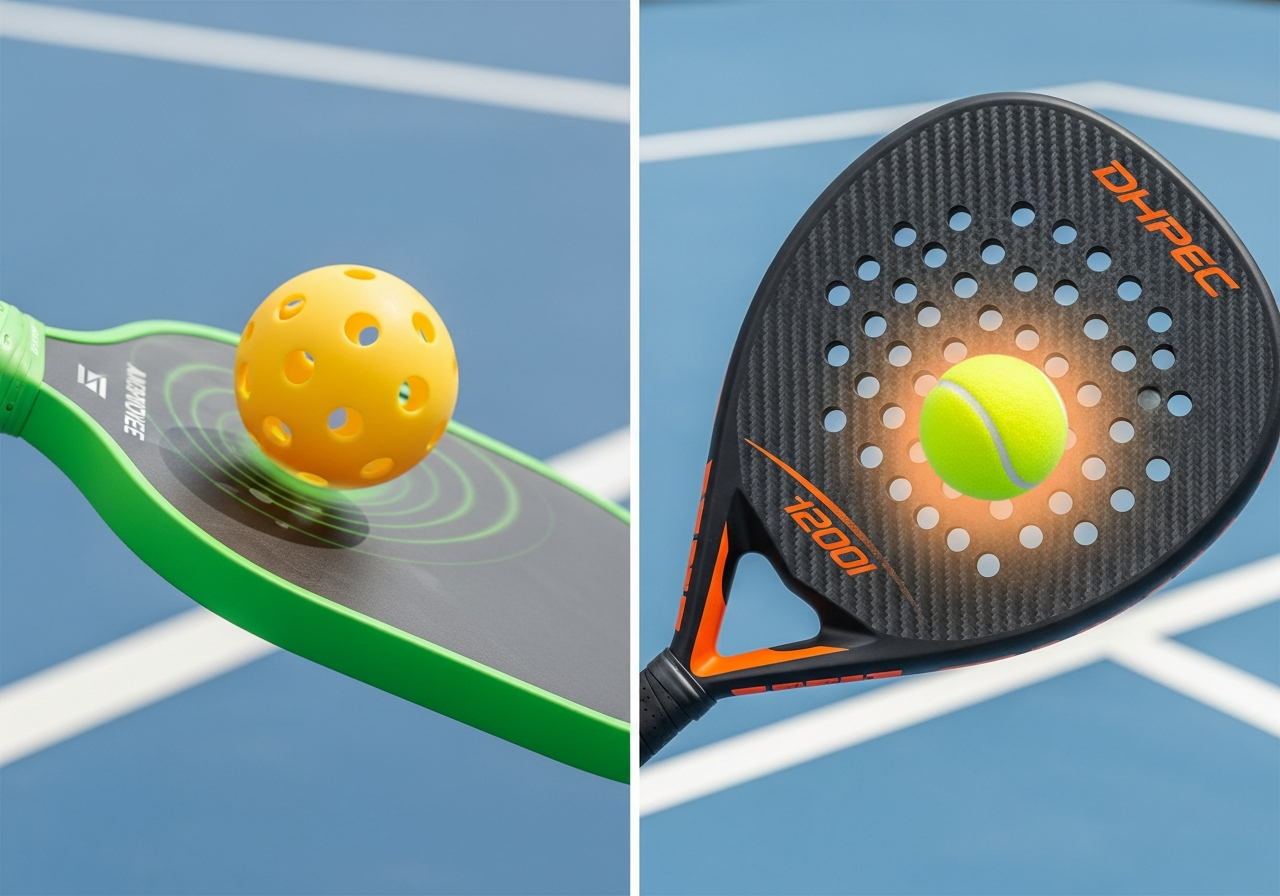
Impact feel is shaped by the internal core.
Padel:
- Softer, deeper contact
- EVA core compresses and rebounds
- Strong vibration absorption
Pickleball:
- Crisp, quick contact
- Honeycomb core produces a higher pitch
- Less compression, more immediate response
Padel engineering focuses on stability for glass-wall play, while pickleball design prioritizes maneuverability and quick volleys.
Can You Use a Pickleball Paddle for Padel?
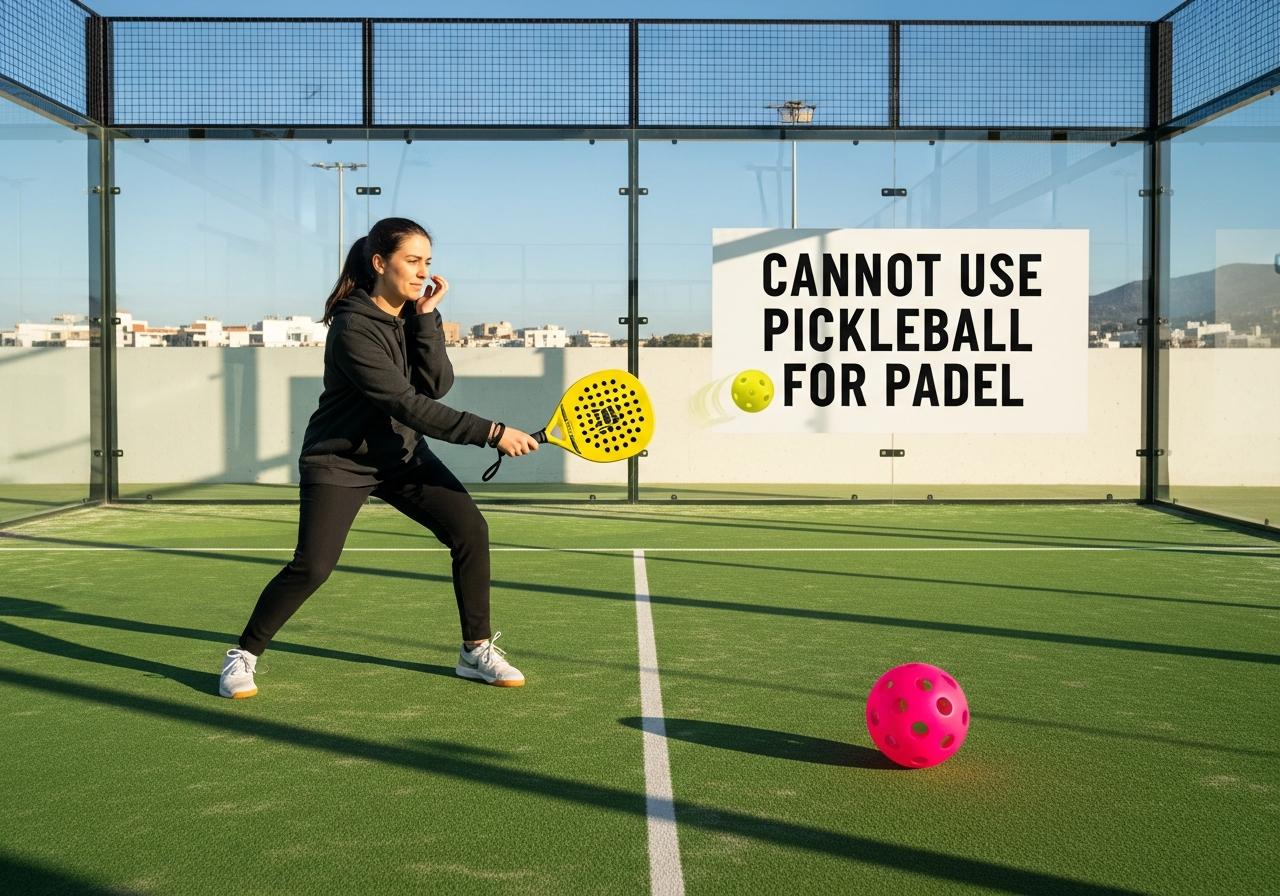
No—rules and gameplay make it impossible.
Reasons:
- Pickleball paddles have no holes → illegal in padel
- Too light for the power needed in padel
- Insufficient thickness and resistance for wall rebounds
- Reduced durability under padel impact loads
Similarly, padel rackets cannot be used for pickleball due to weight, thickness, and surface construction.
How Do Factories Build Padel vs Pickleball Equipment?
Production lines differ completely.
Padel Racket Production:
- EVA core shaping and bonding
- Carbon/fiberglass layup inside CNC-mold
- Temperature-controlled curing
- Precision drilling
- Balance and stiffness calibration
Pickleball Paddle Production:
- Honeycomb core cutting
- Composite face lamination
- Heat-pressed structural bonding
- Edge-guard assembly
- Surface texture coating
Each process requires dedicated tooling, resin systems, and quality standards.
Conclusion
Pickleball and padel racquets are not the same. They differ in structure, weight, materials, balance, shape, and engineering requirements. Padel rackets use EVA cores and carbon layers for controlled power and durability, while pickleball paddles use honeycomb cores and composite faces for wrist-based speed and precision. With proper factory engineering—CNC molds for padel, bonded laminates for pickleball—each sport receives equipment designed for its unique mechanics and performance demands.
These insights help brand owners, distributors, retailers, clubs, and manufacturing partners position their product lines correctly and guide customers toward the right equipment.