Choosing the right pickleball paddle is crucial for improving performance, comfort, and overall enjoyment of the game. With the variety of paddles available, it can be overwhelming to figure out which one suits your playstyle, skill level, and preferences.
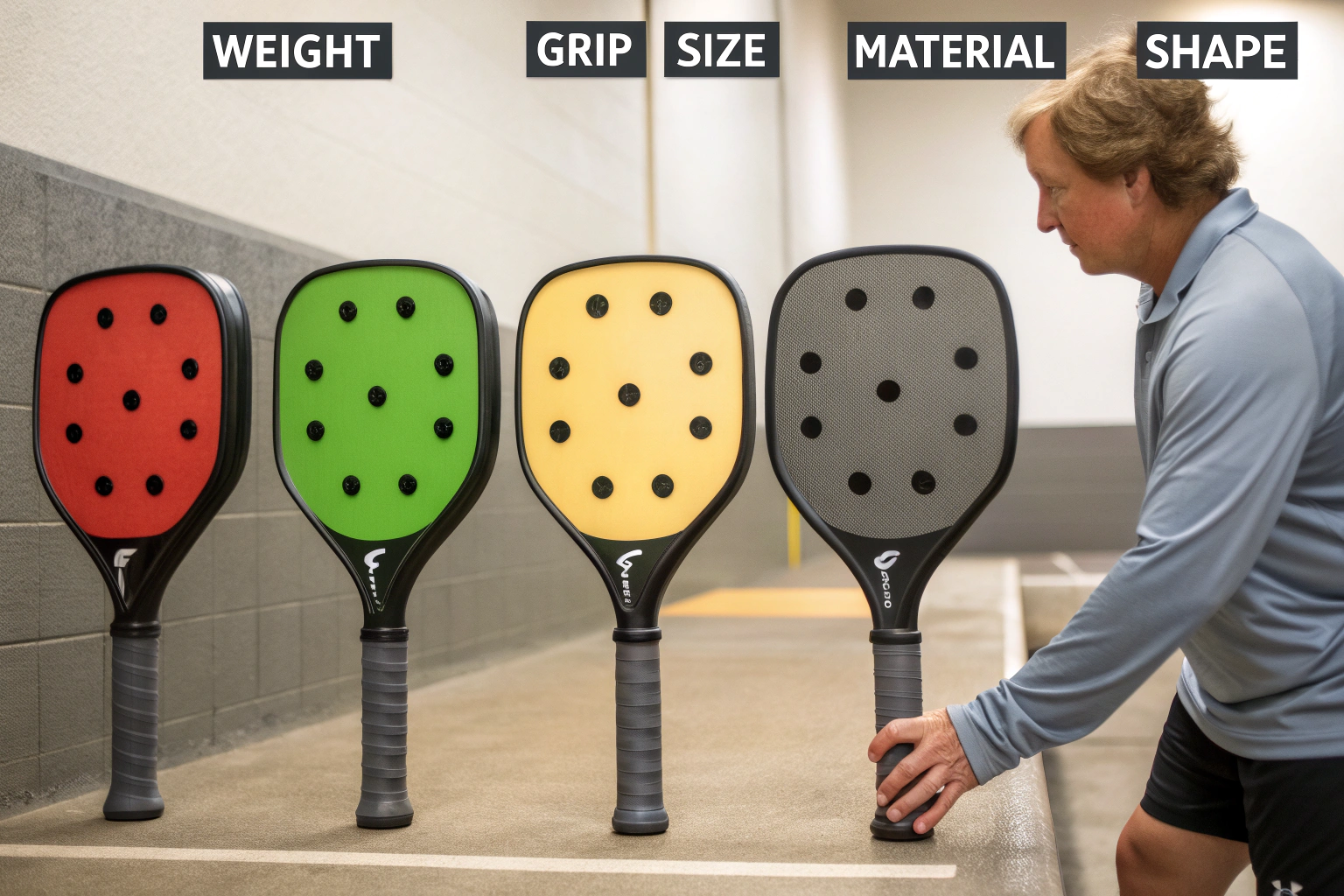
To choose the right pickleball paddle, consider factors such as weight, grip size, material, paddle shape, and balance. Each element can affect your control, power, and comfort on the court.
In this guide, we break down the key features to look for when selecting a paddle, whether you're a beginner, intermediate, or advanced player.
What is the ideal weight for my pickleball paddle?
The weight of your pickleball paddle plays a significant role in how it feels during play and impacts both power and control. Paddles typically weigh between 6 and 9 ounces, and the weight you choose should align with your style of play.
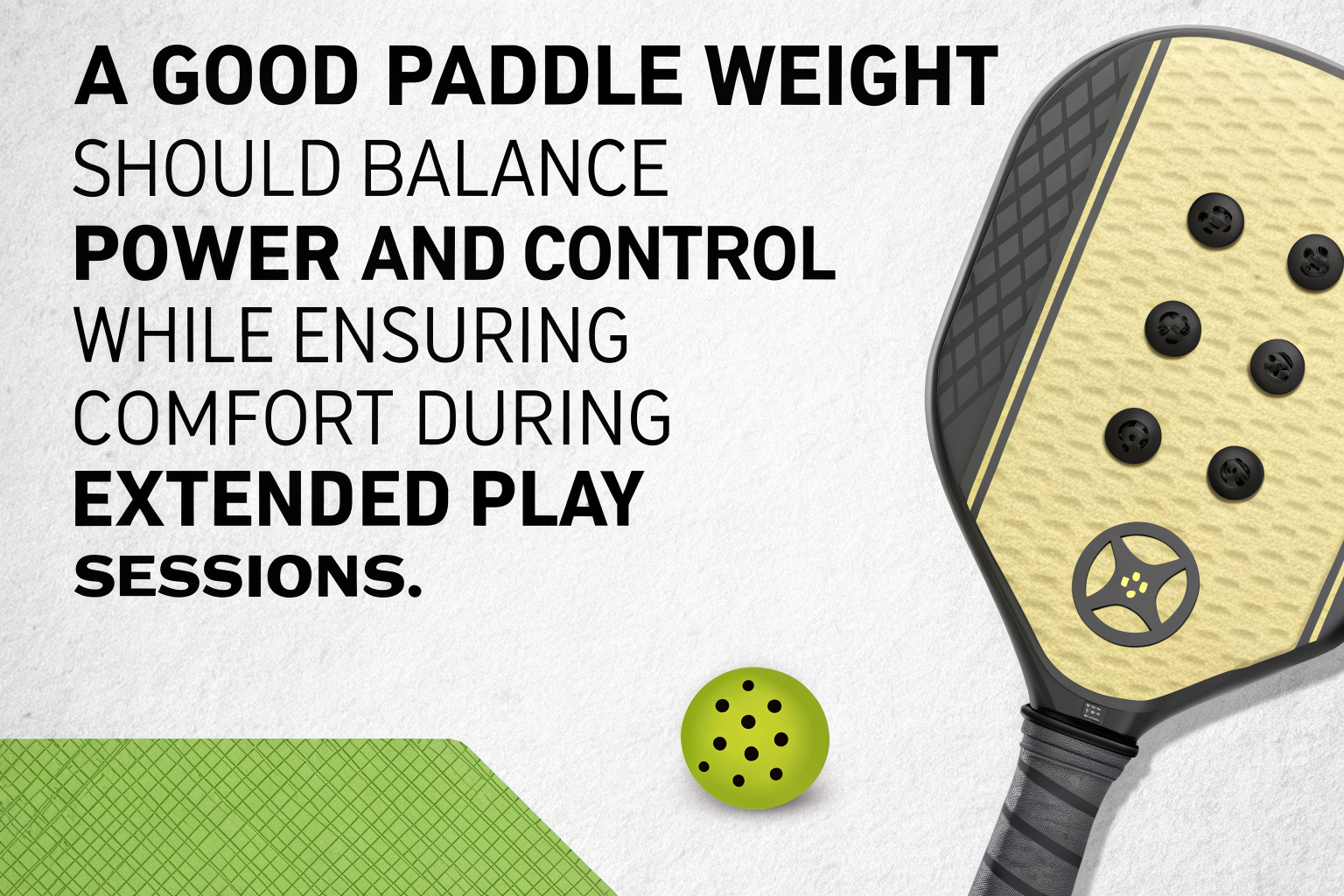
A good paddle weight should balance power and control while providing comfort during extended sessions.
Lightweight Paddles (6–7 ounces)
- Maneuverability: Lighter paddles allow for quicker reactions and faster wrist movements, making them ideal for net play or players who focus on precision and control.
- Less Power: Lightweight paddles generally lack the mass to generate as much power on hard shots, but they are great for control and quick exchanges.
Midweight Paddles (7.5–8.5 ounces)
- Balanced Performance: Midweight paddles offer a good balance of power and control, making them a popular choice for most players. They provide enough power for deep shots without compromising maneuverability.
- Comfort for Extended Play: Midweight paddles tend to be the most comfortable for long playing sessions.
Heavy Paddles (8.5–9 ounces)
- Power Focused: Heavier paddles generate more power and stability, making them ideal for baseline players who prefer aggressive shots.
- Less Maneuverability: Heavier paddles can be harder to control in fast exchanges or quick net play, but they excel in delivering powerful shots.
For most players, a midweight paddle offers the best combination of power and control, but if you prefer speed and quick shots, a lightweight paddle may be a better choice.
How does grip size affect my paddle choice?
The grip size of your paddle is one of the most important factors in ensuring comfort and preventing injury. A grip that’s too big or too small can lead to fatigue, decreased control, and even strain on the wrist and elbow.
A proper grip size will enhance control, reduce the risk of injury, and provide comfort during play.
How to Measure Grip Size:
- The Ruler Test: Measure from the crease of your palm to the tip of your ring finger. This gives a general idea of the ideal grip size.
- The Finger Test: Hold the paddle as you normally would and check if you can fit your index finger between your fingers and palm comfortably. If it fits snugly, your grip size is correct.
Grip Size Options:
- Small (4.0 – 4.25 inches): Suitable for players with smaller hands. Often used by women and juniors.
- Medium (4.25 – 4.5 inches): The most common grip size, ideal for players with average hand sizes.
- Large (4.5 – 4.75 inches): For players with larger hands, providing more stability and control.
If you are unsure, it’s best to try different paddle grips to find the one that feels most comfortable. Many paddles also allow you to add an overgrip to adjust the size.
What material should my paddle be made of?
The material used for the paddle’s face and core plays a huge role in its performance. Higher-end paddles use more advanced materials that offer better control, durability, and power.
The right material for your paddle depends on the balance of power, control, and comfort you're looking for.
Paddle Face Materials:
- Carbon Fiber: Known for its stiffness and excellent control. Carbon fiber paddles provide better responsiveness and are favored by advanced players for spin and precision.
- Fiberglass: Offers more flexibility, giving a balance of power and control. Ideal for intermediate players.
- Composite Materials: A mix of different materials, often fiberglass or carbon fiber, offering versatility and durability at a more affordable price.
Paddle Core Materials:
- Polymer Core: Lightweight and durable, polymer cores offer great shock absorption and a quieter feel. Common in recreational and mid-range paddles.
- Nomex Core: Offers more power and stability but can feel less forgiving than polymer cores.
- Aluminum Core: Provides a solid and stable feel, often used for paddles focused on control and precision.
Selecting the right core and face material combination is essential for tailoring the paddle to your playing style, whether you’re after precision, power, or balance.
4. How does paddle shape affect performance?
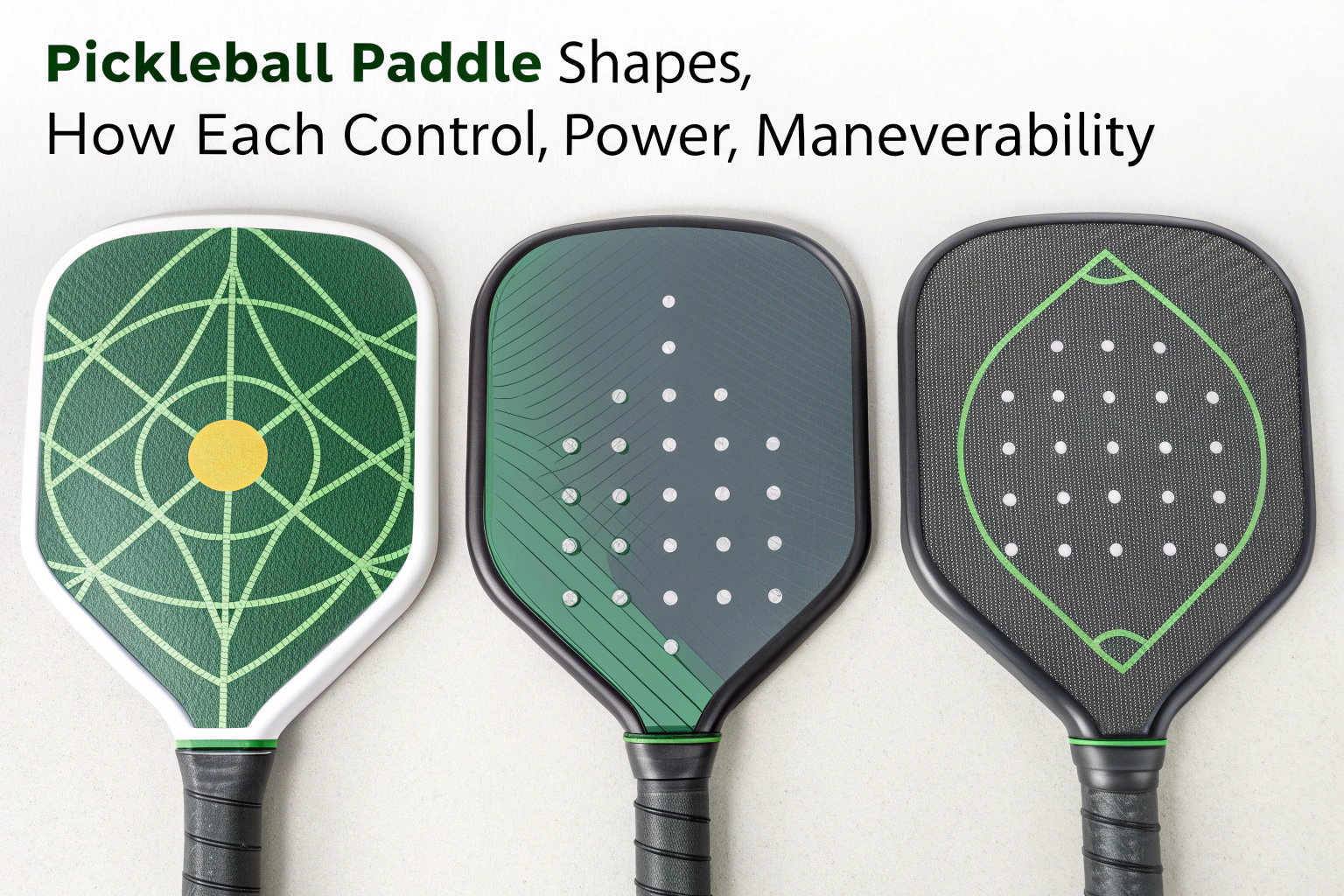
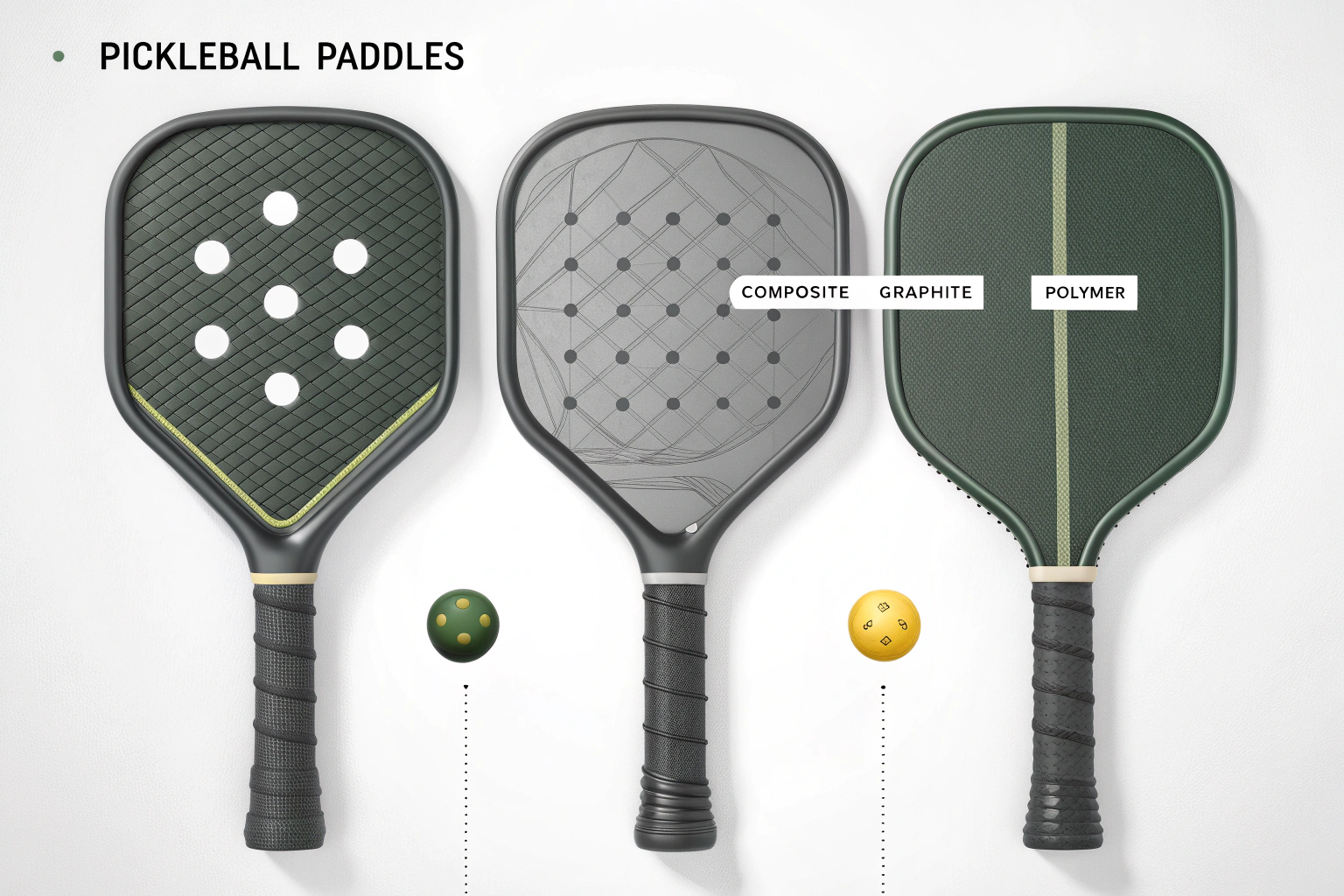
The shape of the paddle influences its sweet spot, maneuverability, and overall performance. There are several common shapes, each offering different benefits depending on your playstyle.
The shape of your paddle affects how well you can control the ball, generate power, and maneuver during fast exchanges.
Paddle Shapes:
- Teardrop Shape: Provides a larger sweet spot, offering more forgiveness on off-center hits. This shape is ideal for players who prefer extra power and a larger hitting area.
- Widebody Shape: A wider face combining power and control, making it a good choice for recreational players who want versatility.
- Classic Round Shape: Offers more control and precision, but with a smaller sweet spot. This shape is favored by advanced players who focus on shot placement.
Choosing the right shape will depend on whether you prioritize control (round), power (teardrop), or balance (widebody).
What is the right balance for my paddle?
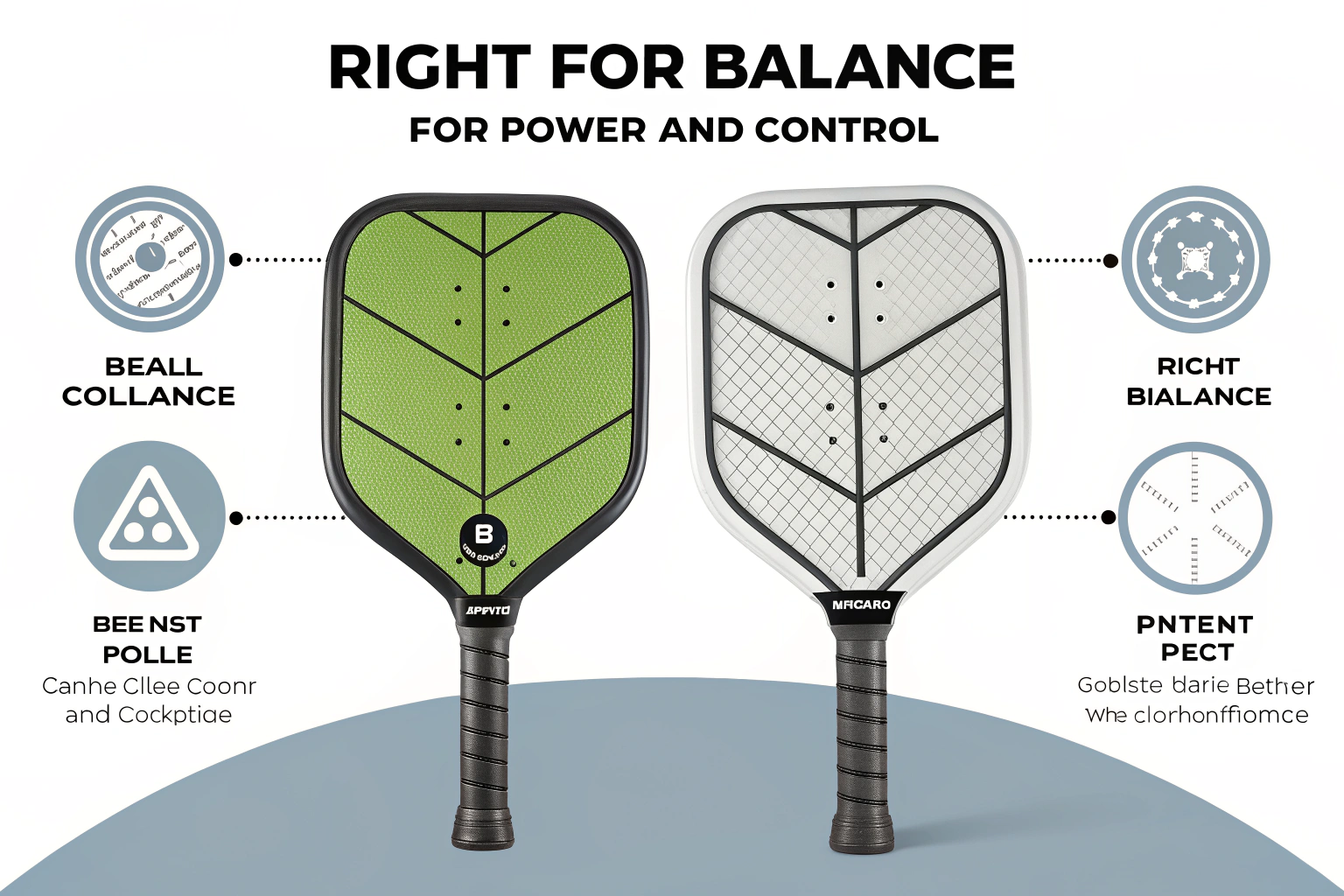
The balance of a pickleball paddle refers to how the weight is distributed between the handle and the paddle head. This affects how the paddle feels during play and influences the power and control of shots.
The right balance will match your playing style, whether you need more power or control.
Types of Balance:
- Head-Heavy Paddles: These paddles are weighted more towards the head, generating more power but making the paddle less maneuverable.
- Even Balance Paddles: These paddles distribute the weight evenly across the handle and head, providing a good balance of power and control.
- Handle-Heavy Paddles: These paddles have more weight towards the handle, improving control and precision. Ideal for players who focus on net play and quick reactions.
Conclusion
Choosing the right pickleball paddle depends on a variety of factors, including weight, grip size, material, shape, and balance. Each of these elements affects your playstyle and performance on the court. Whether you’re a beginner or an experienced player, selecting the right paddle is essential for optimizing your game.
Manufacturers should focus on providing paddles that cater to different player preferences. Offering a variety of paddles with different weights, materials, and designs ensures that players can find the perfect fit for their needs.
📩 For custom paddle manufacturing, expert design consultations, or material sourcing, contact the Youth Padel team at hu@miao-ke.com or via WhatsApp at +86-13023656973. We offer full-service solutions to create paddles that meet player expectations and industry standards.